The best things to do in Franz Josef & the glacier country
Glaciers, rainforest, and obsidian lakes; Westland Tai Poutini National Park is one of my favourite destinations in the South Island
Disclosure: This article contains affiliate links. I may make a small commission should you book through those links, at no extra cost to you. Thanks for your support.
Tourists have been flocking to Franz Josef since the late 1800s; back then, the ice was visible from the main highway.
The glacier has beaten a lengthy retreat since then, but it’s still a fantastically accessible river of ice.
Usually, to see a glacier, you have to make it high into hostile alpine terrain, or into the depths of a place like Patagonia or Greenland. In Franz Josef, the glacier is visible just a short walk from a tourist village right on the main highway through the region.
The first time I drove up the narrow road to the carpark closest the glacier, I couldn’t believe the chunks of ice flowing down the river, nearly to the sea.
I’ve been back many times since. And I have yet to get tired of exploring Franz Josef.
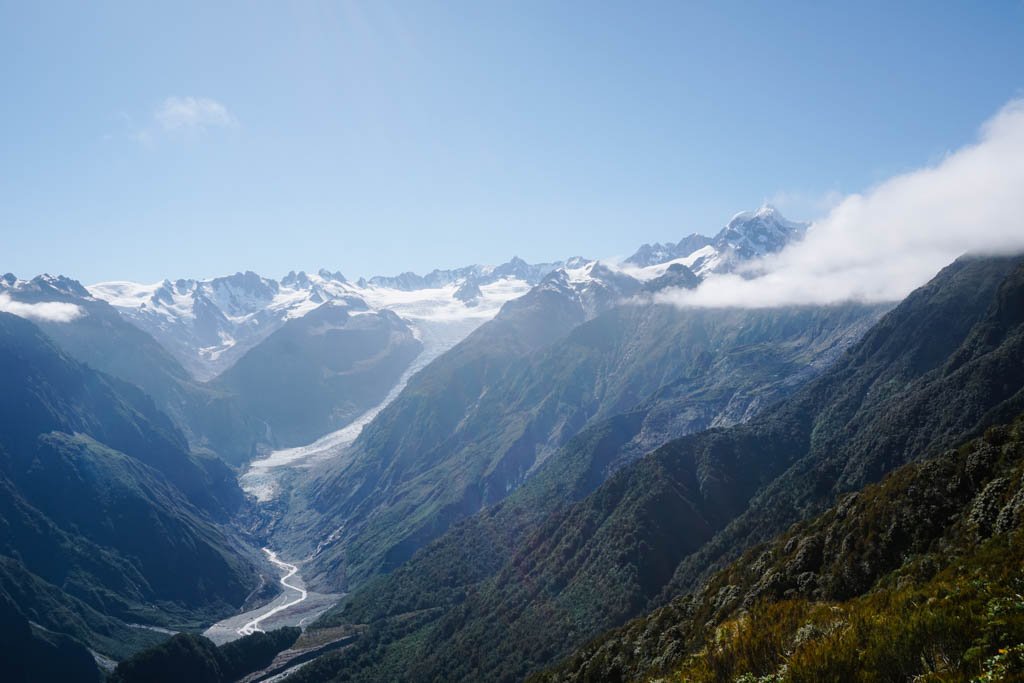
The twin glaciers of Fox and Franz are the stars of Westland Tai Poutini National Park, distinctive for their proximity to the sea – they sit at a mere 300 metres (1000 feet) above sea level and only 12 kilometres from the coast.
But, the national park is also home to rich forest that drips in bright green moss, obsidian lakes that mirror the mountains, and beaches where if you’re lucky, you might see the rounded fins of Hector’s dolphins.
Go for the glaciers, but stay long enough to explore all of glacier country.

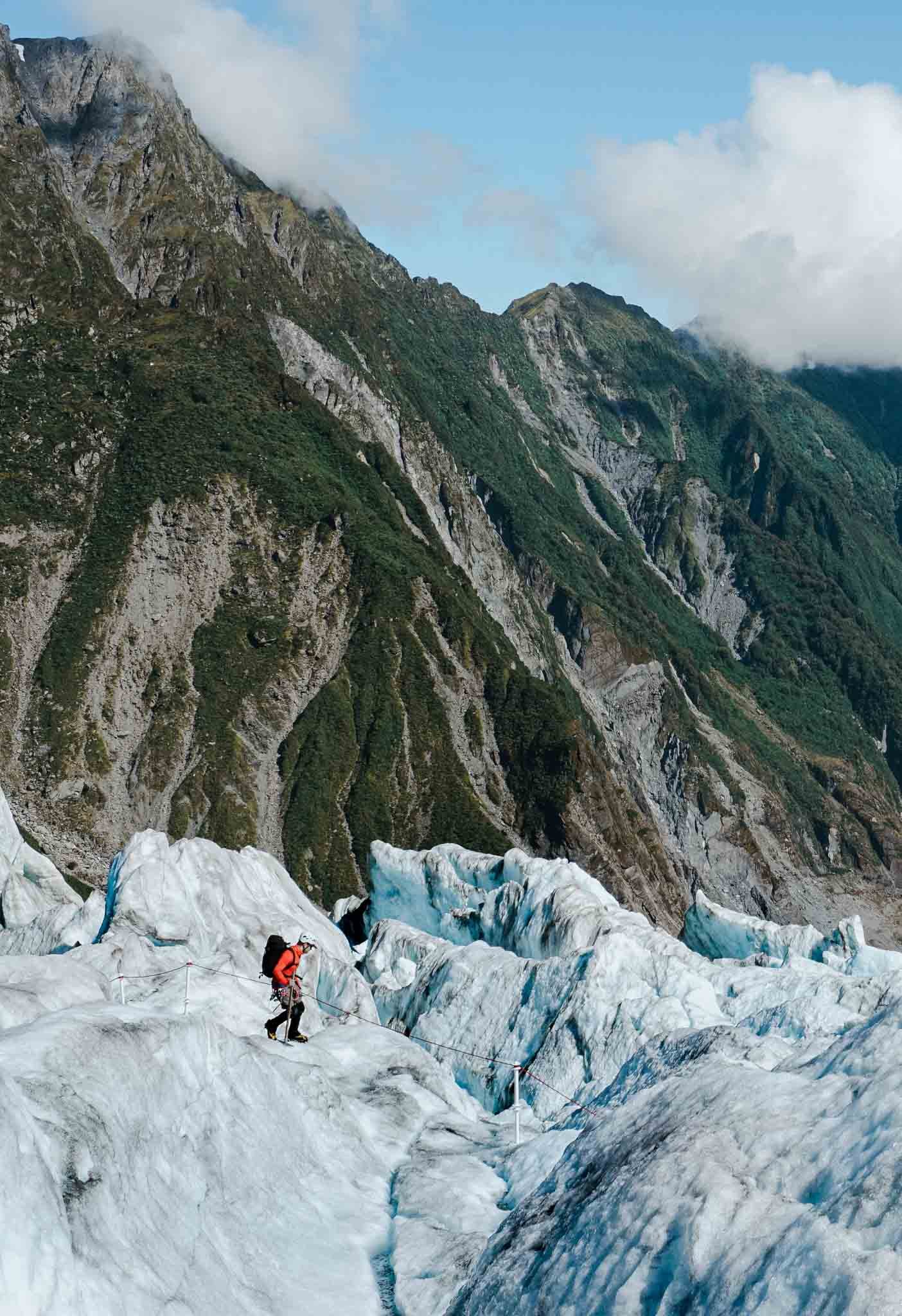
A view of Franz Josef glacier as I was doing the heli hike
My Franz Josef highlights
Hike to a viewpoint in the area — Roberts Point is excellent for a half day walk, or Alex Knob for a full day hike
Getting there and away
There’s only one way in and out of the region; State Highway 6, the long and lonely road down the west coast.
The most common route to or from Franz Josef is from Christchurch, over Arthur’s Pass and down through Hokitika to Franz Josef. Most travellers will carry on down to Haast Pass and through to Wanaka, before heading either back to Christchurch or on to Queenstown.
Needless to say, your own set of wheels is the easiest way to get around (although there are limited Inter City connections throughout the region). There are plenty of hotels in Franz Josef and Fox Glacier townships, with a smattering of Airbnbs as well.
Travelling in a campervan might be the ideal way to move throughout glacier country, though, thanks to the superb campgrounds. Just make sure you’re prepared to deal with abundant sandflies and wet weather.
How long to stay
When visiting Franz Josef you should always have both a raincoat and a good amount of patience; the weather on the west coast is famously fickle, and frequently derails the best-laid plans. During wet weather, helicopters stay grounded and cloud obscures the glaciers from view.
If you have enough time in your itinerary, stay for at least two nights, to increase your chances of seeing the rivers of ice. Glaciers aside, there is plenty to do in this beautiful part of the country, so it’s unlikely you’ll regret spending a little extra time there.
A tip for checking the weather: I use NIWA to look at the weather in Franz Josef (and other national parks). The forecast includes details on visibility and how low the cloud is expected to sit. Anything under 3000 metres means you won’t have great visibility.
Franz Josef or Fox Glacier?
Franz Josef
Fox Glacier
The townships of Franz Josef and Fox Glacier are a 30 minute drive apart, so it’s easy enough to visit the sights in both areas while using only one as a base. My preference is to stay in Franz Josef. The Franz Josef township is busier, but has a better visitor centre, more options for accommodation and food, and a much prettier rainforest setting (the large number of visitors is generally swallowed up by the fantastically green surroundings, so it rarely feels crowded). There’s also a few more activity options in Franz Josef for rainy days.
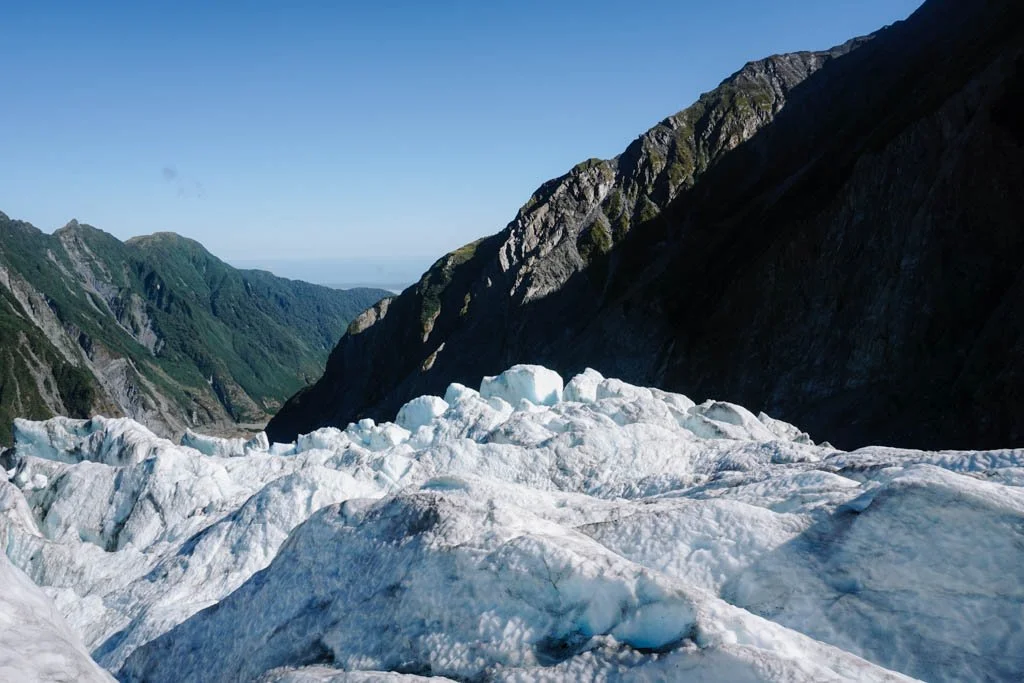
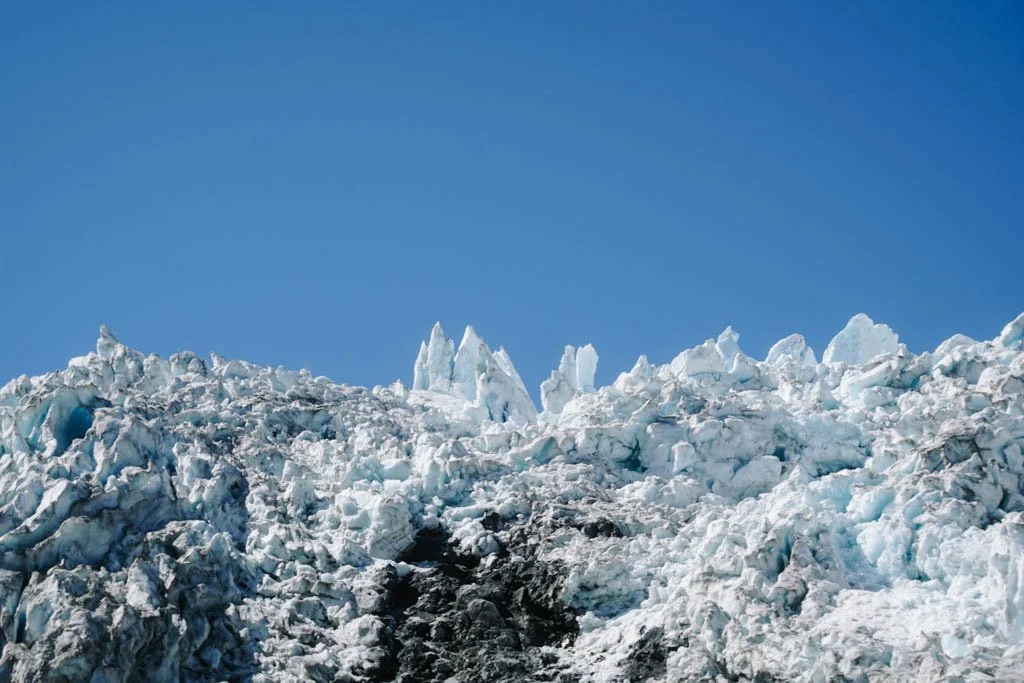
As for the glaciers, both glaciers are visible from accessible viewpoints (in good weather) that you can reach on foot. Franz Josef does have a few more hiking options, but both can be visited via helicopter for a scenic tour or a heli hike. Franz Josef glacier is steeper than Fox, with a distinctive black rock at its centre, as well as deep blue crevasses and ice caves. Fox Glacier itself is longer and gets fewer visitors, so it can make for a less crowded heli-hike experience. Sitting a little lower, sometimes the weather can favour Fox Glacier too, making it more likely you’ll get onto the ice.
Where to stay
Rainforest Retreat has a beautiful setting, excellent facilities and a range of room types for all budgets
Wild Kea Lodge has an impeccable kitchen for self catering, and they supply complimentary soup, popcorn, and muffins on arrival.
For campervans — Orange Sheep Campervan Park
What to do in Franz Josef
Franz Josef heli hike
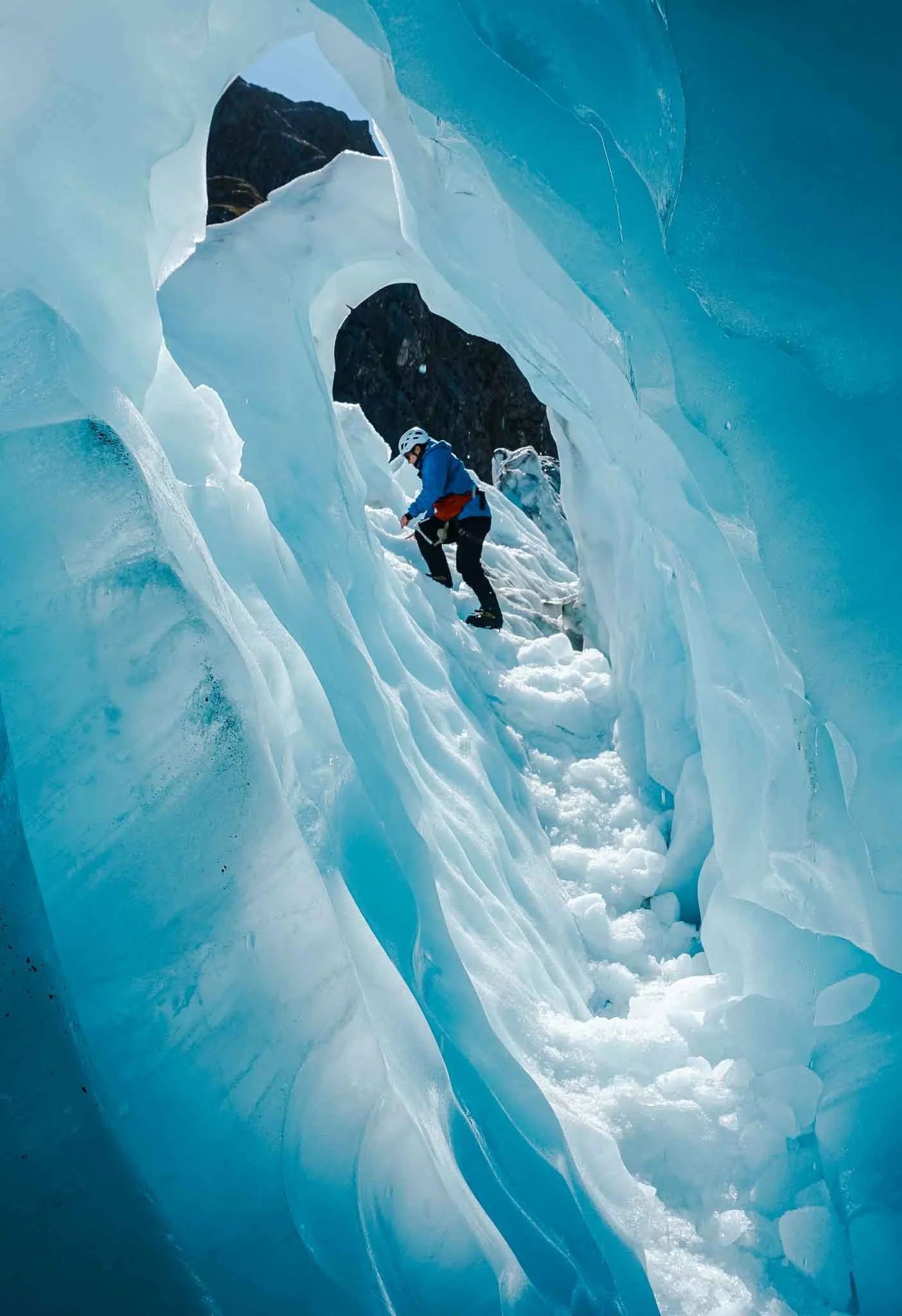
The premier activity in Franz Josef is hitching a ride on a helicopter up onto the ice. Heli hikes on Franz Josef glacier are exclusively the domain of Franz Josef Glacier Guides. You may see heli hike trips advertised via other booking agents, but the only ones leading you on the ice are guides from this outfit (owned by Ngai Tahu Tourism, the tourism arm of the South Island’s largest iwi/tribe).
You’ll need an exceptionally clear weather window.
Unlike a brief landing, or a fly over, the heli hike requires several hours of good weather. That means there’s a good chance your heli hike may be cancelled; early morning trips have a better shot at getting on the ice, but even so, be prepared for your plans to change.
I was lucky enough to get perfect blue skies for my heli hike. This was my first time in a helicopter, so although it’s a very brief ride of around 10 minutes (walking on the glacier is the real attraction) I enjoyed the trip up the valley.
Walking on the ice was equally surreal, with crevasses, ice caves and views out towards the sea.
I did find the heli-hike to be more of a meander than a hike. Time is allocated for photo stops, and if you’re lucky enough to go through an ice cave, the group will pass through one person at a time. Expect to move at the pace of the slowest person in your group (although the upshot of this is more time staring at the blue ice).
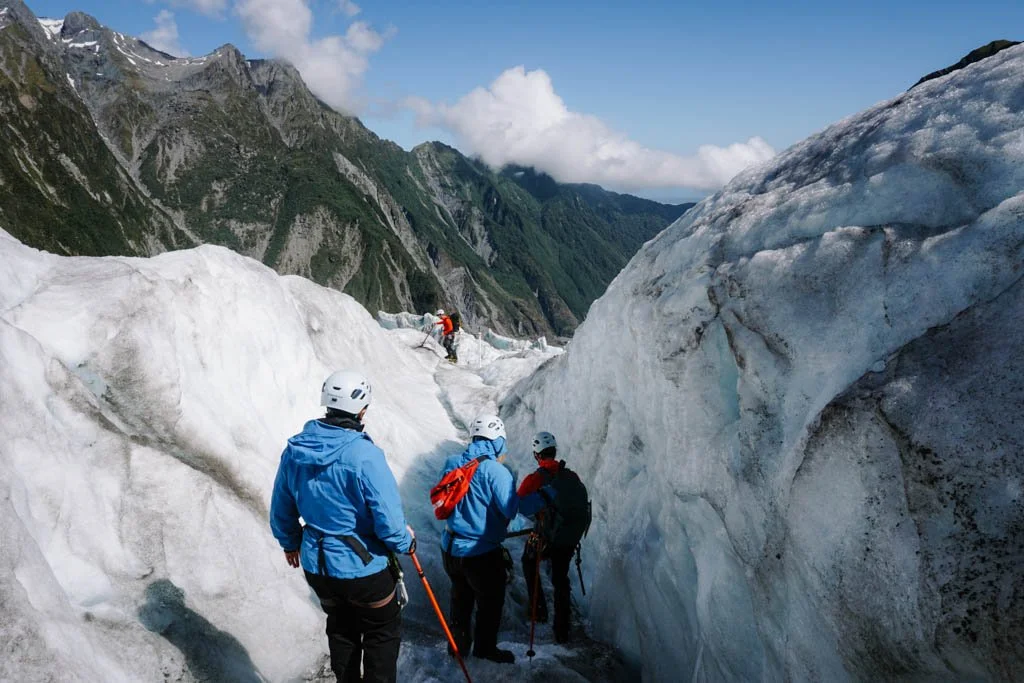
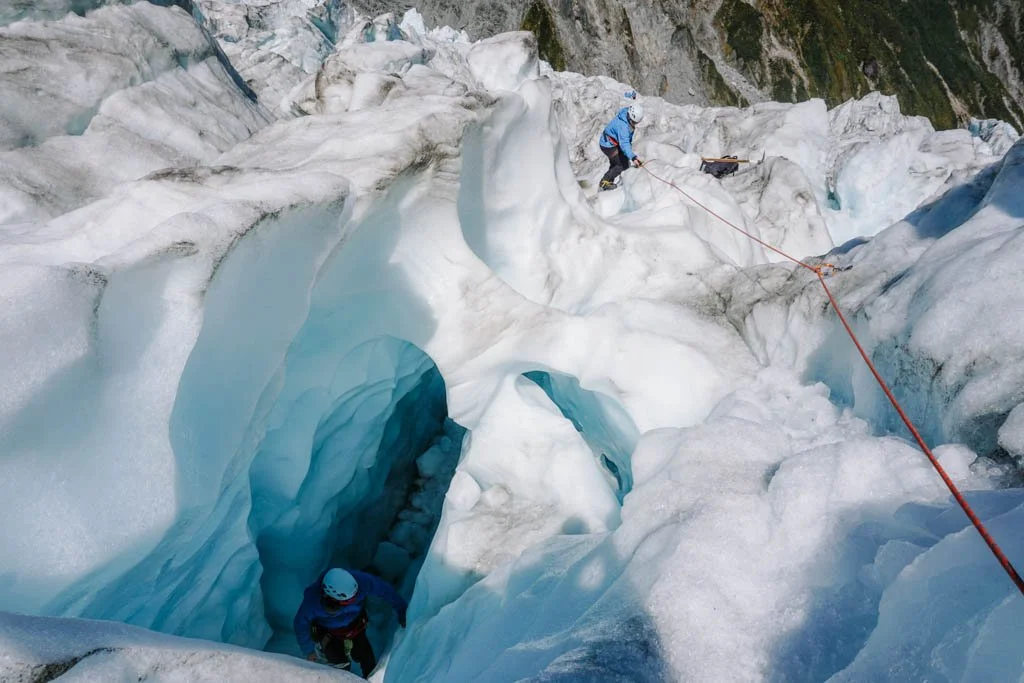
There are more adventurous options, like the Glacier Heli Ice Climb, or the Glacier Adventure, both of which sound as if they would test you a little more physically, and give you more time on the ice (5.5 hours versus the 2.5 hours on a heli hike).
I’m curious about both of these options, but have yet to try them; trips do come with a high price tag and are subject to minimum numbers.
Another thing to note; I visited in 2022, when New Zealand’s borders were still closed to international visitors.
Standing on the ice, my guide pointed out a waterfall on a cliff edge in the valley. It was notable because you could hear the sound of the water; he told us that on a clear day, before borders were closed, the number of helicopters flying up and down the valley was so high that the prevalent sound in the area is the buzz of chopper blades. The sounds of waterfalls, ice cracking, and other natural sounds are drowned out. I imagine this is the case again now.
This, along with the irony of fossil fueled powered flights to see the melting ice, may mean the most nature oriented visitors might not enjoy the trip. If this sounds like you, I recommend prioritising the hiking trails in the area instead, ideally in the Fox Glacier area where the overall number of helicopter flights is lower.
The details
I went on a heli hike with Franz Josef Glacier Guides
‘Flightseeing’ hikes
Helicopter trips designed to give you views of the glaciers, and a short snow landing, are an option if you’re not interested in the heli hike.
There are a number of helicopter companies, but tour offerings and prices are roughly the same. Trips typically last from 25-45 minutes, with a 10 minute landing on one of the glaciers, and cover a combination of Franz Josef glacier, Fox glacier, and the Tasman Glacier lying on the opposite side of the Southern Alps, in Mount Cook National Park (which is very close as the helicopter flies).
The details
Glacier Country Helicopters is a small, family owned operation offering the standard selection of scenic heli flights; Franz Josef Glacier, Franz and Fox, or Franz, Fox, and Tasman.
INFLITE offers longer than standard trips, and is the only Franz Josef helicopter operator to cross the main divide and land on the Tasman Glacier (the longest in New Zealand) in Aoraki Mount Cook National Park.
Walks and hikes in Franz Josef

The view of Franz Josef from the Roberts Point lookout platform
If you’re on a budget, don’t like helicopters, or don’t want to add to the carbon emissions driving the glacial retreat, there are some wonderful walking options around Franz Josef.
You can get some pretty spectacular views of the glacier from viewpoints in the area, with different levels of difficulty.
The Franz Josef Glacier/Kā Roimata o Hine Hukatere track for a 30 minute gentle walk to a viewing point of the glacier and valley. This is possibly the most disappointing view, as the glacier has shrunk far up the valley, but it’s still a lovely (but somewhat busy) walk.
Roberts Point Trackis a longer and more challenging hike that crosses swing bridges and rocky terrain. The end point is a wooden viewing platform which faces the glacier, giving you clear views up the valley. I went early in the morning and was the only one there, I loved it.
Alex Knob
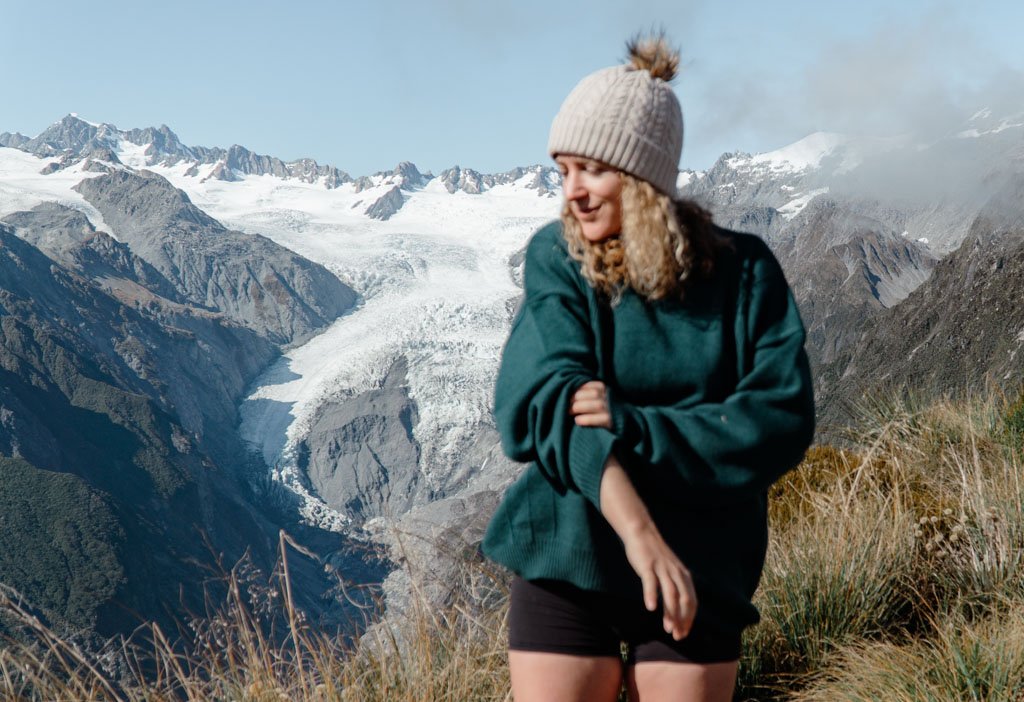
Offering the best views of Franz Josef without taking a helicopter, Alex Knob is a long but very rewarding day hike. The trail itself is well graded and has two lookout points before reaching the top. I recommend starting early – at first light, if you can.
The carpark right at the trailhead is small, and fills up fast. If you don’t get a park there, you’ll need to park in the main carpark (which now costs $5 an hour) and walk an extra 45 minutes to reach the trailhead. Starting early also means you have a higher likelihood of seeing the glacier sans cloud, as weather is generally better in the morning.
Callery Gorge Walk
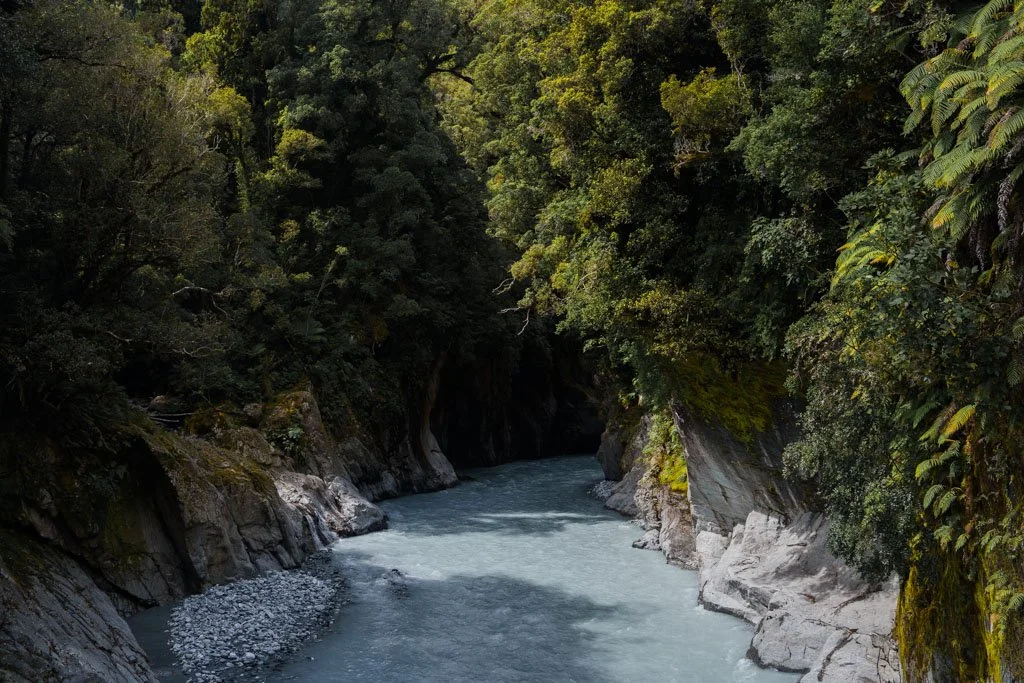
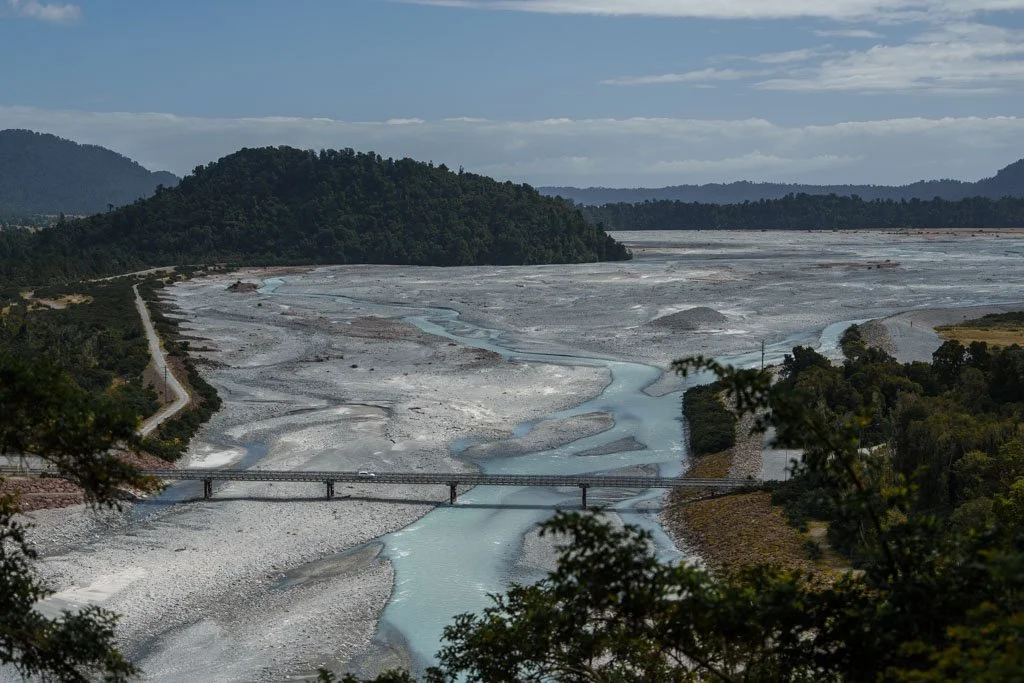
Taking around 1.5 hours return, this walk is a nice option if you have a couple of spare hours to fill. I wouldn’t go out of my way to do it, but the view of the gorge at the end is pretty and it’s a convenient track that starts from the township. The trail is a gentle walk through the forest to the historic Callery Gorge bridge, which has views of the narrow Callery Gorge. You can also climb down to the gravel river shore and admire the gorge from there. The colour of the water is often portrayed as bright blue in photos online, but in summer it’s more of a pastel grey than blue (I think the blue is brighter in winter, when there is less glacial melt muddying the water).
Lake Wahapo
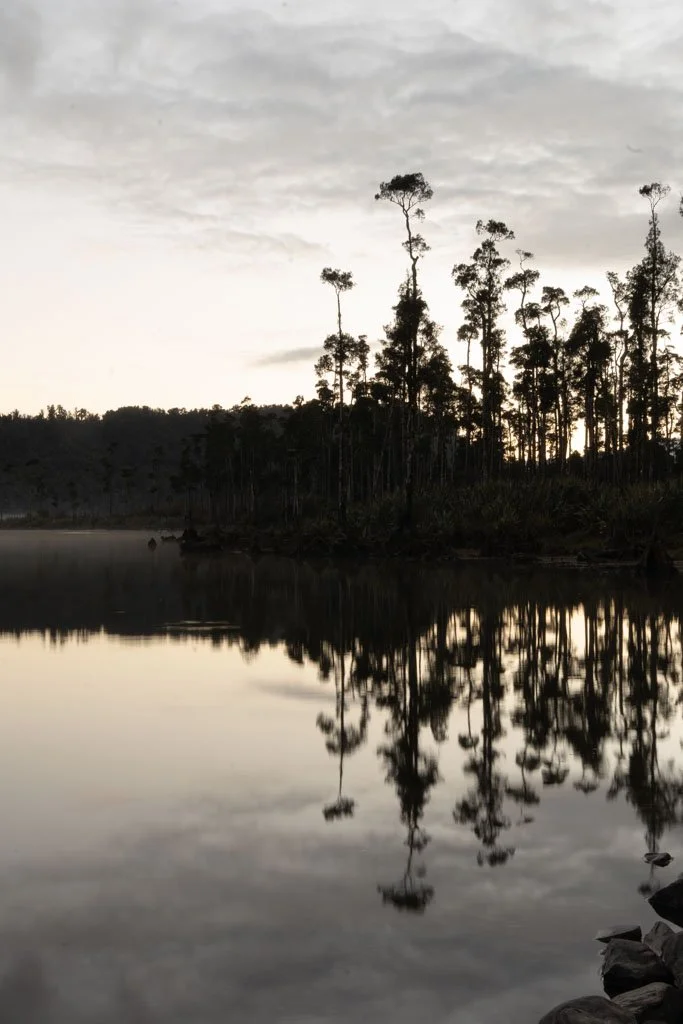
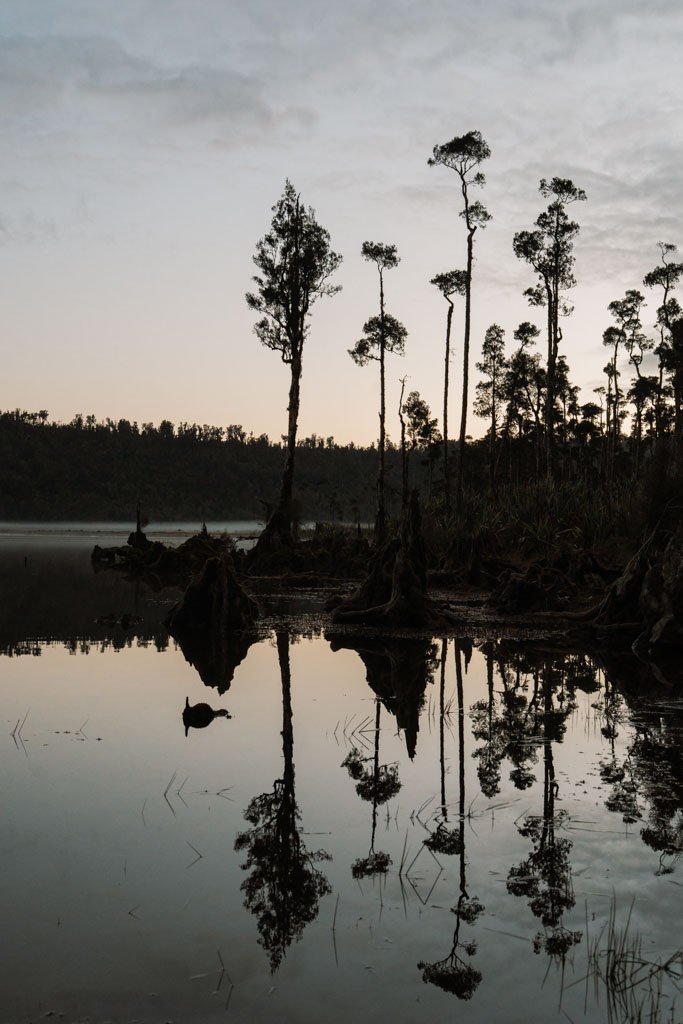
About 20 minutes north of Franz Josef, within Westland Tai Poutini National Park but right next to the main road through the region, is Lake Wahapo. It’s easy to drive straight past this little lake, and during the daytime there isn’t much to stop for anyway.
But, for keen photographers, it’s worth heading out to the lakeside before dawn. In the early hours, mist often hangs low over the dark water, while the rising sun illuminates the dense trees and flaxes along the shore. The main point of interest, though, is the stand of kahikatea trees at the eastern edge of the lakeshore. These native trees are the tallest in New Zealand and don’t mind having wet feet, so they grow right down to the shore and even stand in the shallows of the lake. In the early morning calm, the trees can cast fantastic reflections on the water.
If you do want to try and capture sunrise scenes here, cover all skin and take insect repellent – the sandflies here are particularly vicious.
Kayak on Ōkārito Lagoon
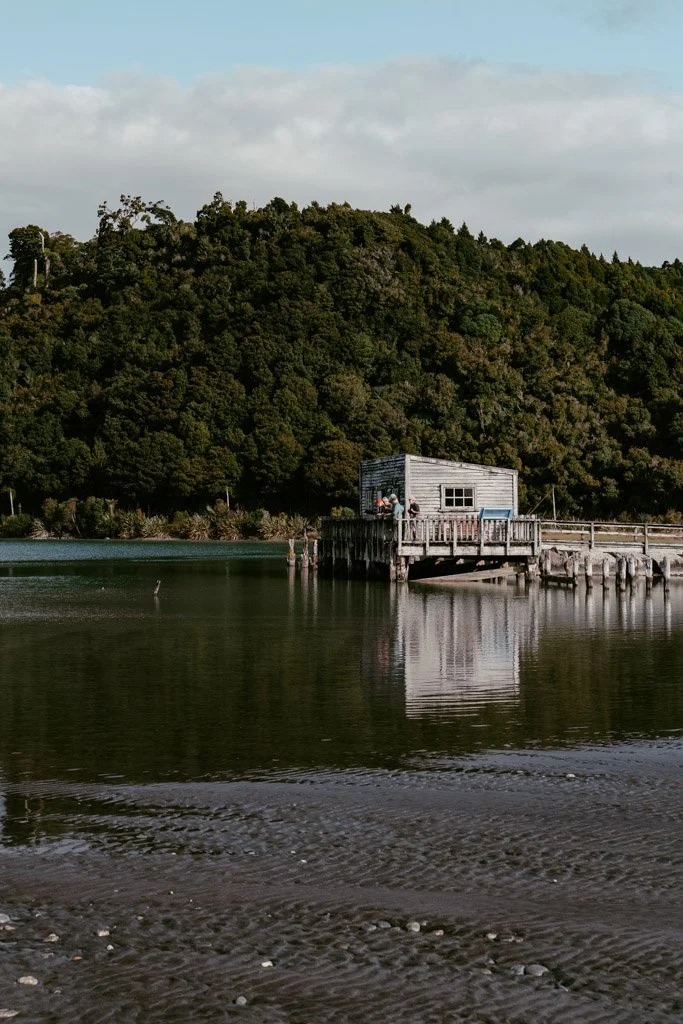
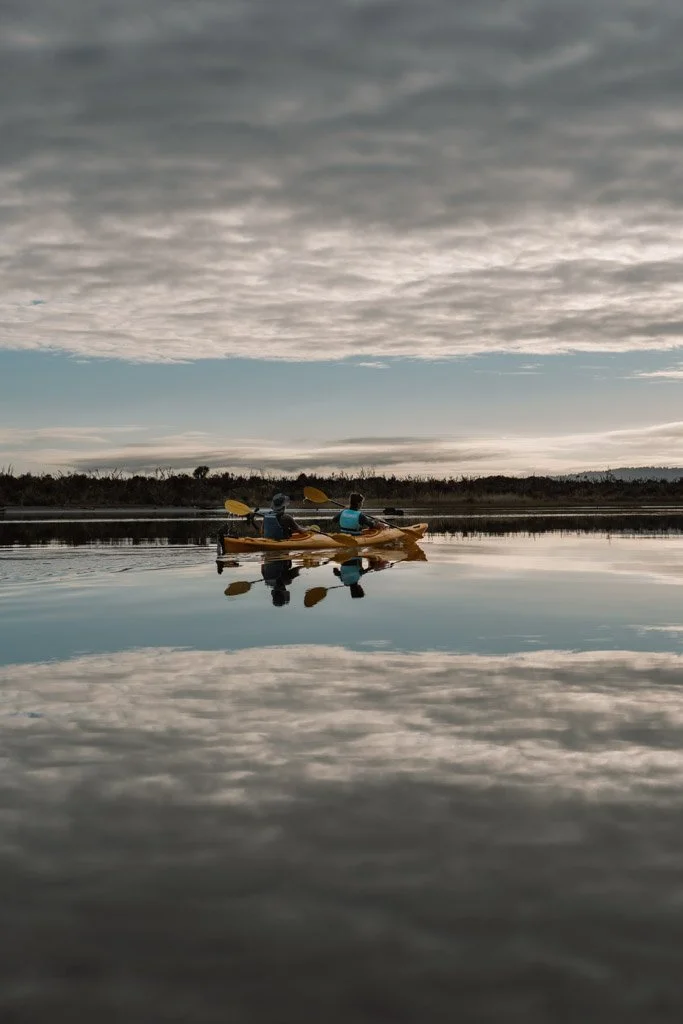
While in Franz Josef, I highly recommend a detour to Ōkārito, about 25 minutes from Franz Josef, off the main highway.
There are only 30 permanent residents in Ōkārito, a village bounded by dense forest, sea cliffs, a vast lagoon, and the wild Tasman Sea. There are no shops, no restaurants. There are only three small businesses in town; a boat tour, a kiwi tour, and a kayak rental. You can get a coffee at Okarito Kayaks, but that’s about it. Everything in this place feels slow, simple, wild, and wonderful. It’s a real treasure of the South Island, and one of the places that will always make my heart lift when I go back there.
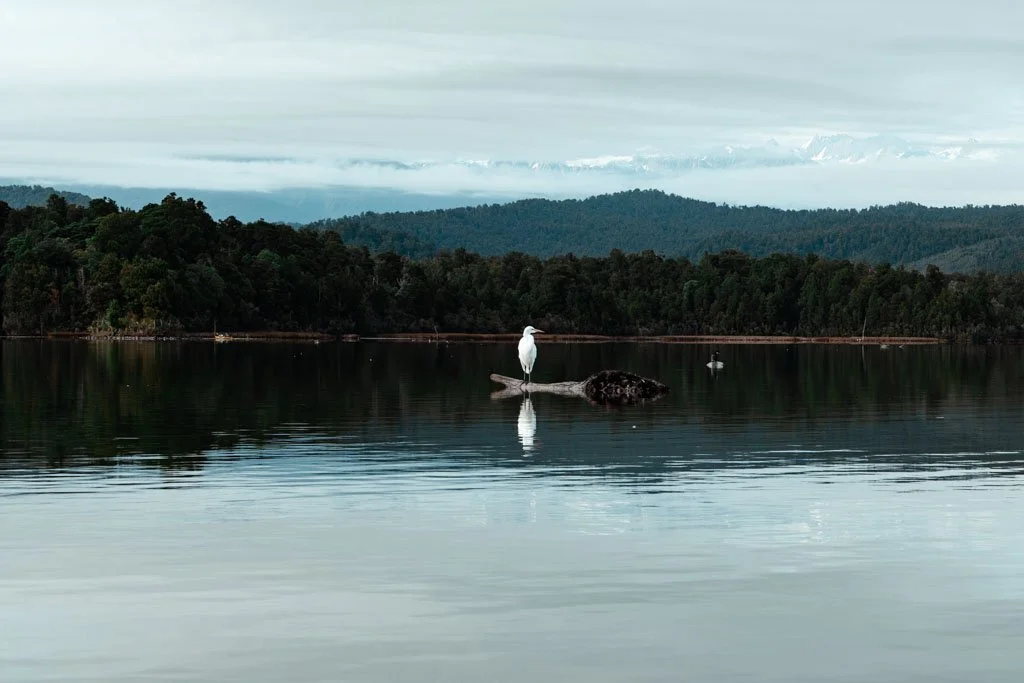
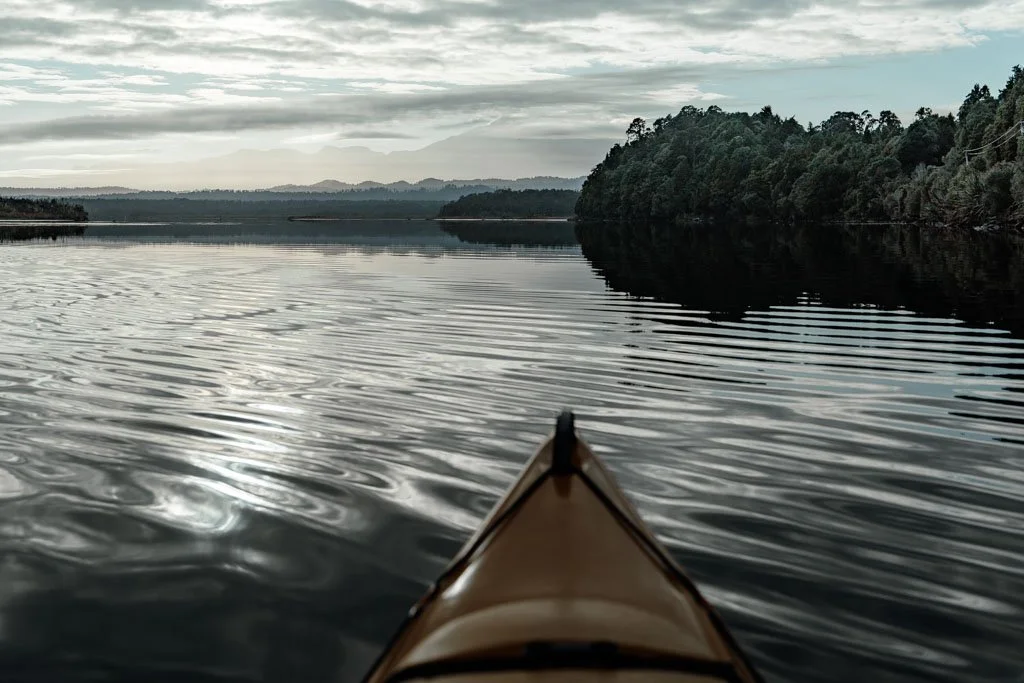
Part of Westland Tai Poutini National Park, Okarito Lagoon is New Zealand’s largest unmodified wetland. It’s easy to see what a rare and special thing that is. More than 76 species of birds thrive on the lagoon, including the eerily beautiful kōtuku/white heron.
To fully appreciate the lagoon, you have to get out on the water (only a small part of it is visible from dry land). Ōkārito Kayaks have self-guided and guided kayaking options. Even if you’re not a bird enthusiast, the paddle around the lagoon is still beautiful (I’m not a kayaking enthusiast, and I still loved it). It’s gentle as far as kayaking goes, with side trips up the tree-lined creeks feeding into the lagoon.
I chose the half day option over the 2 hour kayak rental, to give me more time to explore. Although times shift a little around the tide, I recommend going as early in the morning as you can; the morning light on the lagoon, silky smooth before sea breezes picked up, was divine. Views of the Southern Alps were clearer in the morning as well.
There are also some great walks at Ōkārito. Try the Ōkārito Trig walk, which starts on the Three Mile Pack Track before branching off and climbing gently uphill to the Ōkārito Trig viewpoint. On a clear day, you can see across the lagoon and all the way to the Southern Alps. It’s a beautiful walk through some lovely coastal forest, with wonderful bird life – I spotted many bellbirds and robins along the way.
The details
Ōkārito is 25 minutes from Franz Josef. Pack a lunch and allow a full day to visit.
Go kayaking with Ōkārito Kayaks in the morning
Walk the Ōkārito Trig track in the afternoon
Quad bike through rainforest and rivers with Franz Josef Wilderness Tours
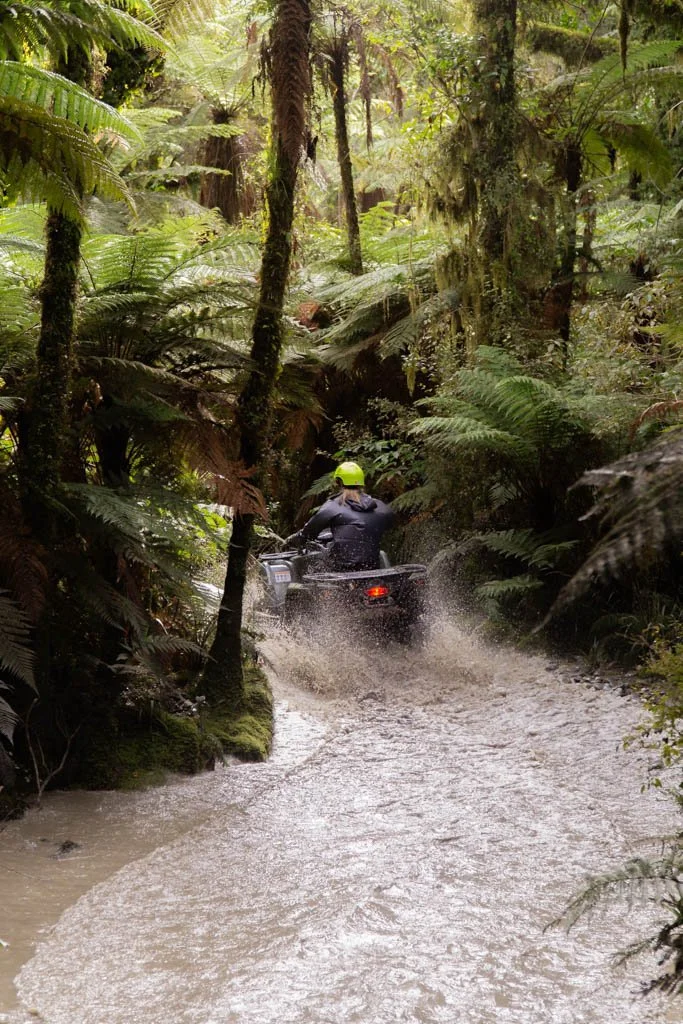
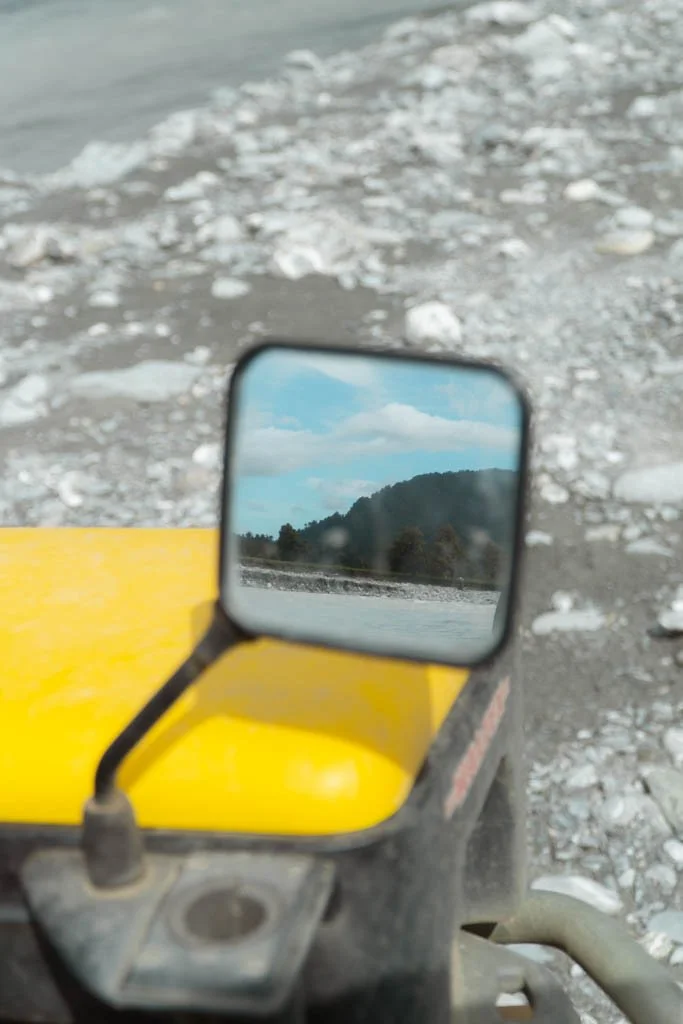
A family owned business run by Kiwi-Canadian couple Bronwyn and Dale, Franz Josef Wilderness Tours runs a range of kayak, boat, and off-road trips in the Franz Josef area.
The guided quad bike tours are a noisy, fun, and fast-paced way to explore glacier-fed riverbeds, muddy grasslands, and lush rainforest. I don’t usually get my thrills from loud vehicles, but throttling through the grey river was an exhilarating experience.
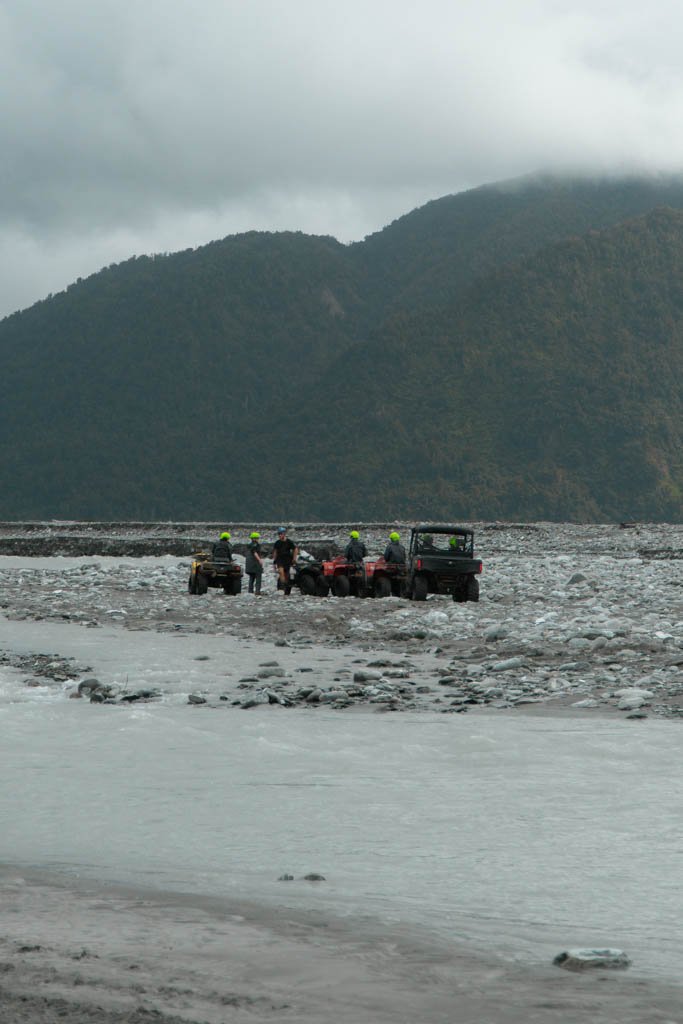
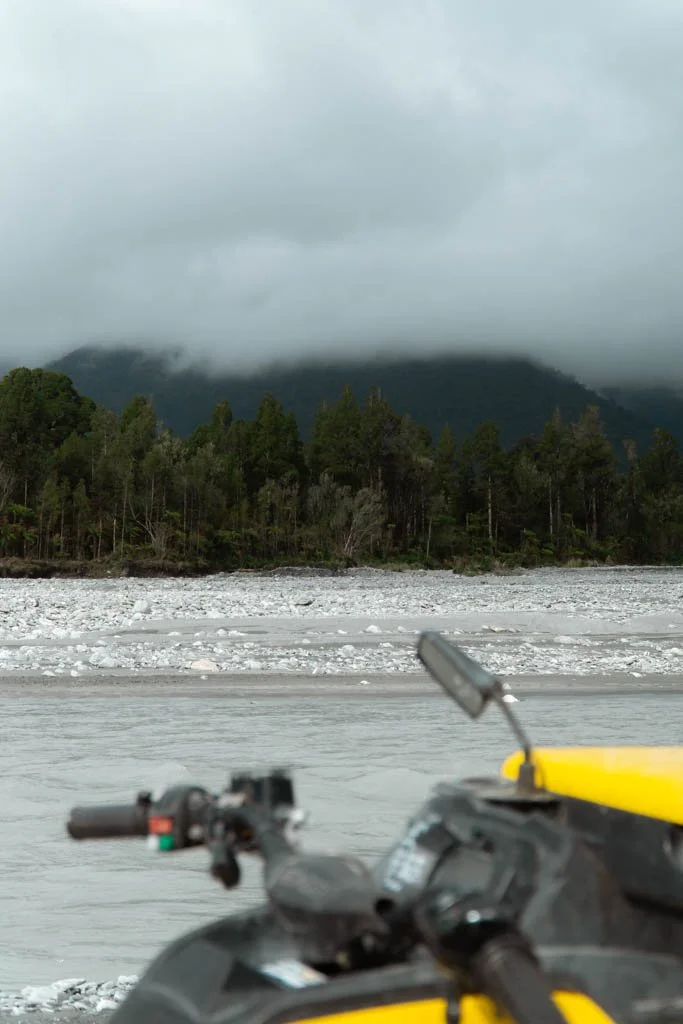
Hooning around on quad bikes is the ideal activity on a rainy day in Franz Josef, when hikes and heli tours aren’t an option. The puddles add to the fun – you’ll be kitted out in waterproof clothing from head to toe, and encouraged to kick up a bit of mud.
If, like me, you’re fairly tentative with a quad bike, not to worry. Dale and his team are remarkably laid back and do a great job of making sure you’re comfortable with the bike and the terrain.
The details
Franz Josef Wilderness Tours were kind enough to host me on this trip — it’s not something I would normally choose for myself, but if you like quad bikes you’ll love this trip
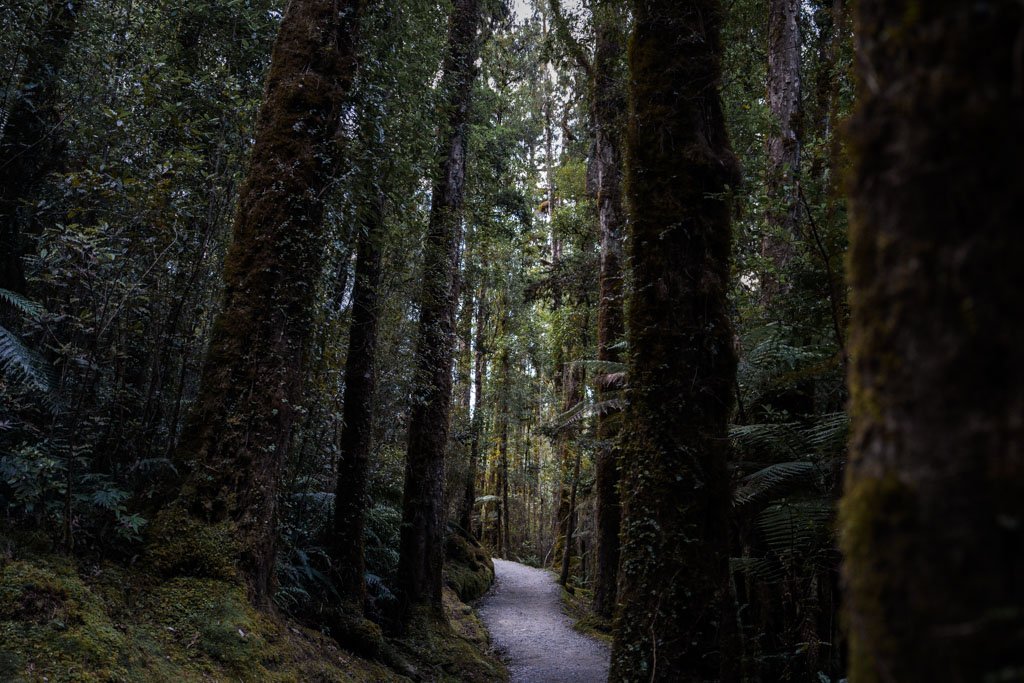
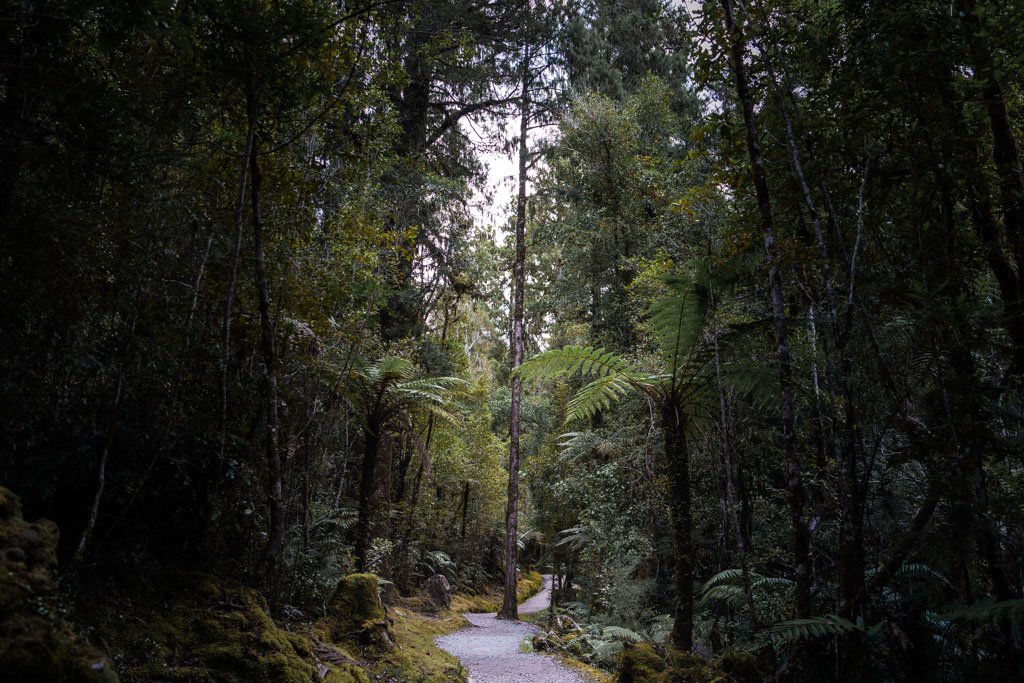
This 4.4 kilometre, 1.5 hour loop track is famous for the mirror-like qualities of the lake, which reflects views of Aoraki/Mount Cook on clear, still days, thanks to the glossy brown water stained a dark tea colour by humus of the forest floor. Your best chances of seeing the mirror effect are at dawn and dusk, but even if a breeze has ruffled the surface of the lake, it’s still a beautiful walk through old-growth forest.
I am sad to report, however, that recently the lake seems to have been overtaken by Canadian Geese. Although not officially labelled a pest, these huge, messy, noisy birds have been left to breed unchecked. There must have been between 300-400 of them on the lake when I last visited, making a huge amount of noise. This vast number of geese changed the whole experience for me.
It might still be worth visiting Lake Matheson, but for a quieter and lesser visited option, check out Gillespies Beach lagoon, where I didn’t see a single person (or goose).
Gillespies Beach lagoon
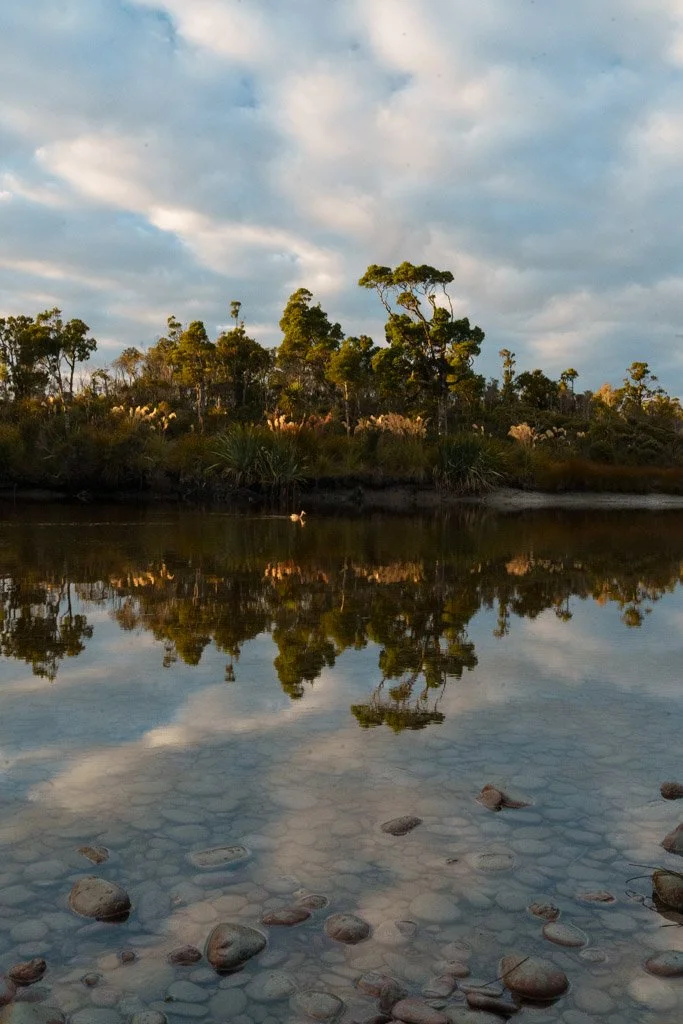
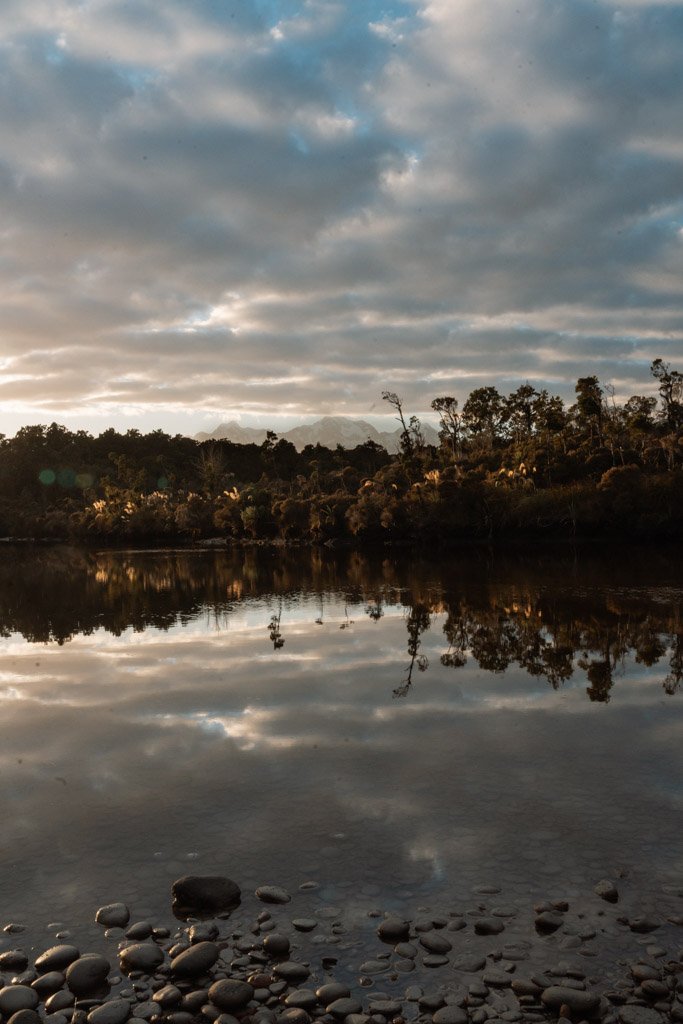
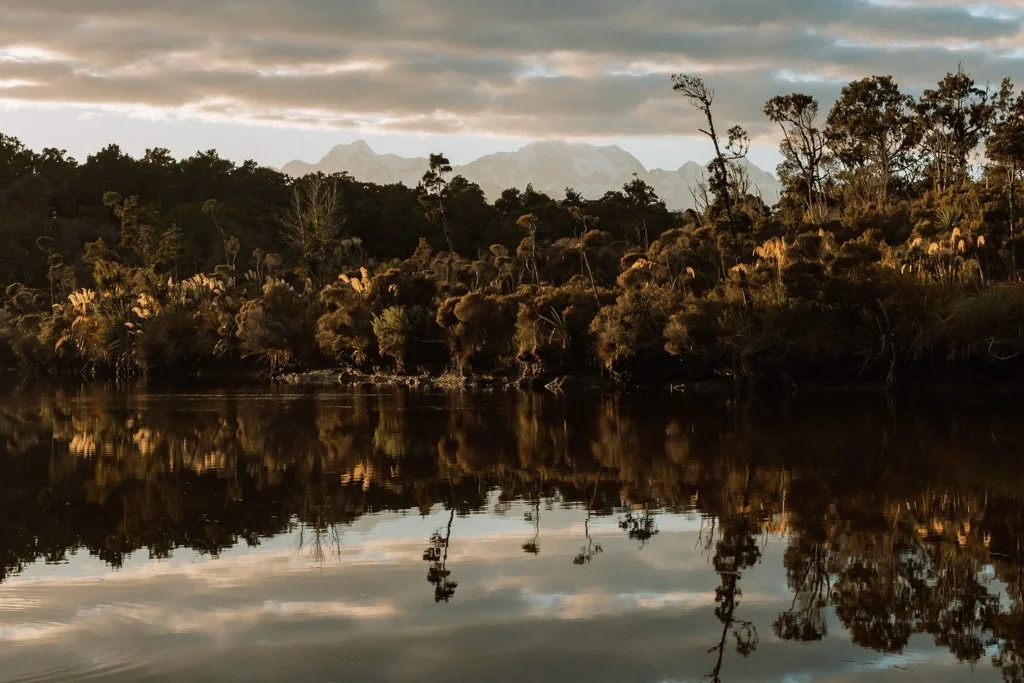
Gillespies Beach is about 25 minutes (17 kilometres) beyond Lake Matheson. The road out to the coast is unsealed and narrow in parts, but it’s a beautiful drive through native forest. The campground is an excellent place to spend a night if you’re in a campervan or motorhome.
From the Gillespies Beach car park and camping area, follow the Miners Tunnel Track along a low ridge of old dredge tailings. From the slightly raised trail, you can get some good views of the Southern Alps. Eventually the trail emerges onto the beach; follow the beach north until you reach the lagoon. A few minutes inland there’s a bridge across the lagoon. From there, you get good views of the mountains. The trail does carry on to the remote Galway Beach (3 hr 30 min return), but I admit I have never gone that far.

AUTHOR BIO
I’m a freelance travel writer from New Zealand with bylines in National Geographic Travel, Conde Nast Traveler, Travel + Leisure and more.
I’ve travelled up and down beautiful Aotearoa and I love sharing my recommendations for the best places to visit in New Zealand.
READ MORE