A South Island winter road trip itinerary
It’s cold and wet and dark, but the winter months in New Zealand can also be beautiful.
Hiking Key Summit in Fiordland in the middle of winter — cold, but beautiful
Disclosure: This article contains affiliate links, which means I may make a commission if you buy something via those links (at not extra cost to you).
I’m happy to spend the summer months road tripping around New Zealand, camping, hiking, surfing, and generally just being outside. But winter — winter and I have a more troubled relationship.
I’d rather be hiking in the Dolomites in August, rather than the Southern Alps.
Or that’s what I always thought, until a road trip around the South Island in the winter of 2025, which changed my mind completely.
II don’t ski, or snowboard, or do any snow sports at all, but I have been enjoying going on winter walks in snowy and icy landscapes.
I wanted to share a recent winter road trip itinerary, in case it’s useful for getting ideas for where to go and what to do. I’ll try to add in as much practical information as possible along the way.
This is by no means the only winter itinerary you can do in New Zealand, but I hope it’s a good starting point if you’re looking into your own winter trip.
A few things I found handy during this winter road trip
My Black Diamond microspikes (I have the Black Diamond Access Spikes) came in handy on walks in Aoraki/Mount Cook, and have been great for other winter walks in Tongariro National Park as well.
I have the Rab Electron Pro puffer jacket which kept me warm when it was below zero. One warm, insulated jacket like that one works for both outdoorsy activities and walking around town.
I have the Patagonia Marsupial fleece and really came to love it on this trip — it kept me warm, and the pockets are perfect for stashing things on winter walks (like gloves, when I got moving and warmed up).
A warm woollen beanie and warm gloves were also essential (I use fingerless gloves so I can use my camera more easily, and that was sometimes a little chilly).
My two-week winter road trip itinerary
Day 1: Fly into Christchurch, pick up a rental car, and head to Maruia Hot Springs
Day 2: Head to Punakaiki on the West Coast for a night
Day 3-5: Walk the Paparoa Track, one of New Zealand’s Great Walks
Day 6: A hike near Hokitika, then a drive through Arthur’s Pass
Day 7: Drive to Aoraki/Mount Cook to hike and spend a night
Day 8-10: Drive to Queenstown, spend a few days visiting wineries and eating
Day 11: Visit Milford Sound
Day 12: An overnight hike on the Hollyford Track
Day 13: A day hike to Lake Marian
Day 14: Fly home from Queenstown
Day 1 | Maruia Hot Springs
Drive time: 2.5 hours
Start your road trip in Christchurch; the airport makes Christchurch a key entry point to the South Island. You could stop for the night if you’re arriving late, but if timing allows, I would pick up a rental car and head straight out of town. Christchurch is a nice enough place, but when time is limited I much prefer to spend every precious night in the South Island outside of larger towns.
One of my favourite winter destinations in the South Island is Maruia Hot Springs. The naturally thermal springs are found in Lewis Pass, at the foot of mountains blanketed in darkly atmospheric beech forest.
Staying overnight at Maruia entitles you to 24/7 access to the hot springs. I stayed in a glamping pod and loved bathing in the springs in the afternoon, later at night under the stars, and first thing in the morning.
Moody winter weather only adds to the wild surrounds, and the hot spring facilities include a sauna (looking out at the forest) and a steam room.
Day 2 | Punakaiki, the West Coast
Drive time: 2.5 hours
The road from Charleston to Punakaiki is one of the best drives in New Zealand, with rocky beaches on one side and impenetrable forest and hills on the other.
On the edge of Paparoa National Park, Punakaiki is a small village famous for unusual rock formations and blowholes carved out of soft limestone by heaving waves. The short walk around the pancake rocks is the main attraction, but it’s worth sticking around Punakaiki for at least a night, to enjoy more coastal walks or trails in the national park.
The coastline around Punakaiki is beautiful, with rich rainforest and bottle green rivers swirling out of limestone gorges. A subtropical microclimate makes Punakaiki feel a little apart from the rest of the West Coast, with lush rainforest dense with nikau palms cladding the steep rock walls. It also means that temperatures stay mild, even in winter.
One night in Punakaiki is generally enough. Even if you arrive sometime in the afternoon, you should have time to fit in the Blowholes walk (a 30 minute loop) and the Truman Track (30 minutes return).
Activities
Stay
Punakaiki’s remoteness means it’s a great area to search for quirky and unique holiday homes. Here are a couple I have loved:
Day 3 | Hokitika
Drive time: 1 hour 15 minutes
We opted to hike up to Mount Brown hut, but there are other walks close by. The Hokitika Gorge is a lovely walk which is much more suitable for most people.
After the hike, we headed back to the east coast via Arthur’s Pass, where I couldn’t resist stopping for another walk.
Day 7 | Aoraki/Mount Cook National Park
Drive time: 2.5 hours
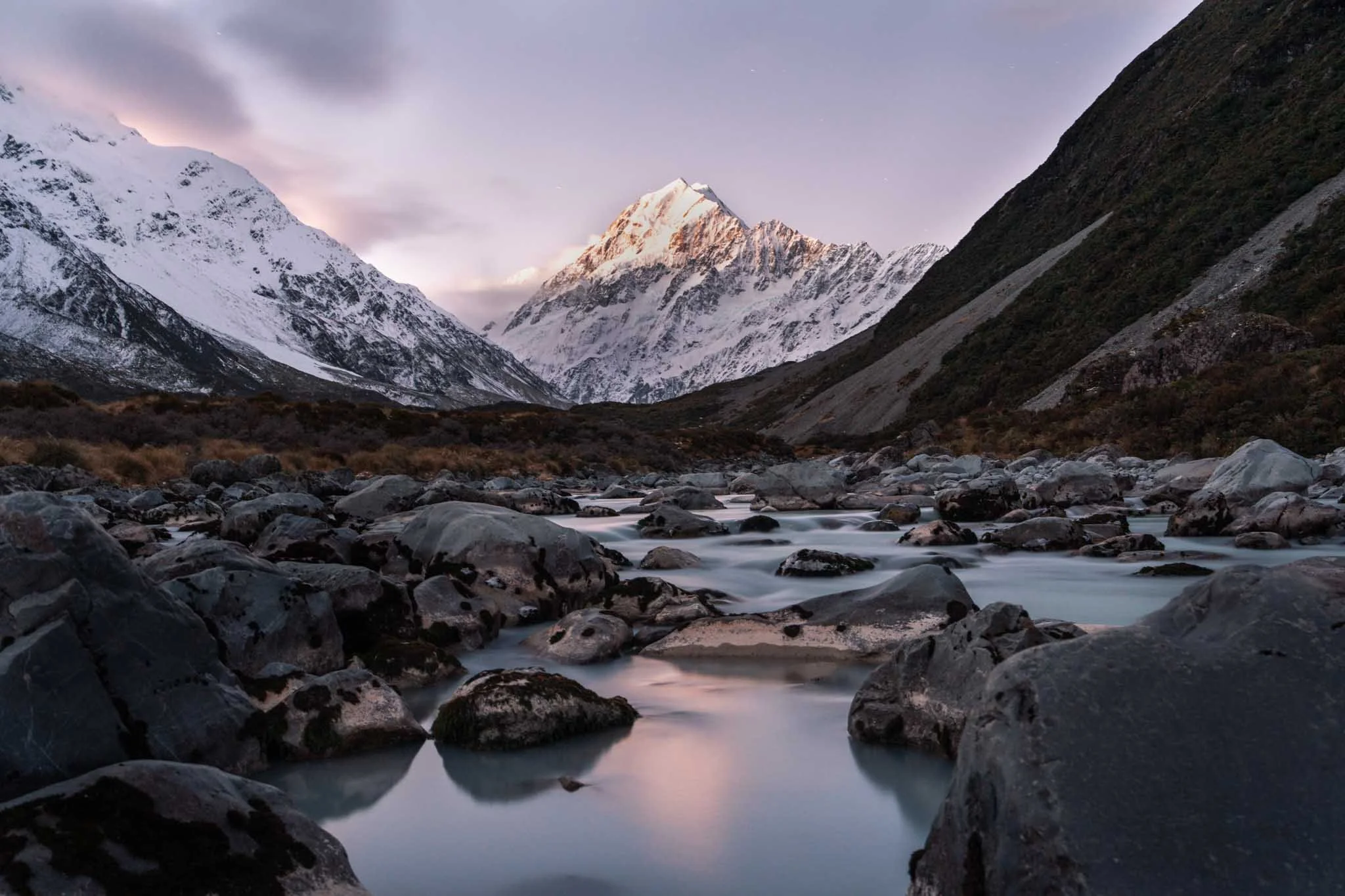
Aoraki/Mount Cook — the cloud piercer — is New Zealand’s highest peak. The national park lying at the foot of Aoraki is quite possibly the single most beautiful place in New Zealand, a land of rock and ice. The sound of rock and ice falls is almost always present, and even in summer ice bergs drift in the glacial lake below Aoraki.
For somewhere so wildly and dramatically beautiful place, Aoraki/Mount Cook National Park is surprisingly accessible, even in winter. There are a handful of walking trails to choose from, depending on your fitness and enthusiasm, and the winter conditions. One night and the better part of two days is usually enough to see the highlights of the national park.
I have hiked up to Mueller Hut in winter (with the appropriate gear) but that is highly dependent on weather and the snow conditions. There are lower altitude trails that are possible in winter, such as Kea Point, Hooker Valley, and the Tasman Lookout. If you’re unsure about conditions, you can stop by the DOC visitor centre to ask for advice.
Activities
Stay
I enjoyed Aoraki Alpine Lodge (although any available room in Mt Cook Village works)
Day 8 | Queenstown
Drive time: 3.5 hours
Although in summer I recommend stopping in Wanaka, in winter Wanaka often suffers from the inversion; a blanket of low, grey cloud that settles over the town and doesn’t move, sometimes for weeks on end.
The inversion forms when a high pressure weather system pushes cold, moist air downward, trapping it in low-lying basins. Queenstown, although only an hour’s drive from Wanaka, manages to escape the inversion thanks to slightly different terrain.
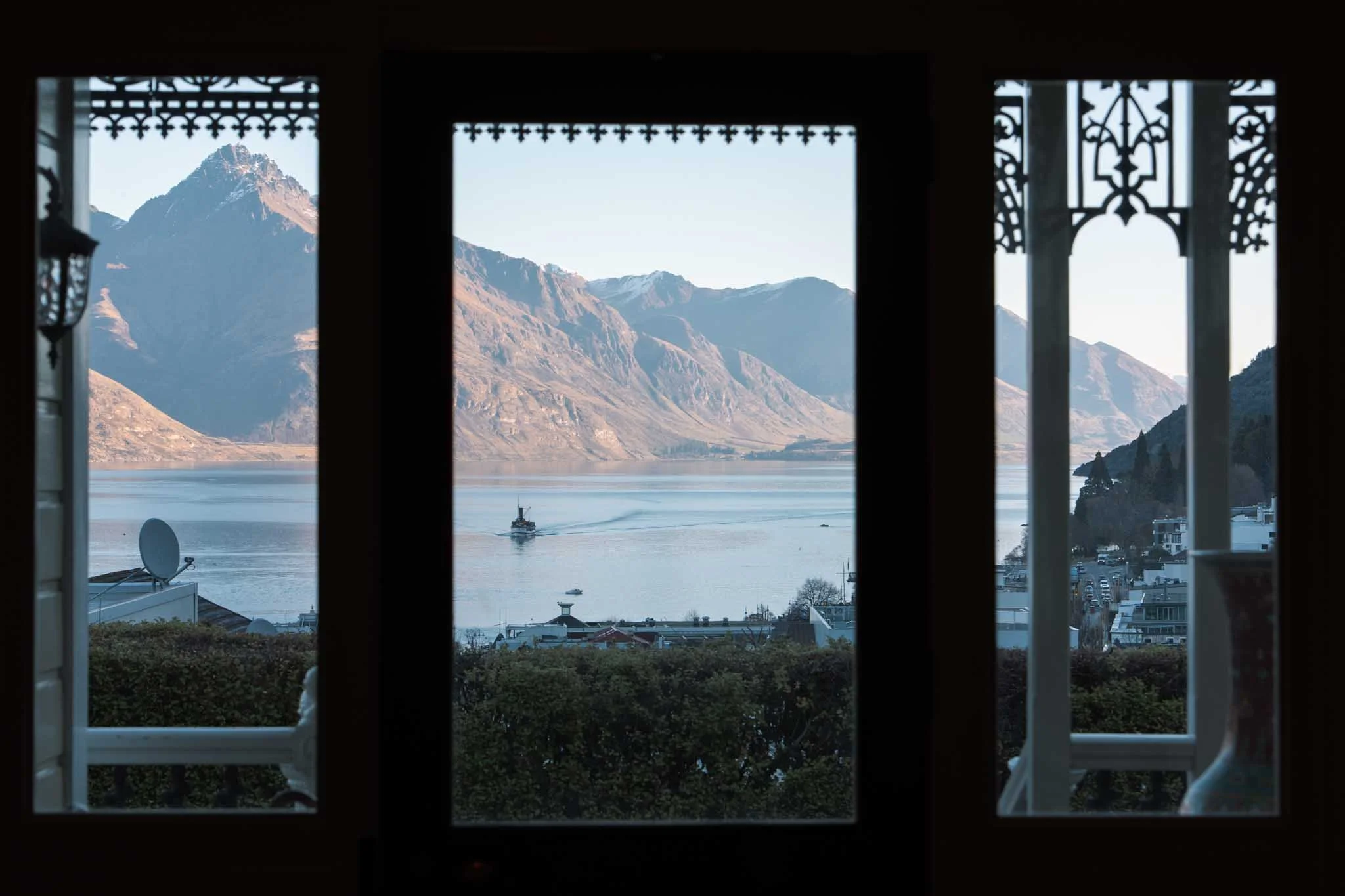
So, after Aoraki, I would head straight to Queenstown. The adventure capital of the South Island is just as lively during winter as it is in summer, with snow sports in full swing.
Stay
Scenic Suites Queenstown (Queenstown centre)
Driftaway Queenstown (Frankton)
Millbrook Resort (Arrowtown)
Day 9 | Queenstown
Activities
Skiing at one of Queenstown’s ski fields; The Remarkables, Coronet Peak, or Cardrona
Take a winery tour
Visit Arrowtown
Warm up at The Bathhouse
Day 11 | Milford Sound
I don’t recommend driving to Milford Sound in winter. The road to Milford Sound can be particularly treacherous — many parts of the road don’t get sunlight until well into the day, due to the high mountains and thick beech forests rising around the highway. As a result, slippery black ice can be present. If you do drive, set off mid-morning and go slowly, and carefully.
A better option is to fly from Queenstown to Milford Sound. With a calm, settled day, you’ll be able to see the snowy mountains and glaciers in their full glory. And skip the road altogether.