This road trip covers my favourite places in the North Island, in two weeks
Disclosure: This itinerary contains affiliate links, which means I make a small commission (at no extra cost to you!) if you make a purchase via those links. Thanks for your support!
The North Island is packed with things to do – hot springs, glow worms, volcanoes – but everything is somewhat spread out. That’s what makes it ripe for a road trip. The freedom of your own set of wheels means you can enjoy coastal roads, remote cabins tucked into native forest, and as many detours as daylight allows.
This road trip focuses on the central and western parts of the island; Northland is a region unto itself, that takes at least four days – and ideally a week – to explore. So, unless you have the luxury of time, there’s a good chance you’ll head south of Auckland on your North Island travels.
For a shorter trip, you could trim out the Coromandel Peninsula, but with two weeks at your disposal it’s easy enough to work it in. Other highlights, which make for a logical route, are Hobbiton, Rotorua with its simmering geothermal activity, Tongariro National Park with its spectacular volcanic landscapes, and the glow worm caves of Waitomo. To that I have added in Taranaki, a region I’m particularly fond of; but, if you’d prefer to slow this whole trip down, you could also drop that corner of the island and spend more time around the centre.
It’s fairly natural on a New Zealand road trip to move most days. In many places, one night is all that’s needed to see whatever there is to see. Spending two or three nights in one place is needed occasionally though, if only to catch your breath and relax for a moment. You can of course settle in anywhere (and a Canopy Camping glamping escape can be a good opportunity for that, as they often have a two night minimum) but the easiest places to stay for longer are Rotorua (most notable – the town is an activity hub), New Plymouth, and Hahei, on the Coromandel Peninsula.
In this two week North Island itinerary, I’ve included some of my favourite places to visit and things to do. I’ve tried to bring together off-the-beaten-track destinations that I love, as well as the popular attractions. I hope this gives you inspiration for exploring Te Ika-a-Māui.
Rent a car
To see the best sights in the North Island, you’ll need a rental car. Compare prices on Discover Cars »
14 day North Island itinerary overview
Day 1: Auckland
Day 2: Waiheke Island
Day 3: Road trip around the Coromandel Peninsula to Hahei
Day 4: Coromandel
Day 5: Make your way to Matamata
Day 6: Visit Hobbiton, then on to Rotorua
Day 7: Rotorua
Day 8: Rotorua to Taupo
Day 9: Tongariro National Park
Day 10: Drive Surf Highway 45 to New Plymouth
Day 11: Hike in Taranaki National Park
Day 12: Head north to Waitomo
Day 13: Make your way to Raglan
Day 14: Back to Auckland
Day 1 | Find your feet in Auckland
Auckland is unlikely to be your favourite stop on your North Island itinerary, but seeing as most international visitors arrive here after a long flight (often across mind-boggling date lines) it makes sense to stop for a night.
Auckland city has pockets of beauty, and plenty to offer on the dining front; the main challenge is that it can take time and perseverance to find parts of the city to love.
For a flying visit, your best bet is to find a hotel somewhere central (ideally around Britomart or the waterfront). From there, you can take ferries to islands in the gulf — Waiheke being the star of the show — and spend an evening at one of the Auckland’s best restaurants.
If you’d prefer to skip Auckland city altogether, but don’t want to drive after a long flight (a wise choice), an excellent option is to head straight to Waiheke. The island is easy to reach; Uber from the airport to the ferry terminal, and hop on the next ferry, they run at least every hour.
Once on the island, you can get to your accommodation (look for somewhere in or near Oneroa) via taxi, then get around on foot or by public bus. Waiheke feels worlds apart from the centre of Auckland, and the combination of sea views, white-sand beaches, and glossy vineyards can mean a thoroughly enjoyable way to recover from jetlag.
Stay
Most hotels are clustered in the city centre, around Queen Street and the Viaduct. While the immediate areas around your hotel might not be the most inspiring, these areas are very convenient to transport (the ferry terminal for Waiheke is right at the bottom of Queen St.) and you will be walking distance to many restaurants.
If you prefer a quieter neighbourhood with less of a concrete jungle vibe, check out stays in Ponsonby or Grey Lynn.
Day 2 | Visit Waiheke Island
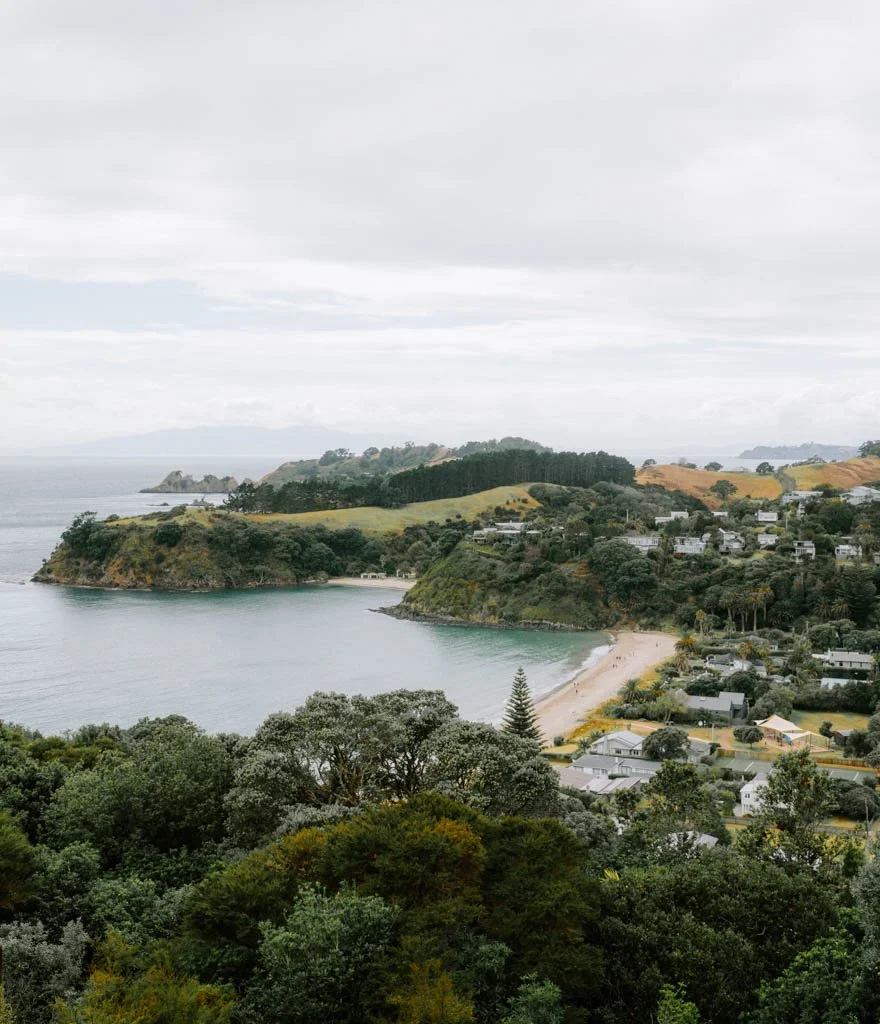

A day trip to Waiheke Island is easily one of the best things to do in Auckland. And not just for tourists; locals love to head over to Waiheke too, whether it’s for a day trip, an event, or the occasional weekend escape.
Back in the 70s, Waiheke was a hang out for hippies and hermits more at home in the laid back island life than the fast pace of the city 35 minutes across the water. The proximity to the city and stunning beaches meant Waiheke was never going to fly under the radar for long, though. The first grape vines were planted in 1977, and in the time it took for them to get established, Waiheke transformed into a luxury holiday destination, complete with multi-million dollar homes overlooking the sea, fine dining restaurants and sleek cellar doors.
Despite the very visible wealth on Waiheke, there are still traces of the bohemian enclave that was. The island still depends on tank water, you’ll still see healing crystals for sale at the Ostend market, and if you wander to the wrong part of some of the beaches, you run the risk of running into fully nude locals.
As a visitor, the magic of Waiheke lies in dipping into both sides of the island. The wine is a big drawcard and sampling syrah is a must do – but so is going for a walk in native bush and picnicking on the white sands of the northern shores.
Waiheke is very easy to reach from Auckland. Ferries leave frequently (at least every hour) from downtown Auckland, and it's only a 40 minute trip across to the island. Most sailings are met by buses, tours, taxis and shuttles at the Matiatia ferry terminal on Waiheke, where you can also find maps and information. It’s chaos initially, but the crowds quickly disperse.
Oneroa, two stops on the public bus or a 20 minute walk uphill from the Matiatia ferry terminal, is the largest village on the island. Here you’ll find a few upmarket boutiques with beautiful homewares, a small supermarket, and a handful of restaurants. Further east is Ostend, a village centre that is a little less glossy than Oneroa, with a more lived-in feeling. Continue on the ‘main’ road and arrive at Onetangi, a long, beautiful beach, a little more removed from the hustle and bustle of Oneroa. This is a lovely area to stay if you plan on exploring more of the island.
Activities
Take a scenic wine tour with Kiwi Connect (the tour operator I recommend)
Day 3 | Road trip from Auckland to the Coromandel Peninsula
Drive time: 2.5 hours from Auckland to Coromandel Town

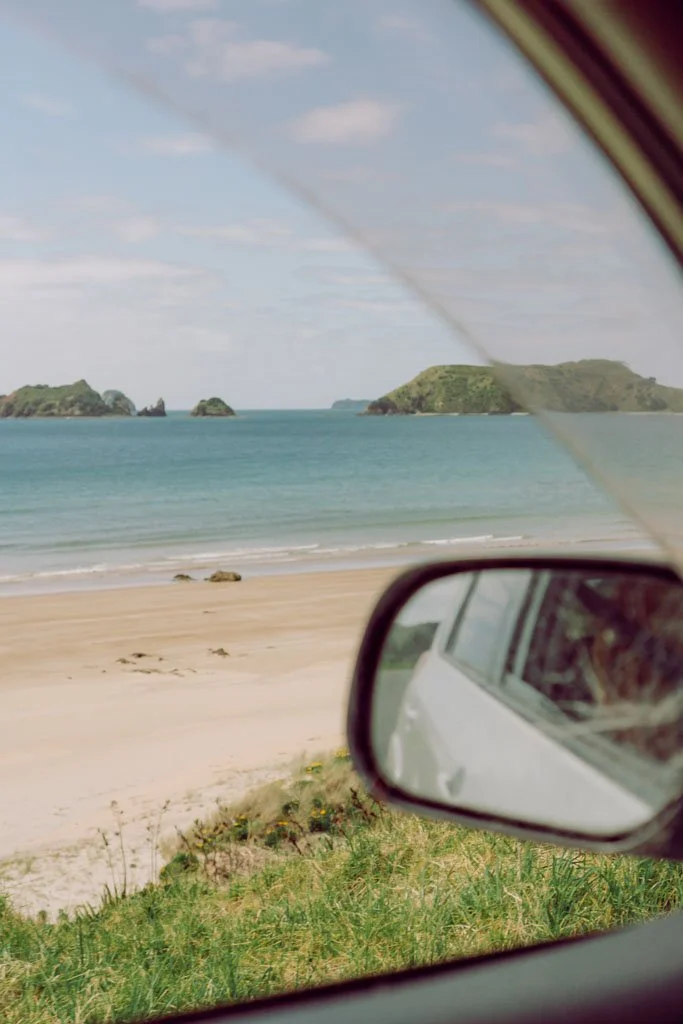
It takes around two hours to reach the Coromandel Peninsula from Auckland; you’ll hit Thames first, an old gold mining town, and from there you can head up the west coast of the peninsula.
The Waiomu Beach Cafe is a colourful lunch stop with good food. From there, continue driving slowly up the winding coast to Coromandel Town. Around Coromandel Town (and further north on the peninsula, if you’re game to drive on the narrow gravel roads) are pockets of the wondrously creative and alternative artists and thinkers.
A true highlight of the Coromandel is Driving Creek Railway, a small train through native bush built by the late artist, engineer and conservationist Barry Brickell. It’s worth making time for the small, quirky train. Driving Creek also serves as a ceramics studio, and the shop is well worth a browse.
Coromandel Town is a good place to stop for the night; there are some unique places to stay around the town, and enough places to eat to make it convenient.
Activities
Stay
Itinerary notes
You could push on to Hahei or Whitianga, if you’d prefer to spend two nights on the Coromandel in the same place (some of the more interesting accommodation options have a two night minimum. Whitianga is the easiest place to catch a boat to explore the coastline, and Hahei is possibly the most scenic town on the Coromandel.
Alternatively, you could spend two nights in Coromandel town and take the opportunity for a day trip up to Port Jackson and the Coromandel Coastal Walkway. That adds a decent amount of driving, but it will take you well and truly off the beaten path (the polar opposite to Cathedral Cove and Hot Water Beach, which are firmly on the tourist route). I love the very far north of the Coromandel, but it does require nerves of steel to get up there — the one-way road is narrow, steep, and gravel for most of the way, with sheer drop offs.

FEATURED STAY
Wairua Rainforest River Retreat
Stay in native forest, with a forest bathtub, hot tub for stargazing, and a fire pit. Glorious. I cannot recommend this place highly enough.
Day 4 | Visit Cathedral Cove and Hot Water Beach
Hot Water Beach
Cathedral Cove walkway
Setting out from Coromandel town in the morning, you could stop by New Chums Beach if the tide is low. A short walk leads over a small headland to the beach. Another detour option is to head up and over the hill beyond Luke’s Kitchen in Kuaotunu (an almost obligatory stop on a Coromandel road trip, given how few other eating options there are). The road to Otama Beach and Opito Bay is true-to-Coromandel-type (steep, twisty, and gravel in patches) but the reward is two stunning beaches which are usually empty of people. From the southern end of Opito beach, climb the steps to reach the top of an old Māori pa — defensive ditches are still visible — and enjoy views back across the bay.
Stop by Luke’s Kitchen on your way back if you need sustenance, before carrying on south.
Although Hahei is a prettier town, with a better beach, more boat trips leave from Whitianga. You could stop in Whitianga on your way through if you’d like to explore the coast from the water. I highly recommend choosing Cave Cruzer, a one-man show run by Brian, who has a deadpan sense of humour and a love for throttling his boat into spins. The boat tours all follow a similar route, so it’s Brian’s personality that makes his tour stand out (and some of the others, like the Glass Bottom Boat, feed the fish in the marine reserve. I don’t agree with that approach, so wouldn’t recommend joining their tours).
If you would prefer to leave from Hahei, the zippy little Hahei Explorer is also a great option, and follows more or less the same route as the boats leaving from Whitianga
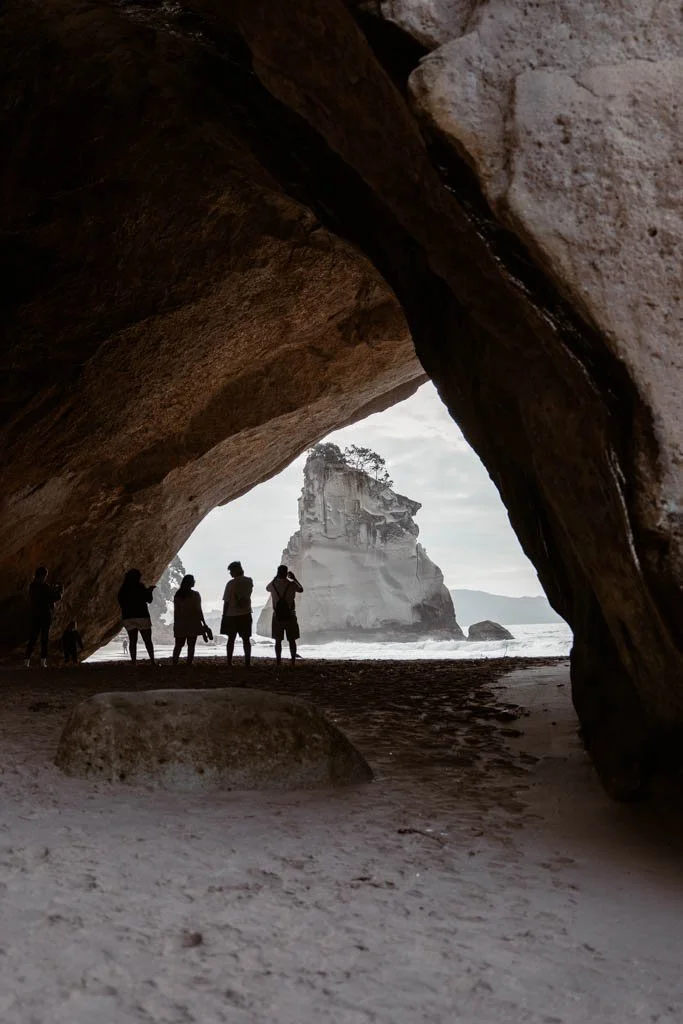
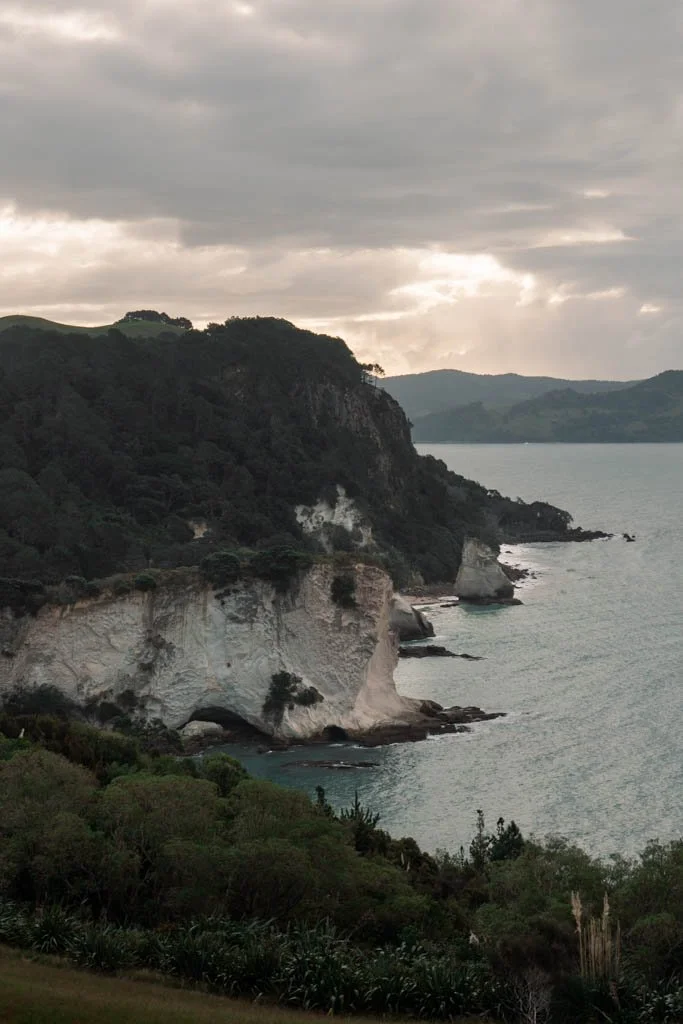
Alternatively, you can walk to Cathedral Cove. The walkway does get busy in summer, so if you’re visiting in high season I would give it a miss (try Lonely Bay, or simply Hahei Beach instead). There’s no parking at the trailhead; you can either use the park and ride service in Hahei, or park by the beach and walk the extra 30 minutes uphill to the track start. The rock formations do make Cathedral Cove a pretty spot, just be prepared to share it.
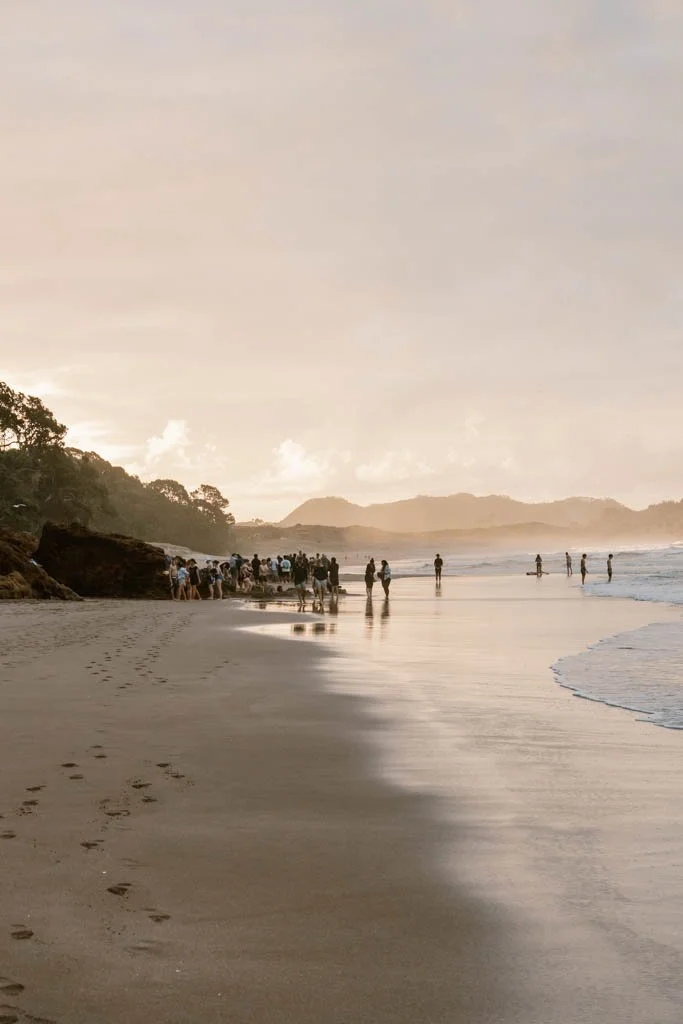
Hot Water Beach is also worth checking out for the novelty value. Geothermal activity under the sand in one specific spot means hot springs well up from under the ground. This spot is only exposed at low tide, so make sure you’re there an hour or two either side of the low tide. You can dig your own little pool in the sand and wallow around in scalding hot water, cooking yourself alongside the dozens of other people doing the same thing. It’s not quite a relaxing bathing experience, but it is unique.
Activities
The Lost Spring is a beautiful adults only naturally thermal hot spring, right in the middle of Whitianga.
Walk to Cathedral Cove (40 minutes one way) or Lonely Bay (5 minutes, steep steps)
Day 5 | Make your way to Hobbiton, in the heart of rural Waikato
Drive time: 2.5 hours
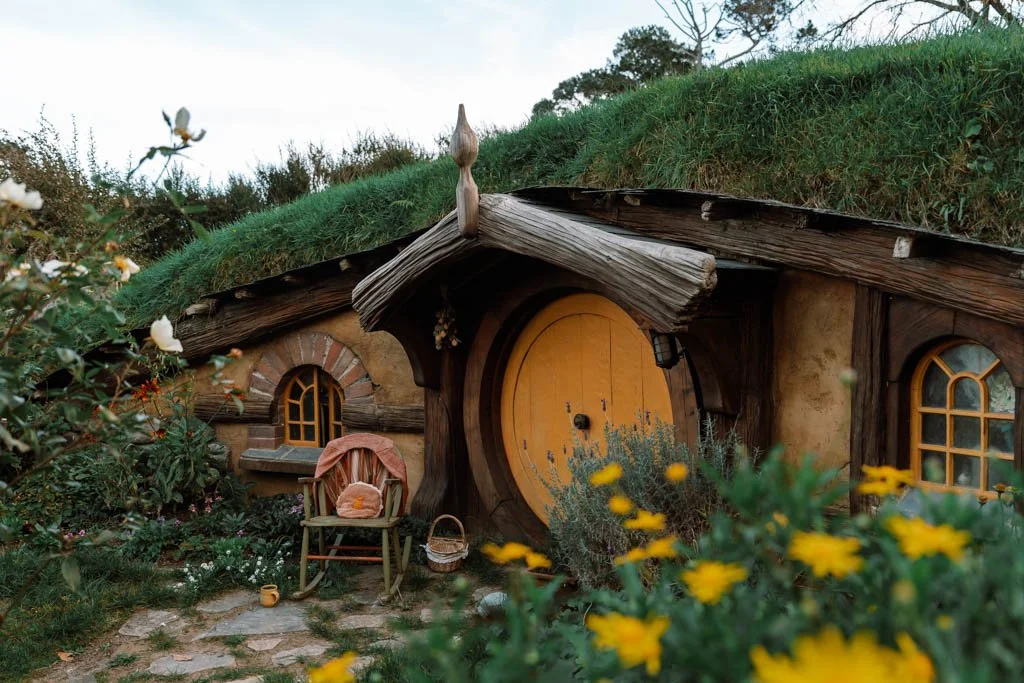
From the Hahei area, set out towards the rolling green hills around Matamata, most famous for providing the setting of the Shire. It takes around 2.5 hours to drive over that way, mostly through dairy farmland with few stops to make on the way.
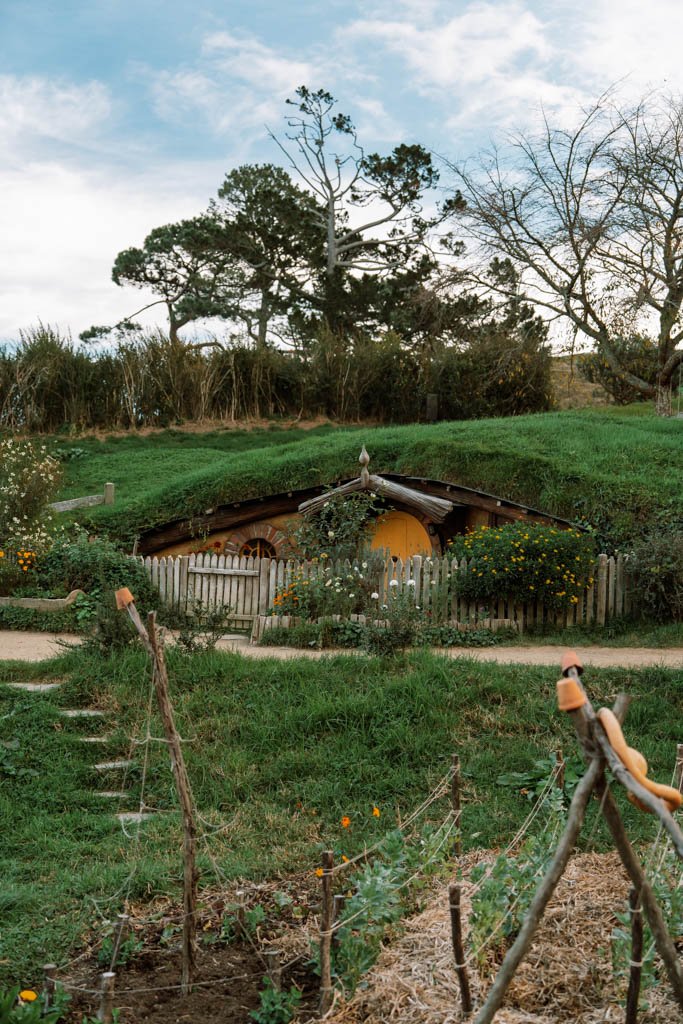
Hobbiton, although a very structured tourist stop, is still wonderful. If you’re organised enough to book in advance, and you have a little luck on your side, I recommend going for the evening banquet tour. If that doesn’t pan out, aim for the Second Breakfast tour on the following day, which is a little easier to get bookings for. If you end up going for the signature movie set tour, it’s still a lovely little excursion, if somewhat crowded.
One of the things I enjoyed most about visiting Hobbiton, though, was the chance to stay in this bucolic part of the North Island. It’s easy to see why this area was chosen for an idyllic part of Middle Earth. The Blue Spring (about 30 minutes south of Hobbiton) is an exceptionally pretty stream winding through green fields. Along that same river are cabins to rent (I loved the rustic nature of the Blue Spring Cabin).
Checking into a rural Airbnb somewhere near Hobbiton, and relaxing into slow pace of life there, is thoroughly enjoyable.
Stay
Itinerary notes
You can, of course, skip this stop altogether if you have no interest in Hobbits. Driving directly from Hahei to Rotorua means you can choose from the inland route through farmland, or the slightly longer, but more scenic road via the coast.
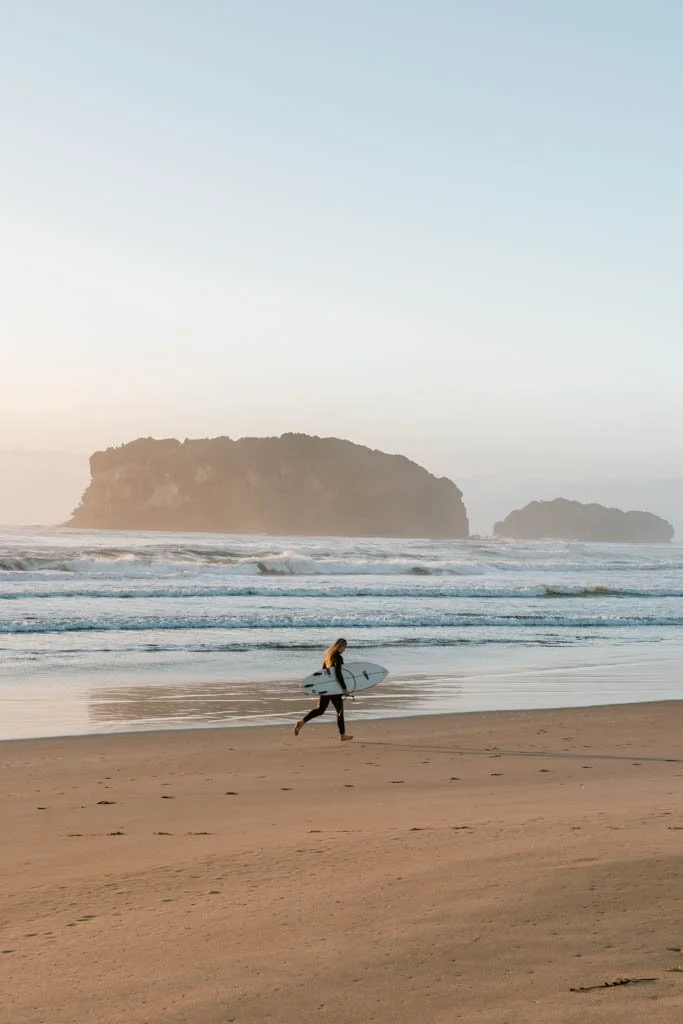
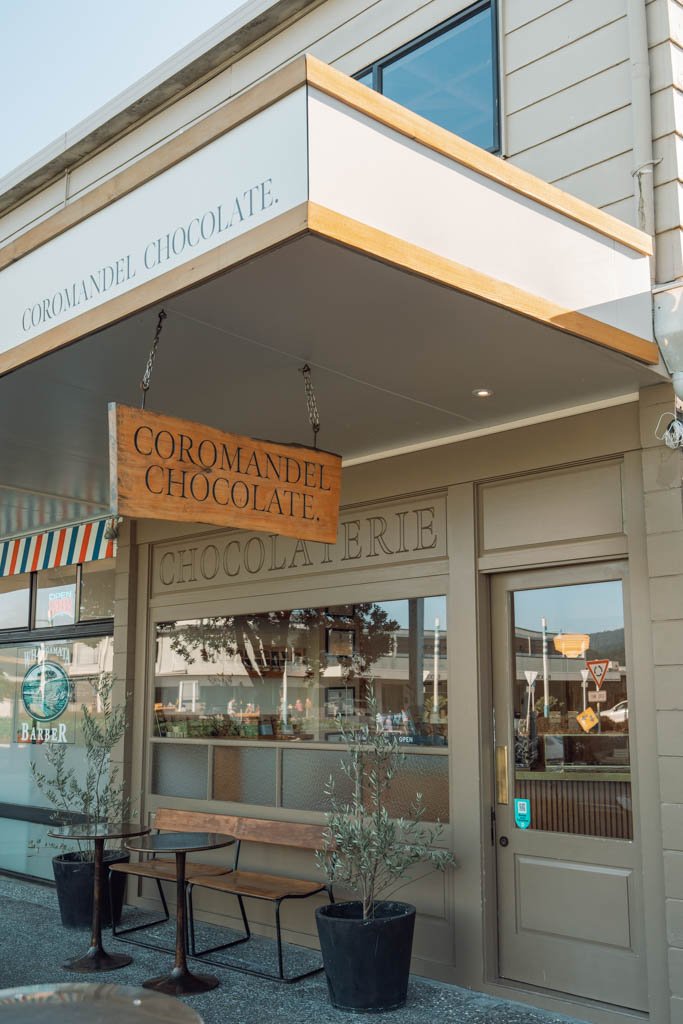
Along the coast route, you could stop by Whangamata, a laid-back surf town with a few good coffee shops and a chocolate shop making what I think is the best chocolate in New Zealand. A little further on, Whiritoa is a pretty beach, and if you can be bothered making the detour Waihi Beach is another beautiful beachy stop with a funky cafe and music venue, the Secret Garden. The walk over to Orokawa Bay is also a good one for coastal scenery.
Day 6 | Make your way to Rotorua
Drive time: 1 hour

Visitors have been flocking to Rotorua’s thermal waters and volcanic wonders since the 1870s. Back then, many came to see the Pink and White terraces of silica deposits, which were destroyed in the 1886 Mt Tarawera eruption. The fabled terraces may be gone, but there are still plenty of natural wonders luring visitors to Rotorua.
Your first introduction to New Zealand’s most dynamic thermal area is likely to be a whiff of sulphur-rich air as you drive into town. Rotorua is built right on top of a geothermal system which sends steam up through storm drains, and makes mud pools bubble in public parks. One of the main reasons to visit Rotorua is to see a geyser, a colourful pool of acid, or steaming cliffs.
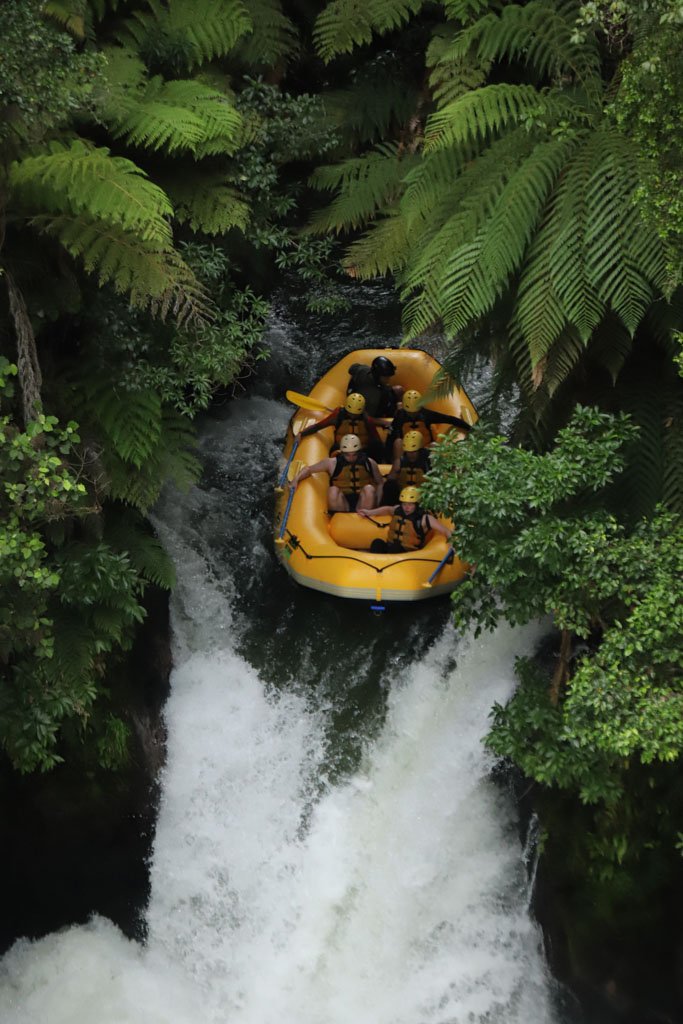
This geothermal activity, and rich Maori culture, are the main attractions in Rotorua, but the lakes and forest around the town mean it is also something of an adventure hub. There is plenty of zip lining and mountain biking to be done around the town, but my top adventure activity in Rotorua is white water rafting. The Kaituna River features the highest commercially rafted waterfall in the world; it’s also very beautiful.
For your first afternoon in Rotorua, you could dive straight into thrills (and possible spills) with Rotorua Rafting (my top choice because you get a free sauna after the experience), plus you can nip next door to Okere Falls Store for a post-rafting burger. Later in the evening, check out the Redwoods Nightlights (I recommend paying to skip the line if you want to do the actual walk; otherwise you can still see a lot from the ground).
Activities
Go glow worm kayaking (this can be a great option if you skip Waitomo caves)
Stay
Day 7 | Visit geothermal and cultural attractions in Rotorua
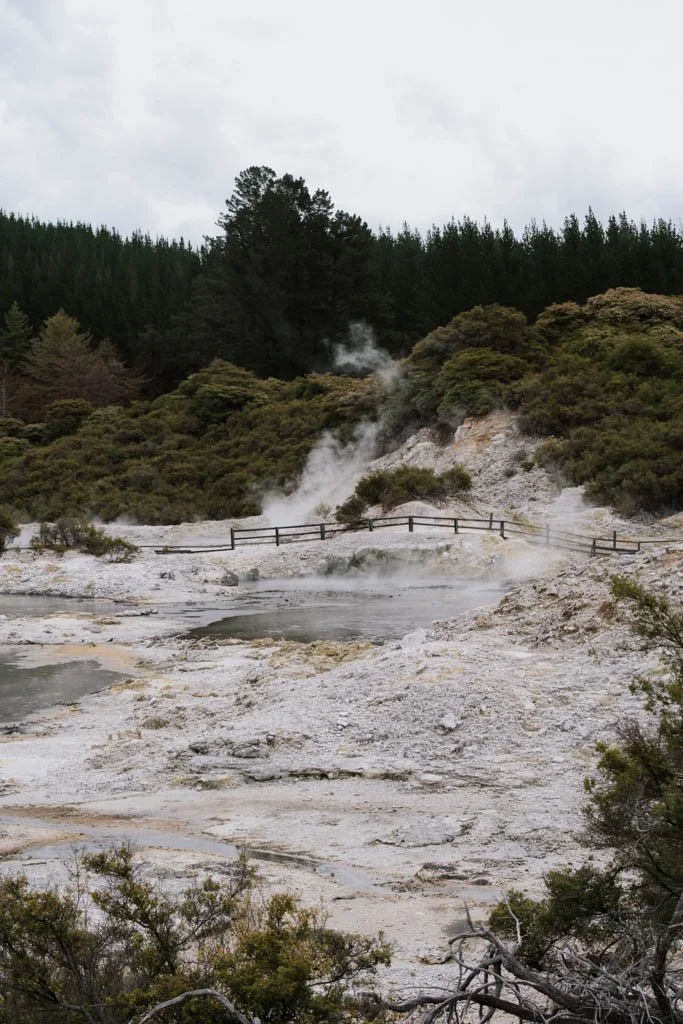
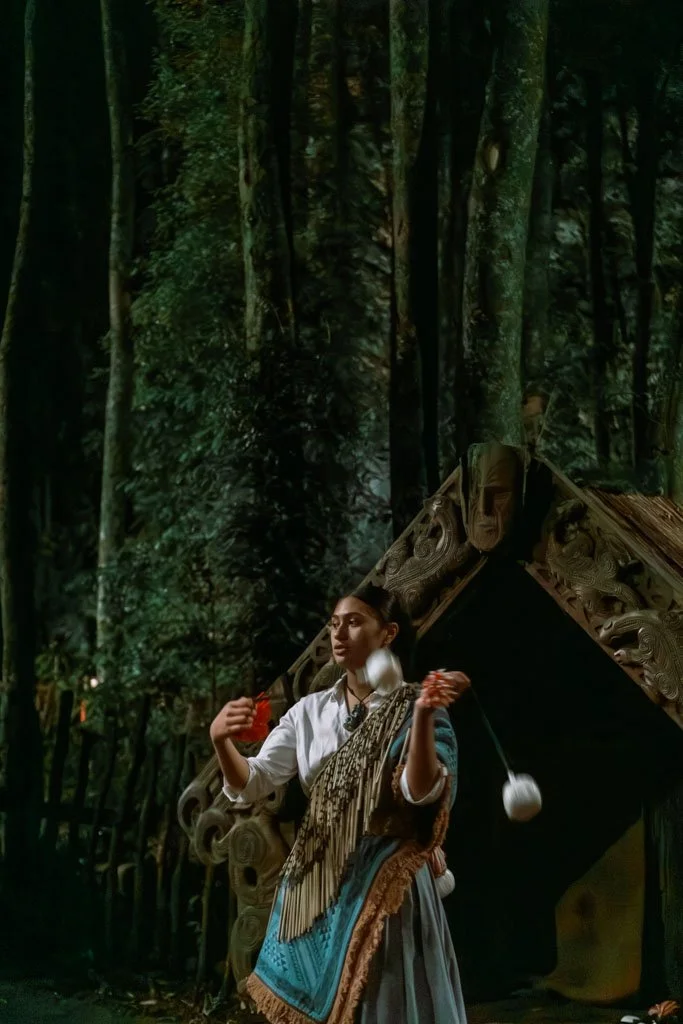
Rotorua is the most accessible place in New Zealand to get to know Māori culture. There are a range of activities on offer; you could spend a whole day with Whirinaki Forest Footsteps, or divide your time between Wai Ariki Spa or Hell’s Gate, before enjoying an evening activity – there are several that offer a dinner and a show style experience in the late afternoon. With Te Pa Tu, this looks like an evening tour of a ‘village’ (it’s more of a set than a living village) followed by a traditional hangi meal and performances, including a haka.
Activities
Enjoy a Māori guided forest tour with Whirinaki Forest Footsteps
Day 8 | Rotorua to Taupo

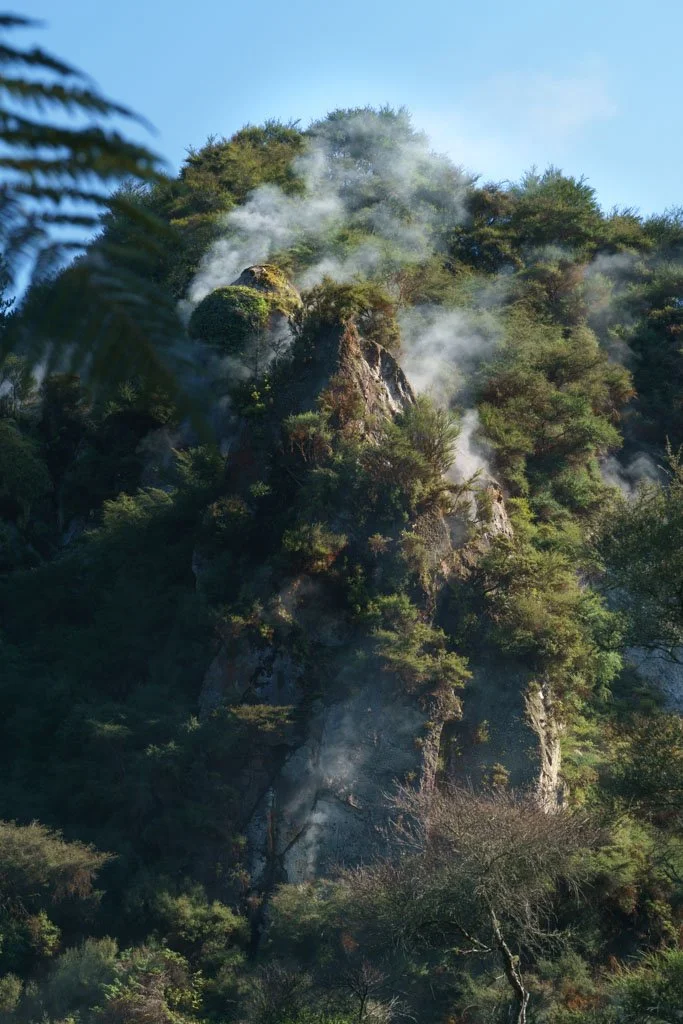
From Rotorua, the drive south towards Taupō (pronounced “toe paw”), a fantastically large lake, takes you right past several geothermal areas. Waimangu Volcanic Valley is more or less directly en route, as is the (free) Hot’N Cold stream. Orakei Korako is more of a detour off the Rotorua-Taupo road, but that’s part of its charm; it’s a quiet, peaceful park. If you like to escape crowds, it’s a great option (although if you’re torn between Waimangu and Orakei Korako, they have fairly similar features. Waimangu is a little more impressive because of the bright blue Inferno Crater).
Closer to Taupo, Huka Falls is an impressive but always busy waterfall lookout spot. It only takes 15 minutes to walk to the viewing platform and back. The thundering falls are a result of the Waikato River, normally 100m wide, being forced through a 15m wide canyon; the torrent of blue water is an astonishing sight. Just brace for crowds.
Taupo town is right on the edge of the lake, with views across to Ruapehu and Ngauruhoe. With plenty of places to stay and eat, it makes for a logical stopover before visiting Tongariro National Park (around 1 hour 20 minutes further south).
Stay
Itinerary notes
You could also carry on to Turangi, and stay at The Quarters. This means a shorter drive in the morning, before hiking (particularly useful if you’re planning on doing the Tongariro Crossing).
Day 9 | Tongariro National Park
Drive time from Taupo to Tongariro: 1 hour
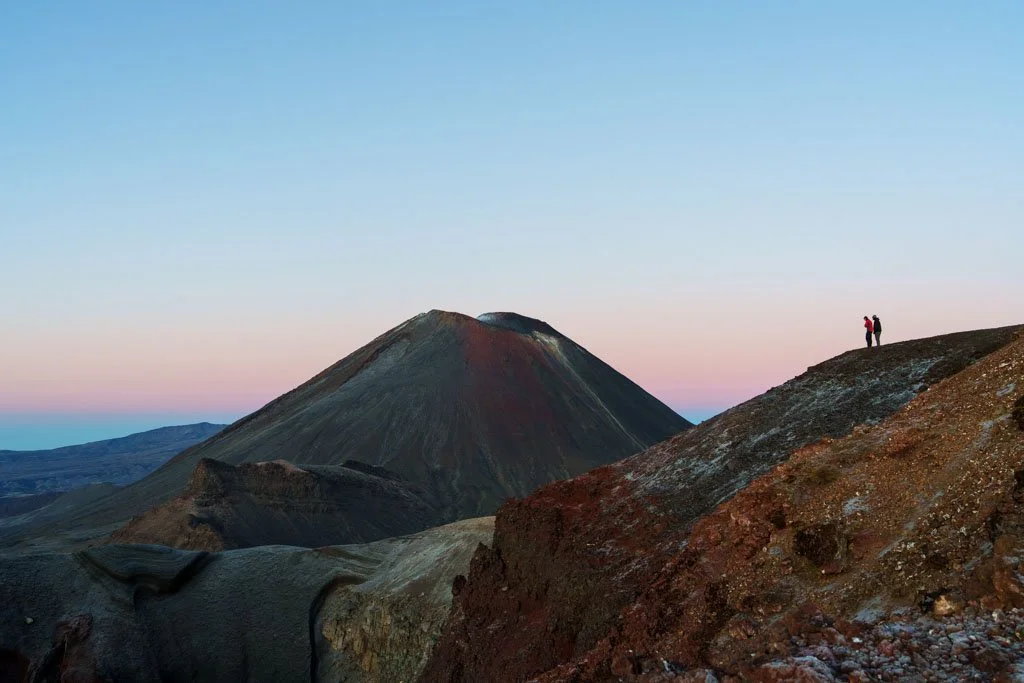
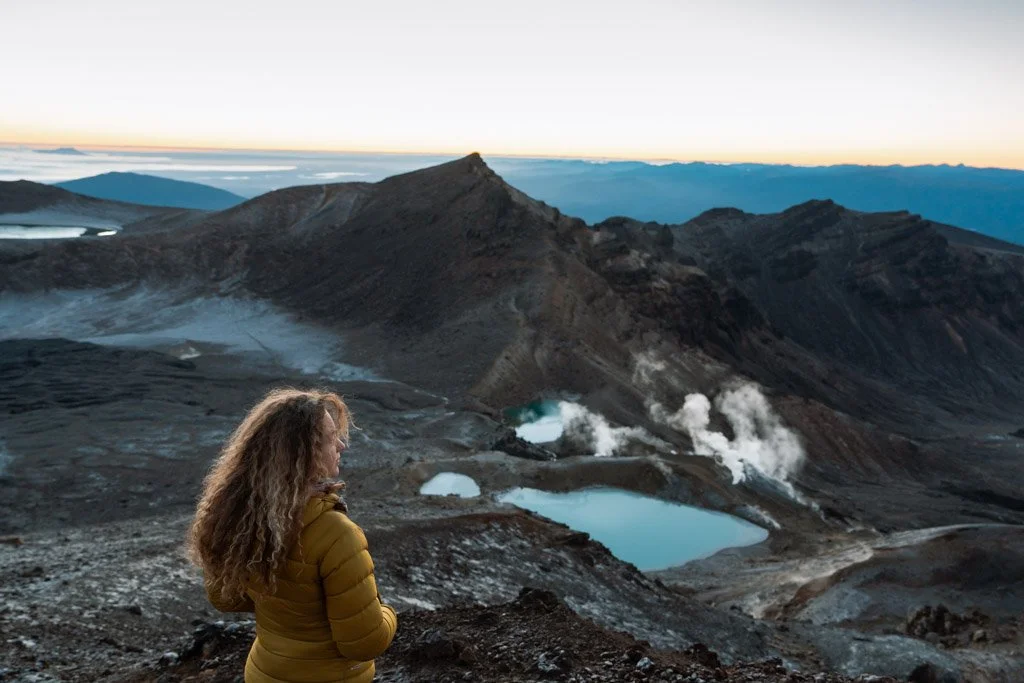
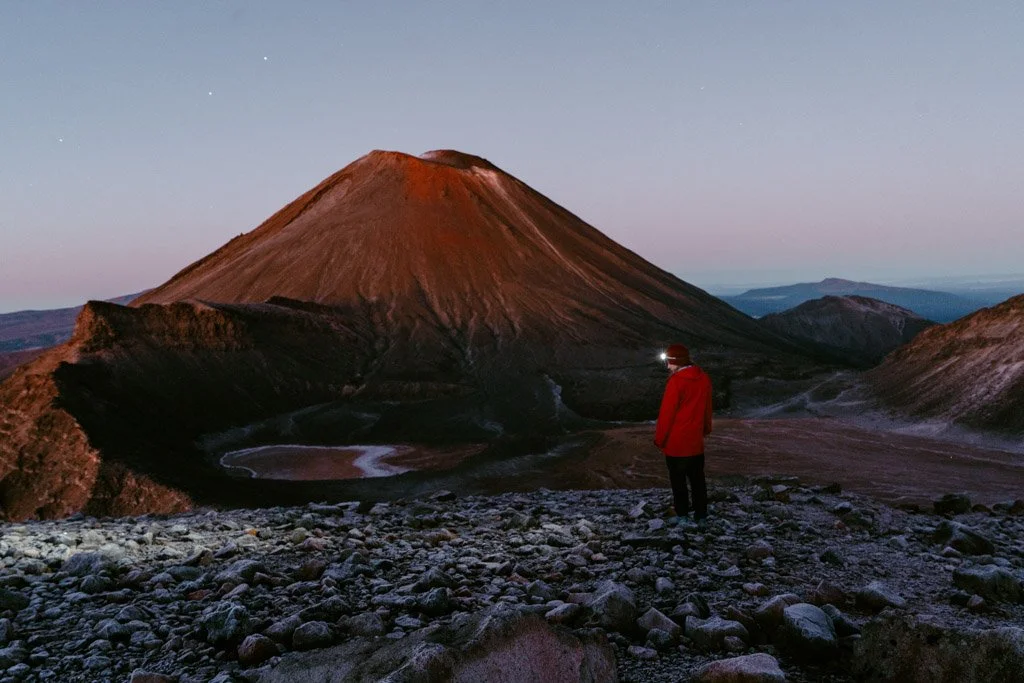
Tongariro National Park, in the heart of the North Island, is a UNESCO World Heritage Site. It’s also home to some of the most striking and unique landscapes in the country, like volcanic cones, deep craters, rock-strewn desert and emerald-green lakes. This makes it the premier hiking destination in the North Island.
Although roads run around each edge of the park – State Highway bordering the eastern edge – Tongariro can be logistically tricky to navigate.
The easiest entry point to the park is from Highway 4 on the western flank, on the road which runs to Whakapapa Village and onwards to Whakapapa ski field. In Whakapapa Village, you’ll find the DOC visitor centre, plenty of car parking, and the trail head for a few walks, including the Taranaki Falls and Tama Lakes track.
If you want to hike the Tongariro Crossing, it’s almost impossible to do so without arranging some form of transport; there is a 4 hour parking limit at the Mangetepopo carpark (the most popular starting point for the hike) and you won’t make it as far as the Red Crater and Emerald Lakes in that time.
The hike is best walked as a one way trek, anyway; you can choose to meet a shuttle at the end point, or park at the end and have a shuttle take you to the start of the track. The second option involves and extra kilometre of walking (to reach the free carpark where you can leave your vehicle all day) but gives you more time freedom, as you won’t need to rush to keep to the shuttle schedule.

Ohakune
Activities
Hike the Tongariro Crossing — you’ll need shuttle transport; I recommend the option of parking at the end and shuttling to the start, for maximum flexibility.
Take a shorter walk to Taranaki Falls or Tama Lakes
Stay
There are a handful of small villages on the western edge of Tongariro National Park; Waimarino/National Park Village and Raurimu are the closest. You could also head further south to Ohakune, which has several places to stay, and from there you get some great views of Ruapehu.
Day 10 | Drive Surf Highway 45 to New Plymouth and Taranaki
From Tongariro National Park, it’s only about a 90 minute drive down to Whanganui.
I think Whanganui is such a little gem.
It reminds me of Wellington, with an eclectic and creative vibe, but it’s smaller and easier to visit (I haven’t included on this itinerary, but which you could carve out a few days for if you’re interested in seeing the capital).
Wellington is a beautiful city, but at the end of the day, it’s still a city.
I love Whanganui for the fact that it’s still a small town, but it has some of the quirky, creative culture of Wellington (more and more people are migrating north from Wellington as a result of the high cost of living there).
Taranaki is one of my favourite regions in the North Island.
It’s the perfect place to road trip around. The Surf Highway curves around the coast and you can turn down almost any side road and end up at an epic black sand beach.
The waves here are wild and rugged, which is why it’s so famous among surfers, but you can still enjoy beach sunsets, long walks, and swimming when the surf is calmer.
Then there’s Mount Egmont National Park, which is an almost circular park surrounding the mighty peak of Mount Taranaki.
Hiking up the summit is the premier walk in the region, but you can only tackle it on a good weather day in summer, and it’s a full day hike.
A half day hike option is the walk up to the Pouakai Tarns, the reflective pools that mirror the peak of Taranaki on calm days.
New Plymouth itself is a pretty standard town, but there are a couple of highlights.
Chief among these is the Govett-Brewster Art Gallery/Len Lye Centre for contemporary art — it’s pretty impressive for a small town gallery. Pukekura Park is also a very beautiful place to go for a walk.
FEATURED STAY
Ahu Ahu Beach Villas
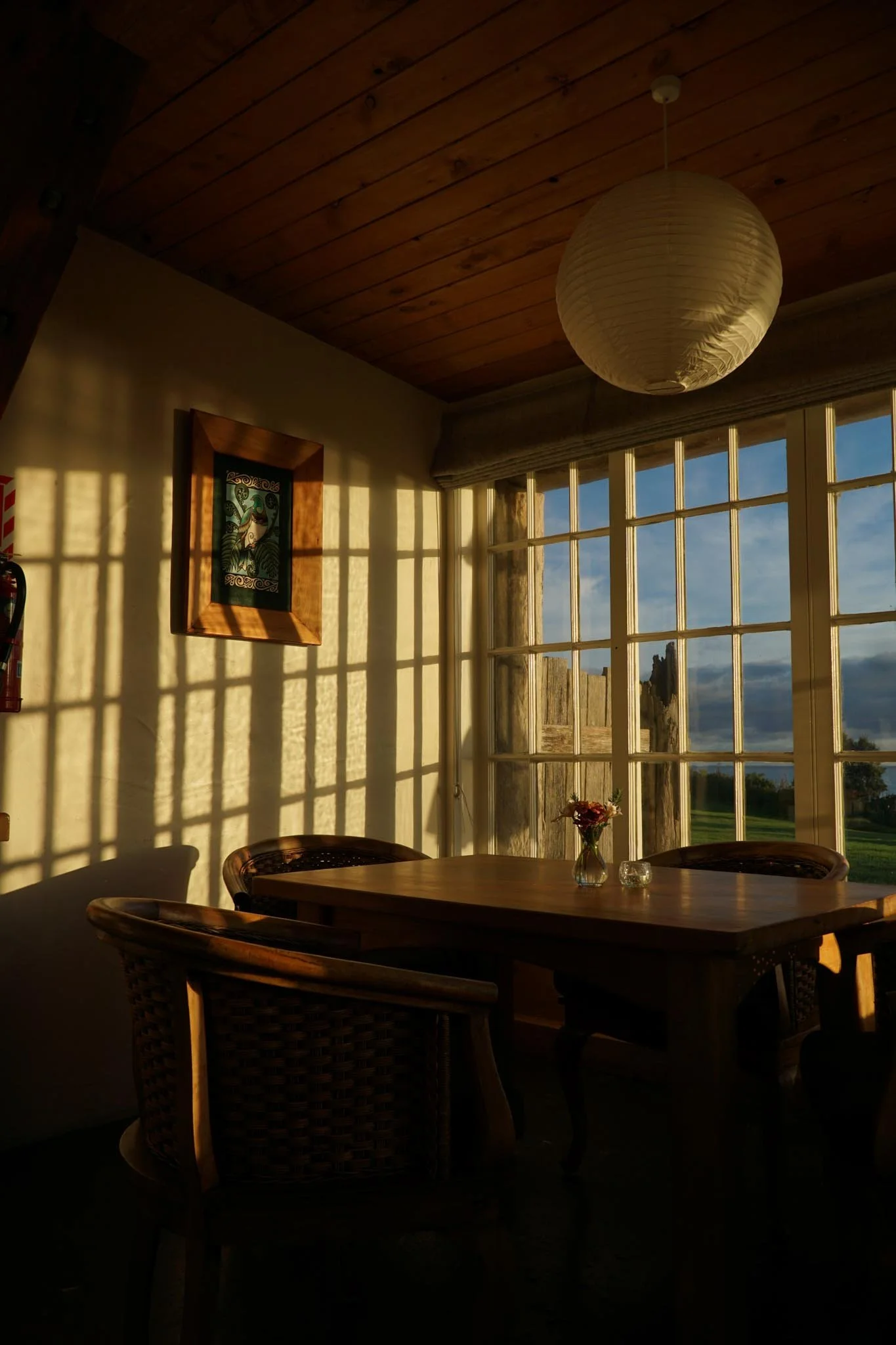
Easily the best place to stay in the Taranaki region is Ahu Ahu. I adored everything about this place, from how welcoming the family who run it are, to how dedicated they are to sustainability and community. And the villas themselves are incredible.
Day 11 | Taranaki National Park
The big walk in Taranaki/Egmont National park is hiking to the summit of Mount Taranaki.
That’s a pretty big undertaking, though — you need clear weather conditions, a good level of fitness, and pretty much a whole day to do it. The views from the top are incredible if you’re up for it. For me, it sits alongside the Tongariro Crossing as the most dramatic day hike you can do in the North Island.
If you don’t feel like climbing a mountain, a much easier option is to hike to the Pouakai Tarns. That’s a nice little out and back hike, with spectacular views across to Mount Taranaki and out to sea on a nice day.
Day 12 | Head north to Waitomo
Drive time: 3.5 hours
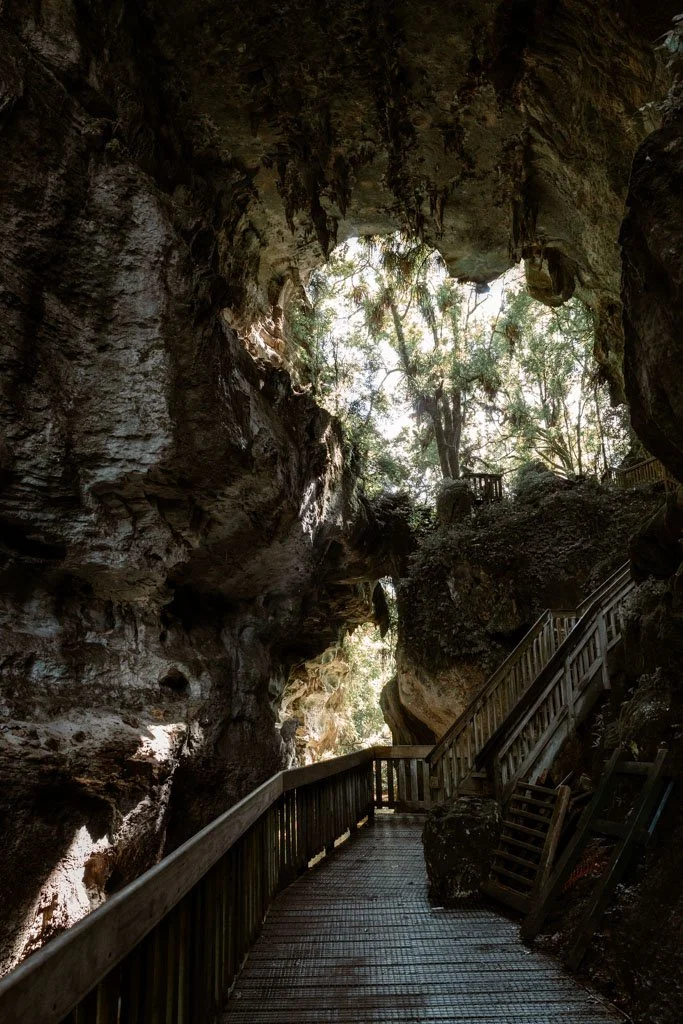
Mangapohue Natural Bridge
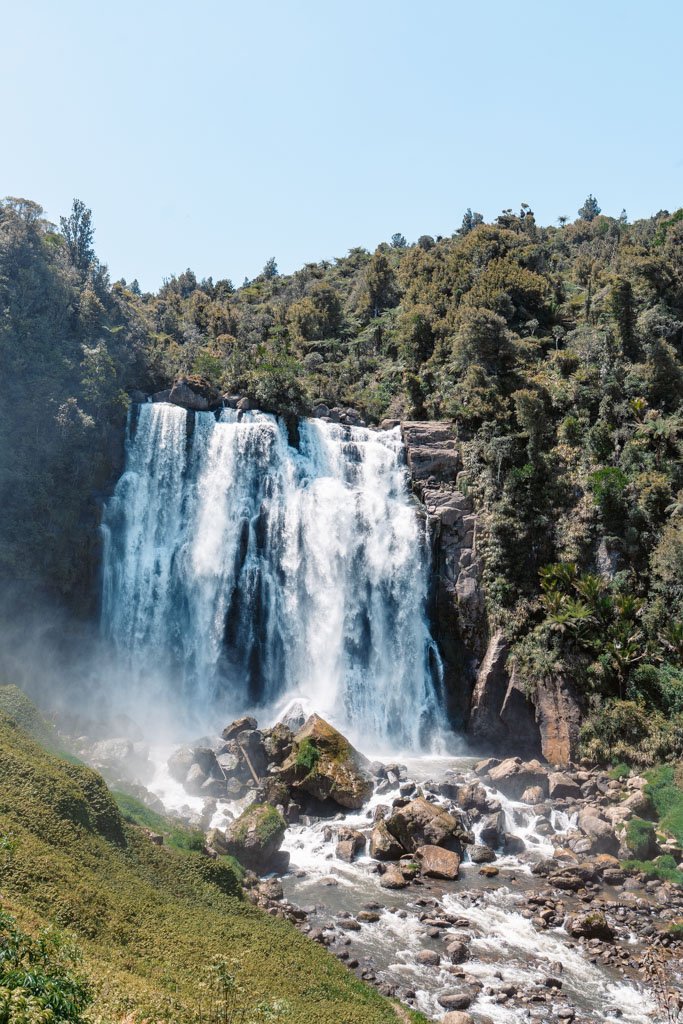
Marokopa Falls
It’s a 3 hour drive from New Plymouth to Waitomo via the coastal route. Stop off at Tongapōrutu, or the Three Sisters, which is a nice beach walk (at low tide only) out to rock formations and views of Mount Taranaki in the distance.
If you like taking roads less travelled, keep following the coastline from Awakino to Marokopa, along a gravel road that sees very few tourist vehicles. Stops on that route include Waikawau Tunnel Beach, and then as you veer inland towards Waitomo village, Marokopa Falls and the Mangapohue Natural Bridge. This adds a little driving time, making the trip around 3.5 hours.
A longer, inland route from Taranaki to Waitomo runs roughly parallel to the coast, but takes much longer – around 4.5 hours. That drive is along the Forgotten World Highway, which sounds a lot more interesting than it really is. Although you’ll get to see some backcountry sheep stations, a couple of unique tunnels, and the village of Whangamomona (famously a self-declared republic), the reality is that there isn’t a lot to see during several hours of driving on a narrow gravel road.

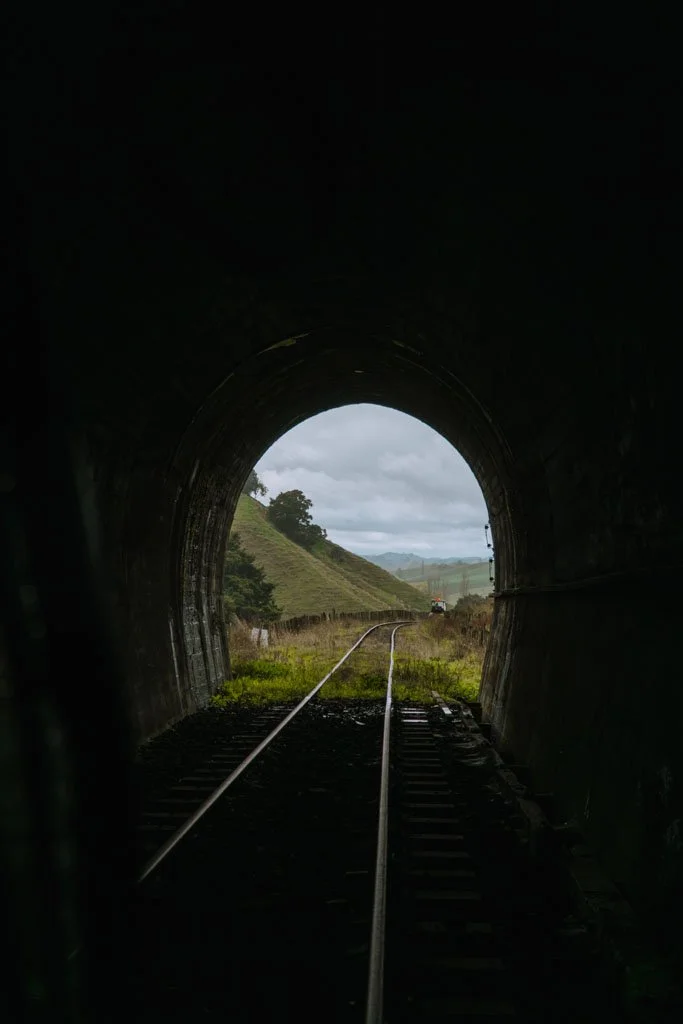
A better way of exploring the Forgotten World Highway is with Forgotten World Adventures, who’ll take you off the gravel road and onto railway tracks through the region. From your perch in a modified golf cart, you’ll have excellent views of the remote area.
Forgotten World can organise to move your vehicle from A to B, so you can experience the rail cart tour as a one way trip.
Stay
Day 13 | Go underground at Waitomo
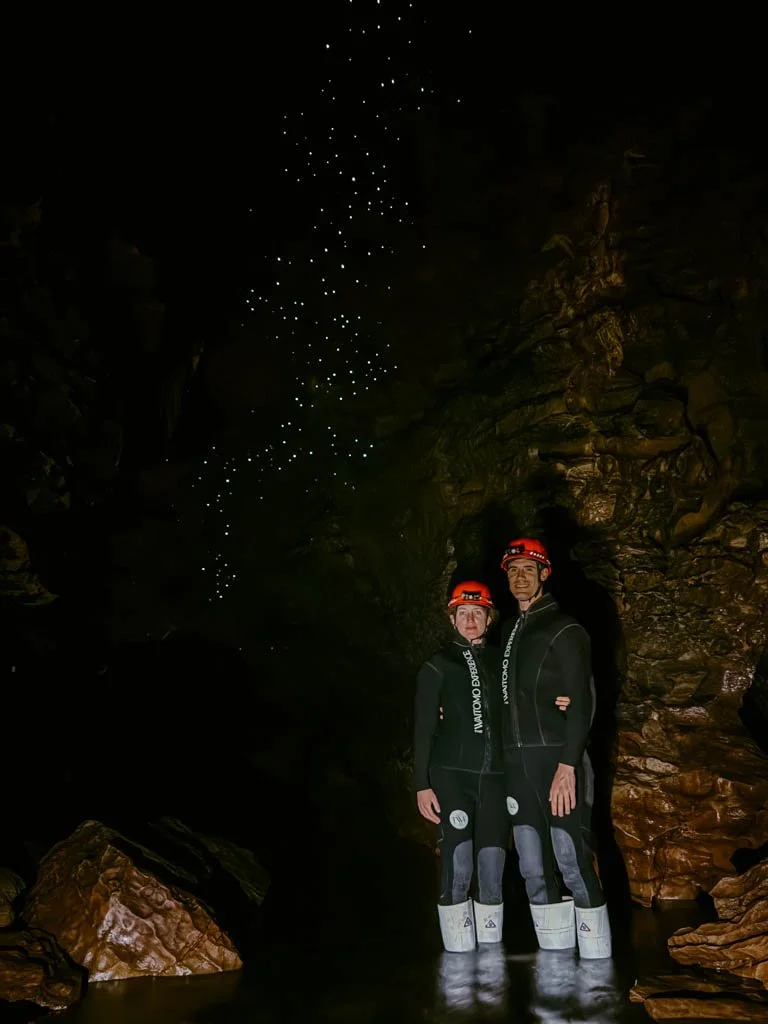
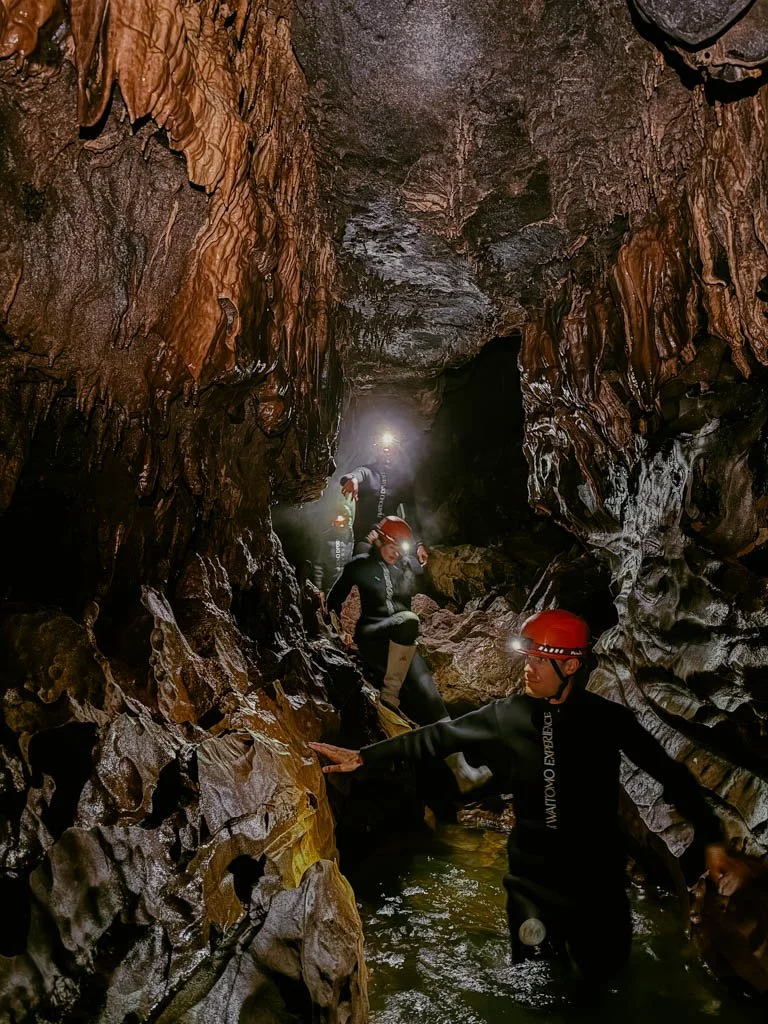
Beneath the rolling green farmland of the Waitomo area lies an immense cave system containing limestone formations, rivers, and caverns. The name Waitomo comes from the Maori words wai (water) and tomo (hole or shaft).
Although glowworms are the star attraction for most visitors to Waitomo, the cave systems with their limestone formations, rivers, and caverns offer caving and adventure opportunities just as enticing as glowing bugs. There are many caves and tours to choose from, ranging from trips where you can keep your feet dry to those where you can jump feet first into pitch black water.
The cave with the most beautiful rock formations is Okohua Cave, visited by The Waitomo Experience. This trip features a bit of everything; walking, swimming, and floating along in rubber tubes. A more adventurous option is the black water rafting trip with Discover Waitomo. The Black Abyss tour includes an abseil and an underground zipline, along with black water rafting. Spellbound, meanwhile, focuses on glowworms rather than caving action, in caves that are much quieter than the main Waitomo Glowworm Cave.
Most of the tours take up roughly half a day. If you visit caves in the morning, you can carry on to Raglan in the afternoon; it takes around 2 hours to reach Raglan. The little surf town is a good place to unwind, with beach walks and west coast sunsets.
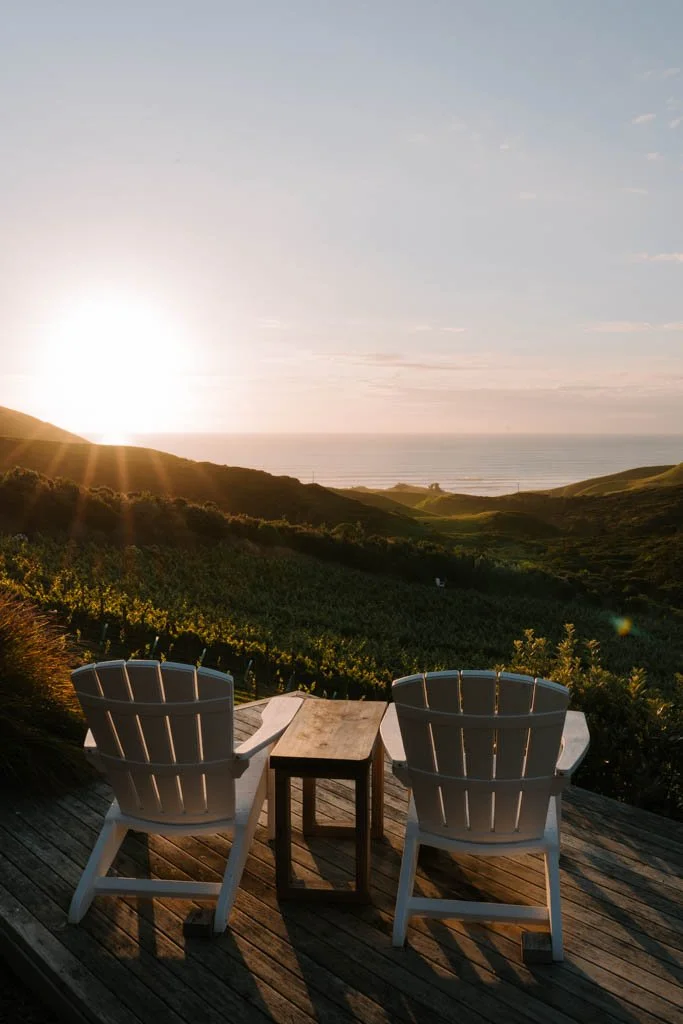
Sunset at Barrelled Wines

The black sand beach at Raglan
Activities
Choose The Waitomo Experience for a lovely balance of walking, swimming, and floating through caves in rubber tubes.
Go for The Black Abyss tour for the most adventurous black water rafting experience
Choose Spellbound for stunning glowworms without the thrills.
Stay in Raglan
Day 14 | Back to Auckland
It’s a two hour drive from Raglan back to Auckland.
This post was about:

AUTHOR BIO
I’m a freelance travel writer from New Zealand with bylines in National Geographic Travel, Conde Nast Traveler, Travel + Leisure and more.
I’ve travelled up and down beautiful Aotearoa and I love sharing my recommendations for the best places to visit in New Zealand.
READ MORE