How to choose which cruise company to take around the fjord
Before getting into the details of Doubtful Sound, I’ll give you a quick heads up; this article includes affiliate links, which means I may make a small commission should you book via those links. There is no additional cost to you, but it helps me keep travelling. I appreciate the support!
For transparency’s sake, I travelled with RealNZ for free, as media. I paid for my trip on Fiordland Expeditions (as of 2026 I no longer take complimentary trips. I want to keep objectivity).
The rugged coast of Fiordland is slashed with 14 fjords, but for most visitors, only two are within reach. Most visitors make their way to Milford Sound, the more accessible of the two. But, if time and budget allow, I highly recommend choosing Milford’s quieter sister.
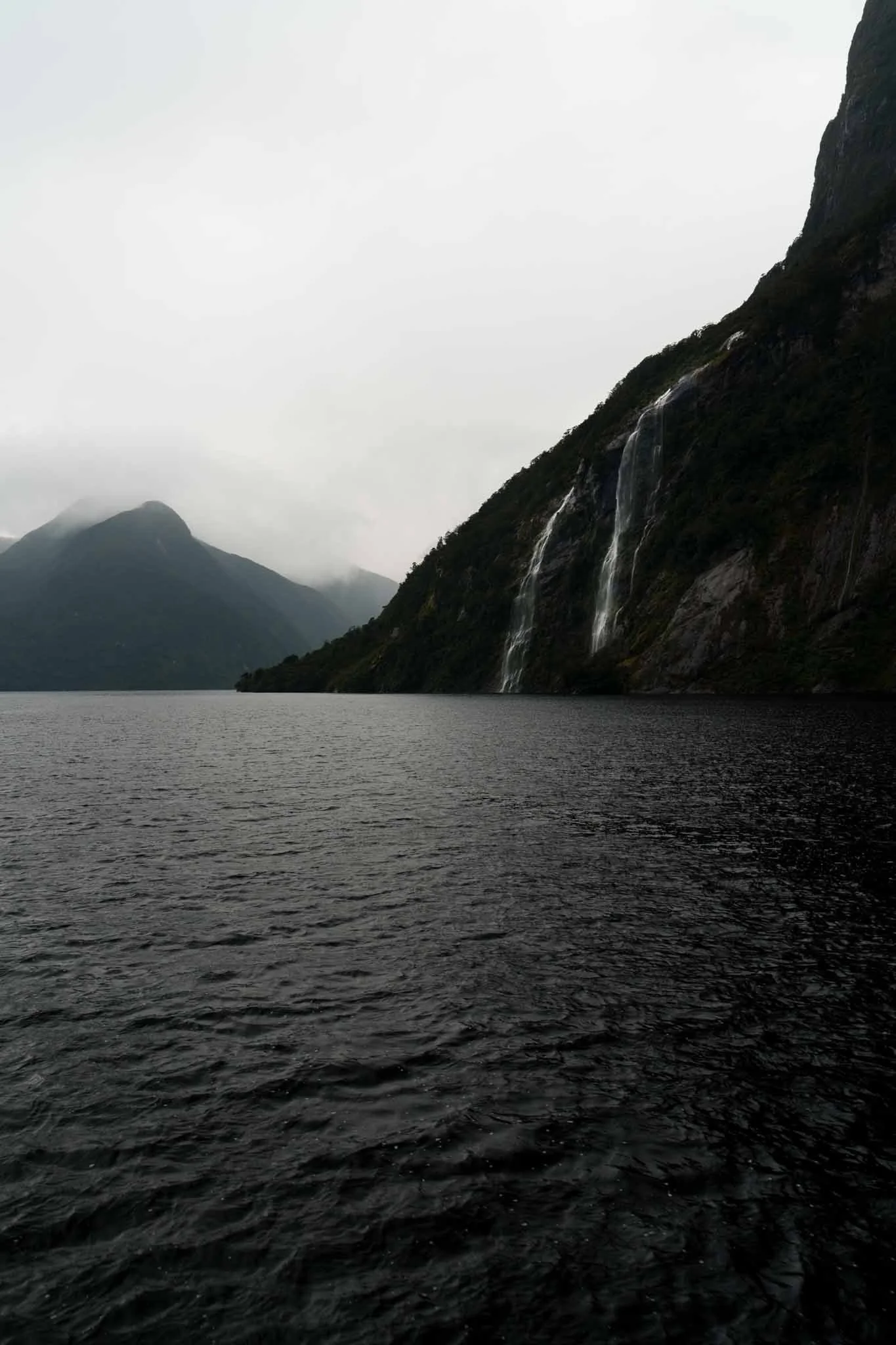
Doubtful Sound is, like Milford, actually a fjord. Its Maori name is better – Patea, which loosely means ‘place of silence.’ It isn’t completely silent there; it’s only devoid of human-made noise, aside from the occasional boat motors. But even those go quiet from time to time.
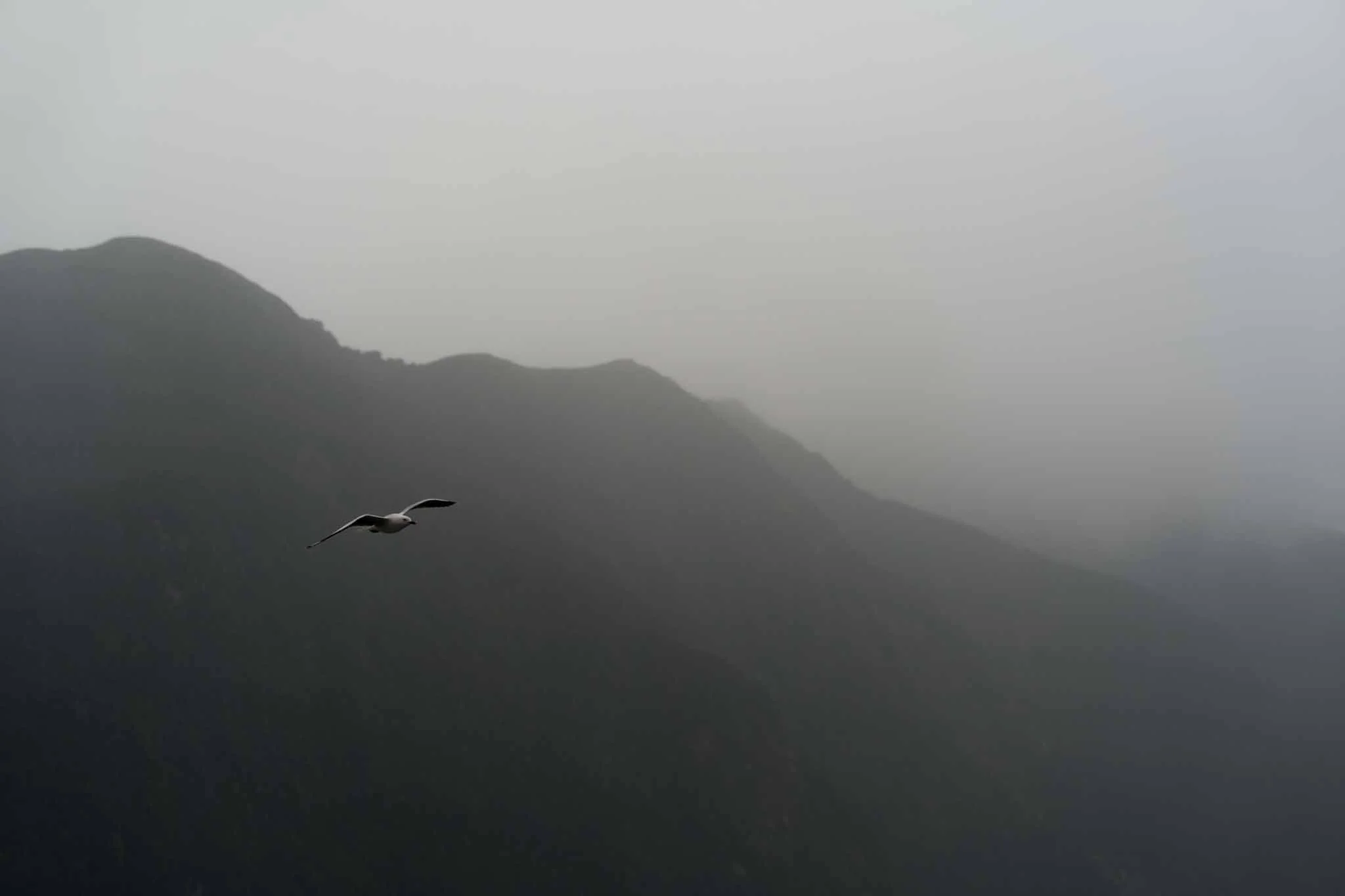
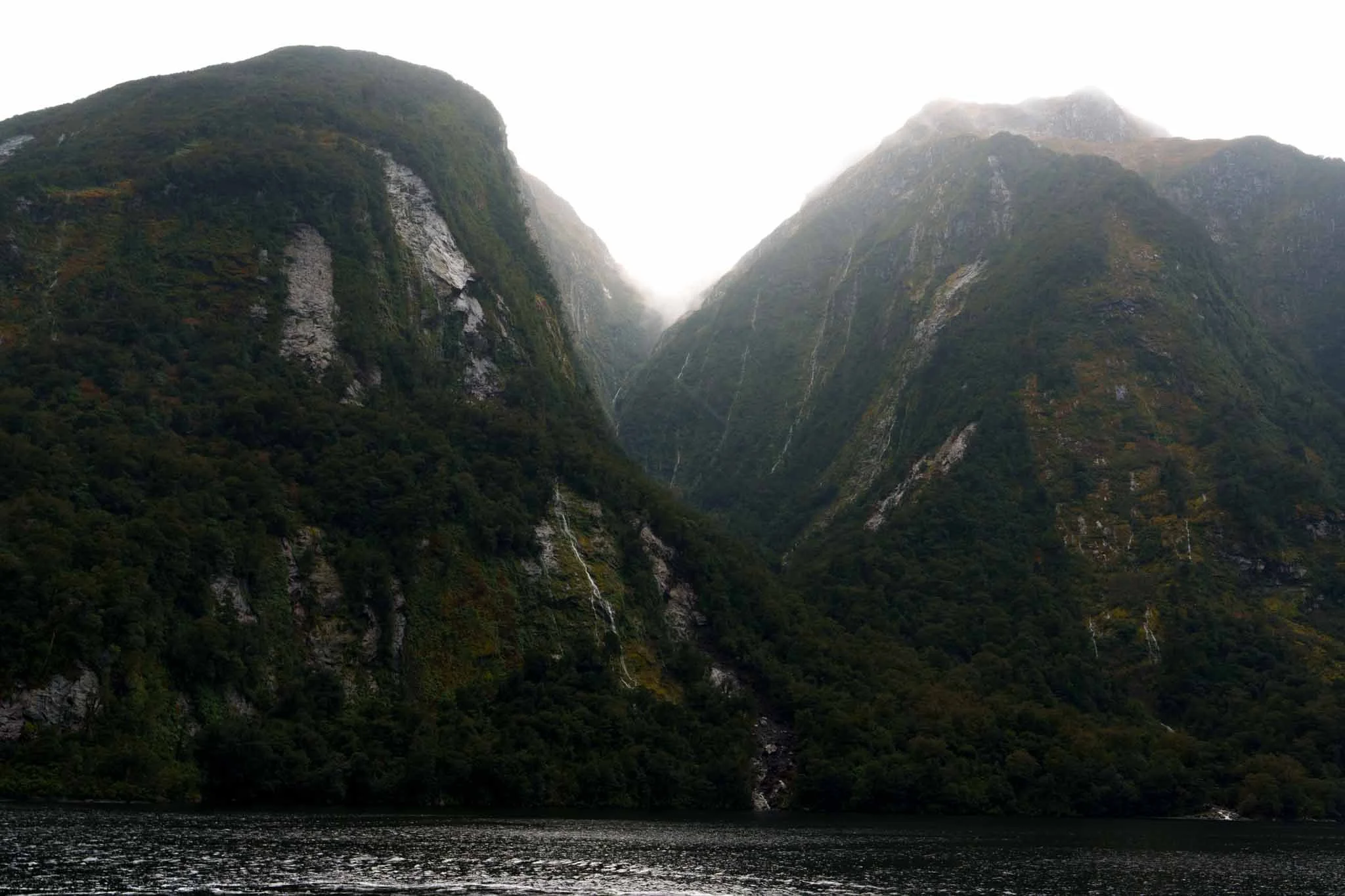
On the second day of the overnight cruise with RealNZ, the captain powers down the engines and asks everyone on board to stand still, to resist the urge to click a camera shutter, to not even whisper. For 10 minutes, the boat drifts in the still water and you'll hear waterfalls making their way down cliff faces, and birds singing freely, joyously, across the water.
Reaching 40 kilometres (25 miles) from the head of the fiord to the Tasman Sea, Doubtful is three times the length and 10 times the area of Milford. It’s also much less visited, which makes it – at least to me – a more beautiful experience.
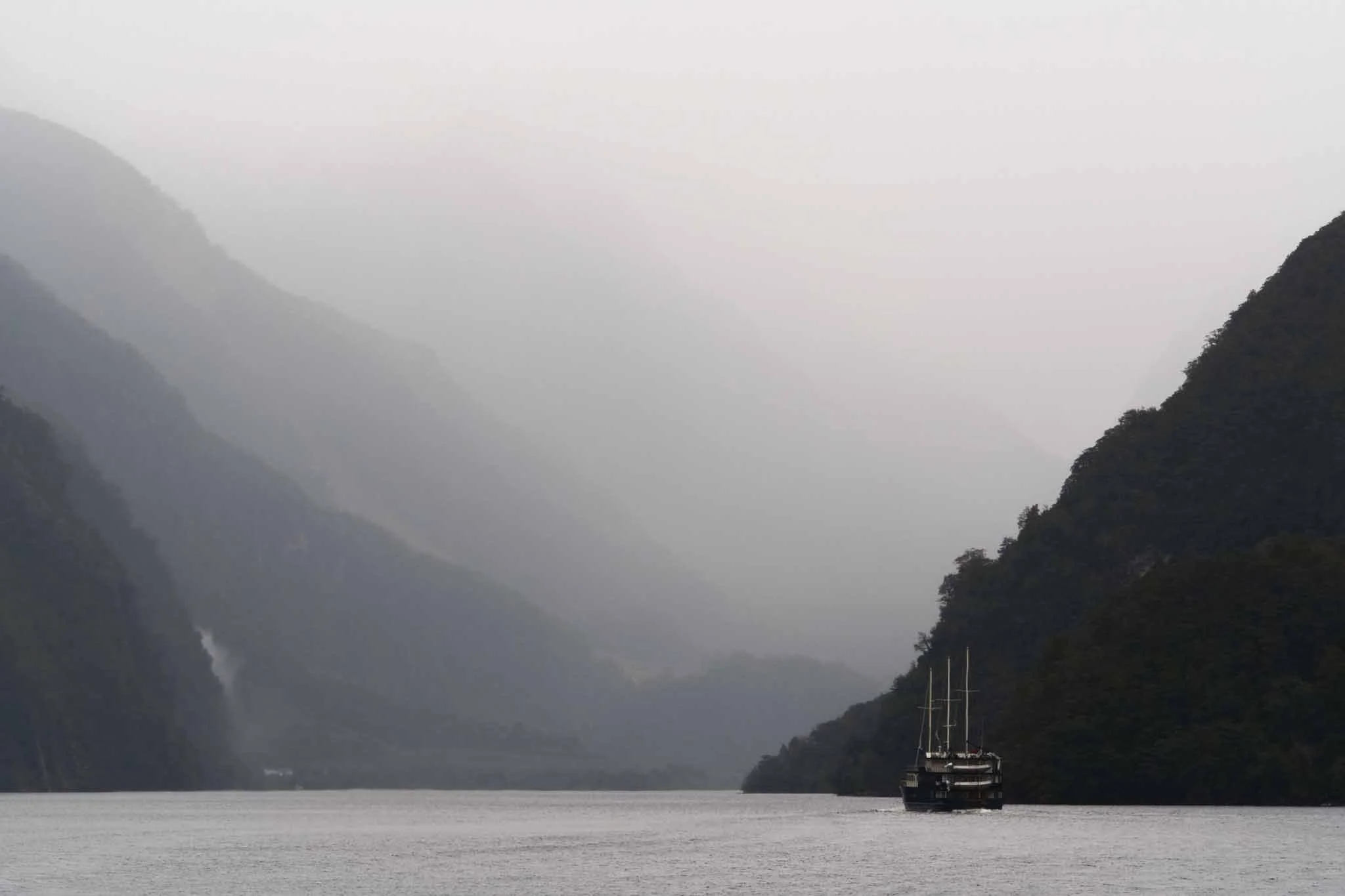
Boat trips to Doubtful Sound depart from Manapouri – operators offer an option to book transfers from either Te Anau or Queenstown to Manapouri at an additional cost. The first step is a one-hour trip across Lake Manapouri to West Arm, followed by a 40-minute drive over Wilmot Pass to Deep Cove. This road only opened in 1959, with the construction of the West Arm power station; before that, the only visitor access to Doubtful Sound was via water or air. At Deep Cove, where you’ll board your boat to cruise the fjord, there’s no settlement as there is in Milford Sound; just a small fleet of fishing boats lining the dock, and an outdoor education centre tucked into the bush.
I have visited Doubtful Sound on overnight cruises with RealNZ onboard the Navigator and Fiordland Expeditions onboard the Tutoko II; personally, I preferred the larger boat. Despite it having many more people onboard, there are more spaces to explore so it counterintuitively feels less cramped than the smaller boat. If you like fishing and seafood though, the chance to catch and eat your own fish with Fiordland Expeditions is pretty special, and unlike on RealNZ, the crew will get to know you by name.
I’ll go into more detail below, and talk through other questions like whether the trip justifies the cost. Here’s the short version:
Book with RealNZ for a beautiful, comfortable boat and a very professional operation
Book with Fiordland Expeditions if you prefer small groups and catching your own seafood for dinner.
Overnight cruises on Doubtful Sound
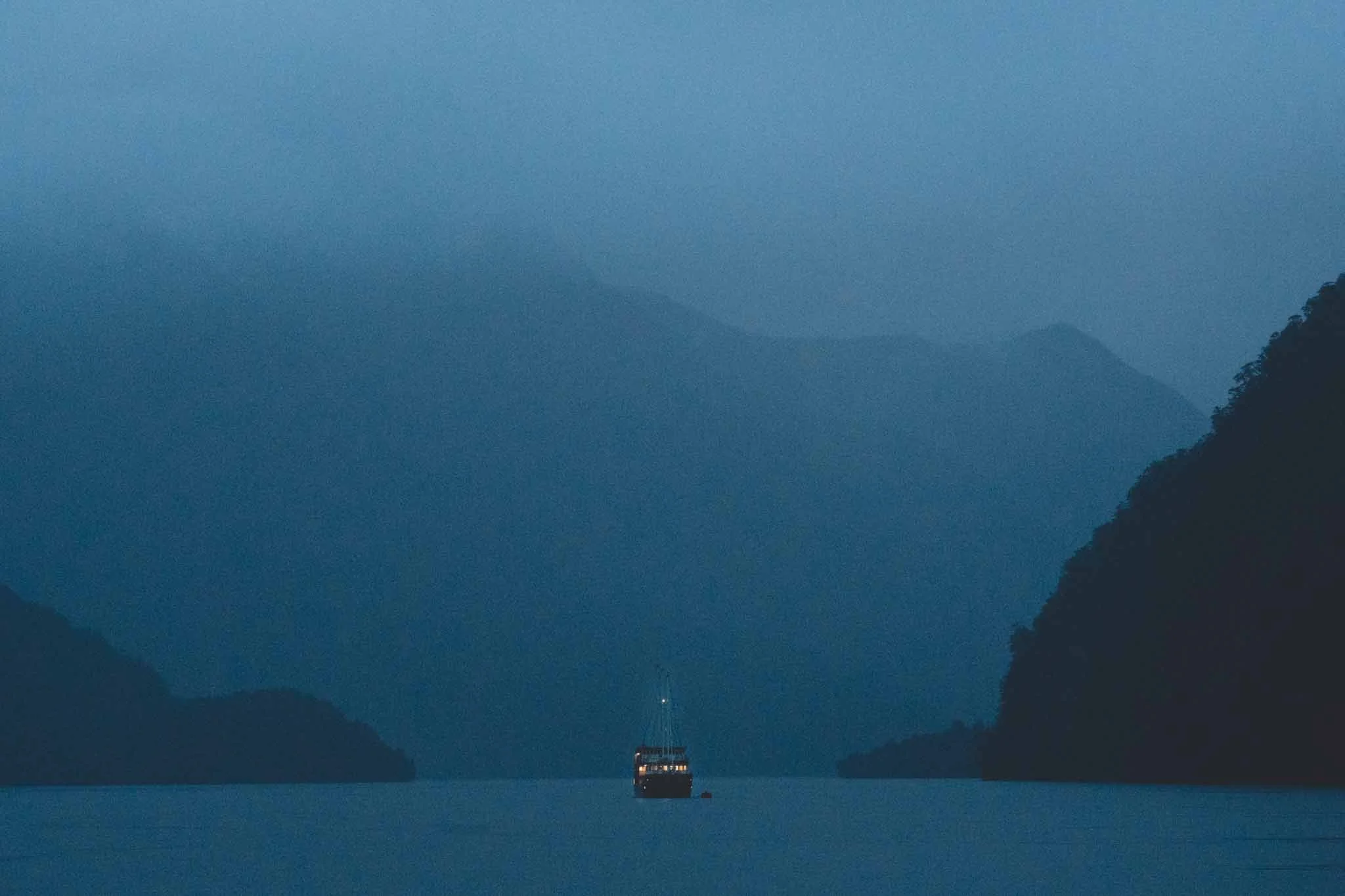
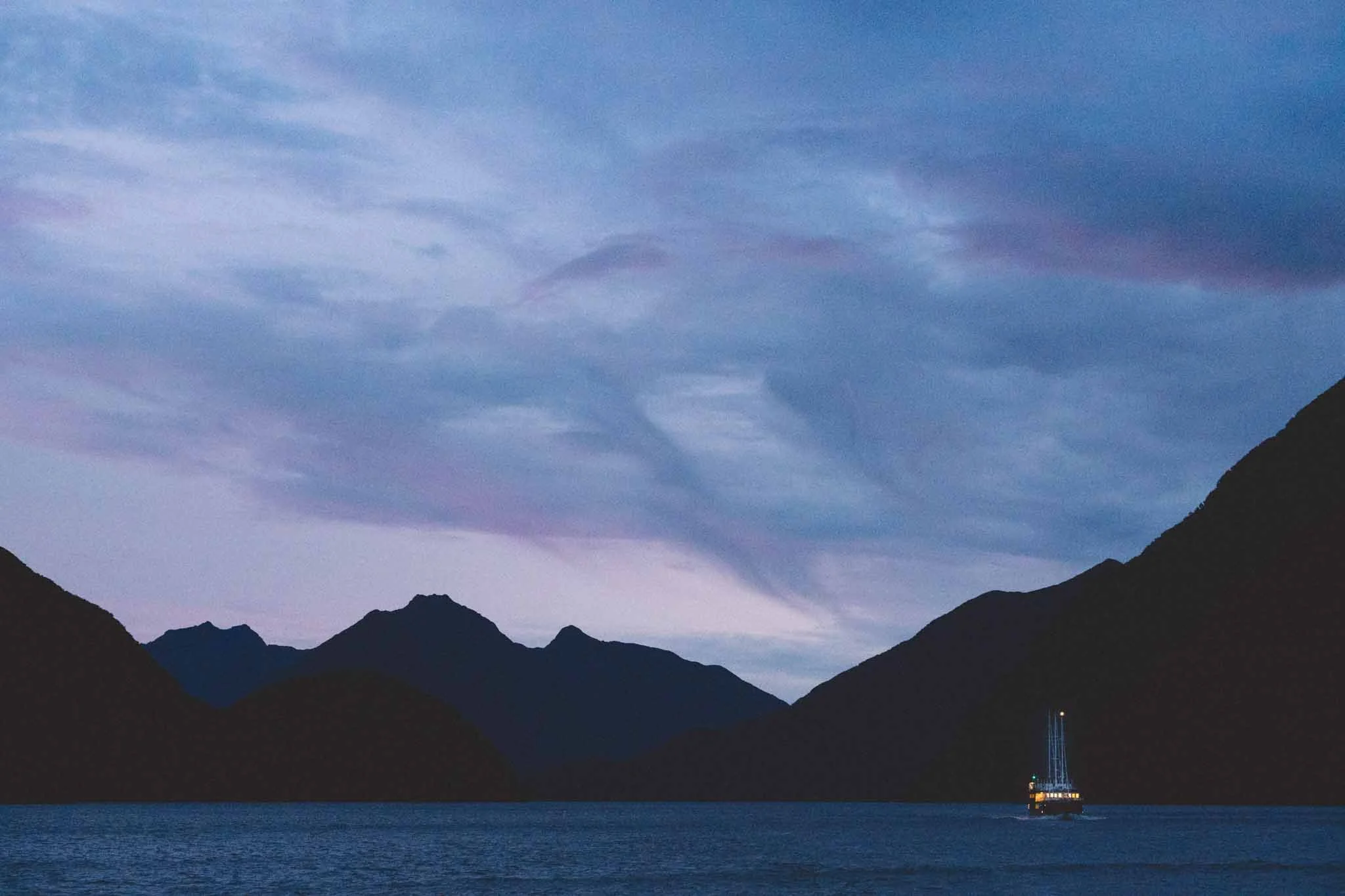
You can opt to visit Doubtful Sound on a day trip, but I strongly recommend going for an overnight cruise instead, if time and budget allows.
Both day and overnight trips include transport by boat and bus. The overnight voyage includes snacks, meals, kayaking, and swimming, as well as commentary from an enthusiastic nature guide. There are currently three operators offering overnight trips on Doubtful Sound. Which one you go with might depend on availability; these trips are very popular, and very limited in capacity, so the high season (late December to late February) books out months in advance.
I have travelled with both RealNZ and Fiordland Expeditions, and although they offer broadly similar experiences — cruising out to the Tasman Sea to spot seals, exploring the various arms of Doubtful Sound, and offering the chance to kayak — the size of the boats makes them quite distinct.
RealNZ sleeps 52; Fiordland Expeditions only 12.
Overall, if I had to choose one to do again, I would go with RealNZ because I found the boat to be more comfortable. But, I don’t eat seafood. Catching a fish and eating fresh crayfish is a big part of the Fiordland Expeditions trip. It might be worth sacrificing a few creature comforts for that experience alone.
RealNZ
The details
Fiordland Expeditions
FAMILY OWNED | LOCALLY OWNED
With a maximum of 12 passengers on the Tutoko II, the trip with Fiordland Expeditions is much more intimate than the cruise with RealNZ. For starters, they check in the day before sailing to make sure they have any dietary requirements and other needs covered; they kindly provided oat milk for me, and catered to my other fairly specific requests (I’m vegetarian but don’t eat eggs or drink milk. That wasn’t a problem).
The boat isn’t particularly luxurious. The rooms feel much more worn than those onboard the RealNZ’s Navigator, and the bathroom was smaller and less comfortable, with the shower more or less over the toilet (the Navigator has proper shower stalls; it feels like a hotel bathroom). The only shared inside space on the Tutoko II is one large table in the cabin, which everyone sits around for meals. On my trip, there were only 6 of us; with 12 I imagine it would feel quite tight. It does create a convivial atmosphere, though, and the upshot is that you end up spending a lot of time out on the decks, no matter the weather. And the views are what you’re there for after all.
Plus, one advantage of the smaller boat is that the skipper gets exceptionally close to waterfalls; so close that in one instance the bow scraped against the rock. I also liked that with the smaller group, when we went kayaking we were set loose without a guide. The crew just puts you in a kayak and off you go, exploring.
The main thing Fiordland Expeditions does differently to RealNZ is the fishing element. Around an hour is dedicated to catching fish, which is later served for dinner. We also made two stops by the cray pots to haul up fresh crayfish (spiny rock lobster) which was the entree for the evening meal. As well as the seafood, we were kept fed with a steady supply of fresh baking, cheese platters, home made biscuits, and multi course meals. The food was good – not overly gourmet, but plentiful.
Another positive note for Fiordland Expeditions is that they have the option of travelling solo and joining a shared bunk room. With RealNZ, solo travellers have to pay a significant sum to have a room alone.
The details
Overnight trips start from $900 per person
Milford Sound or Doubtful Sound?
You might also be wondering if visiting Doubtful Sound is worth the extra time and expense, when Milford Sound is easier and faster to visit. Choosing between Doubtful and Milford comes down to whether you want to see the more famous fjord or the quieter one; if you want to feel like you’re on an adventure, or on a tour; or whether you want extras like a scenic flight back to Queenstown.
Milford Sound is arguably more beautiful. The walls are higher, the views more dramatic. Nothing can compare to the hulk of Mitre Peak or the power with which Stirling Falls punches into the water of the fjord. It’s not for nothing that Milford Sound is the most famous part of Fiordland, even New Zealand. The beauty is a powerful draw; for such a remote location, the fjord gets a staggering three quarters of a million visitors each year. What should feel like the end of the earth — two hours drive from the nearest town, on a lonely coast of a tiny island at the bottom of the world — feels jarringly busy. Boats follow each other round the fjord in a steady procession, each one stopping in exactly the same spots, never out of sight of the one before or the one after. On board, people jostle for space to lean against the railings.
Of course, a beaten track means more transport options. With Milford, you can choose to self drive and cruise, to take a bus and cruise, or to fly and cruise; or any combination of these.
The less trodden path to Doubtful means you’re more limited. Getting there involves a ferry across Lake Manapouri and a bus over a rainforested pass, before finally boarding the boat (for what it’s worth, I found this to be part of the adventure, with each step of the way smooth and thoroughly enjoyable). The upside is this means at least four hours less driving than Milford, but you can’t decide to fly back should you wish to skip the extra bus and boat steps.
On the water at Doubtful Sound, you’re unlikely to see even a single other boat. The size helps. A single arm of Doubtful Sound is the same size as the whole of Milford Sound. For me, this meant that the fiord felt more beautiful and immersive, even if it doesn’t have an equivalent to Mitre Peak. There are still many waterfalls, the chance of seeing dolphins, and a real sense of the depth and breadth of Fiordland’s wilderness.
Thank you for reading
All words (and typos and other errors) are my own, based on my own travels.
During my time on the road, I’ve found many wonderful places — galleries, restaurants, viewpoints and more. I’m sure you’ll find others. If there’s somewhere you think I should know about, contact me at hello@petrinadarrah.com, so I can share with other travellers in future work.
If you’re disappointed with one of my recommendations, I’d love to know that too; places change, or close, so I appreciate updated information.
Thank you for supporting my work – you being here lets me keep doing what I love to do, which is explore New Zealand and share it with others. So a heartfelt thanks for reading.

Author bio
I’m a freelance travel writer from New Zealand with bylines in National Geographic Travel, Conde Nast Traveler, Travel + Leisure and more.
I’ve travelled up and down beautiful Aotearoa and I love sharing my recommendations for the best places to visit in New Zealand.
Read more