The best things to see and do in Kaikōura
Kaikōura is one of New Zealand’s best coastal towns, thanks to an abundance of marine life and beautiful views
Some quick preamble; all of the photos and words in this post are my own. I never use AI, and I have based all recommendations on activities I have done or places I have personally stayed. I try to pay for everything, but I have made a note where I have travelled free of charge. I have added affiliate links to the things I loved the most — if you make a booking through these links I may make a small commission, at no cost to you. That helps keep me on the road, so thank you!
In the 1830s and 1840s, Kaikōura was a whaling town. So many of the great beasts were slaughtered in the waters here that the oldest building in town, Fyffe House, is built upon a foundation of whale bones. Whales are still the foundation of the town’s economy; people still come from all over the world come to this place where sperm whales swim closer to shore than in any other place on earth. The difference is, today they shoot with cameras rather than harpoons.
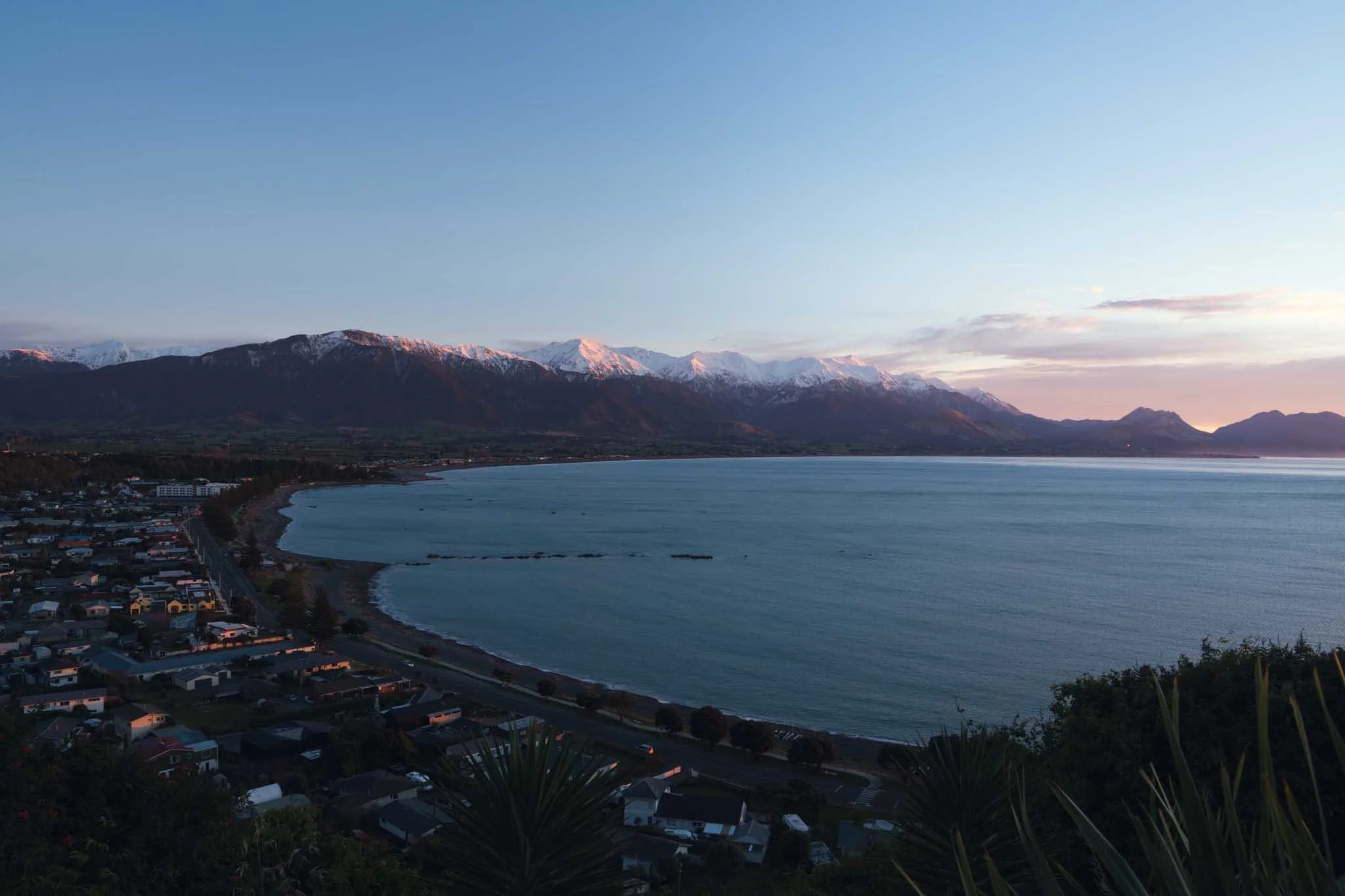
Kaikōura is one of the places I love returning to. Driving to the small town, either from the north or the south, means hitting one of the best stretches of coastal road in the country. The blue swirl of the Pacific ocean against pale rocks and pebbled beaches, the rise of the seaward ranges; I always end up pulling over many times to take it all in, almost always arriving in Kaikōura later than planned.
The town itself is low key, arranged alongside the railway which runs along the coast. I like it that way. Despite visitors coming from far and wide to see whales – by boat and by air – dolphins, seals, albatross, and the other marine life that makes this particular part of the coast so special, Kaikōura remains unpretentious.
The reason for such abundant marine life in Kaikōura is the underwater canyon running just off the coastline. It plunges to alarming depths of more than 1 kilometre exceedingly quickly (the Whale Watch boat tracks the depth beneath its catamarans, and in the space of a minute or so, the sea floor seems to disappear), funnelling up nutrients from the deep sea which feeds a food chain of cetaceans, seals, and other marine life. The bounty brought by this quirk of oceanic topography is where the town gets its name; kai is food, kōura is the crayfish which flourish in these waters.

Kaikōura at a glance
The highlights
See the largest toothed predator in the world on a Whale Watch boat trip
Getting there and away
Kaikōura is roughly halfway between Picton and Christchurch, so it’s a good stopping point on the way to or from the ferry between the islands. It’s a little out of the way of the main South Island attractions further south, so often only visited by people with a little more time – it fits nicely into a loop of the whole island, if you have 2-3 weeks to work with.
Start in Christchurch, stop in Kaikōura, then carry on to Kaiteriteri near Abel Tasman National Park (around 4.5 hours driving), and from there down to the West Coast and around to Wanaka. If you want to skip the upper part of the South Island, stop by Kaikōura then head to Lewis Pass to cut through to the West Coast – you can stop by Maruia Hot Springs on the way.
It’s a stop on the Coastal Pacific train route between Christchurch and Picton (my favourite of New Zealand’s scenic trains), so you can get there and away by train. Just note that the train only stops by once in the morning on the way to Picton, and once again in the afternoon, on the way back to Christchurch, so it’s fairly limited. The train station is also located a little outside of the town centre, so you’ll need to either walk or find a taxi once you arrive.
Planning your time
You could feasibly visit Kaikōura in just 24 hours; walk part of the peninsula walkway on the afternoon you arrive, then join a whale watching flight or boat trip the following morning. But, there are so many activities in Kaikōura – and it’s such a beautiful location – that I think two nights will let you enjoy it much more.
Three nights is even better; you might end up with a little more downtime, but this gives you more wiggle room if the weather doesn’t play ball. And this being the Pacific ocean, it often doesn’t. Even on sunny days, flights and boat trips can be cancelled due to large swell. And if things do go to plan, you can’t complain about a little more time spent sitting by the seaside with a cold drink in your hand. With two or three nights, you can add a kayaking trip or seal swim to the line up of activities.
Where to stay in Kaikōura
Clifftop Cabins are the ultimate place to stay in Kaikoura; the views are unbelievable from sunset through to sunrise
Whale Watch Kaikōura
MAORI OWNED | BOAT TOUR
In 1987, Kaikōura was a town with an economy in freefall and a Māori community struggling with unemployment. Leaders of the local Ngāti Kuri people hatched a plan to create jobs; take tourists out to see the resident sperm whales. After all, according to legend the ancestor Paikea had travelled to New Zealand on the back of a whale. It followed that the might of the whales might help lead the Ngāti Kuri towards a better future.
The first year of operation – 1989 – saw 3,000 passengers step into an inflatable vessel to go see the whales. Today, 100,000 visitors strike out annually with Whale Watch, onboard a custom catamaran. Whale Watch was instrumental in turning Kaikoura into a marine wildlife destination. It’s still a 100% Māori owned business. Still the only operator taking tourists out to see the whales by boat anywhere in New Zealand.
Onboard the catamaran, a guide gives commentary on the ecology of the area and the whales, but once out at sea you’ll likely be more focused on standing by the railings scanning the horizon. There’s a pretty good chance of seeing whales; the Whale Watch boats have impressive echo location tools and they also collaborate with the whale watching flights, sharing information so they can track down the whales. However, sightings are not guaranteed (if you don’t see anything, you’ll get an 80% refund).
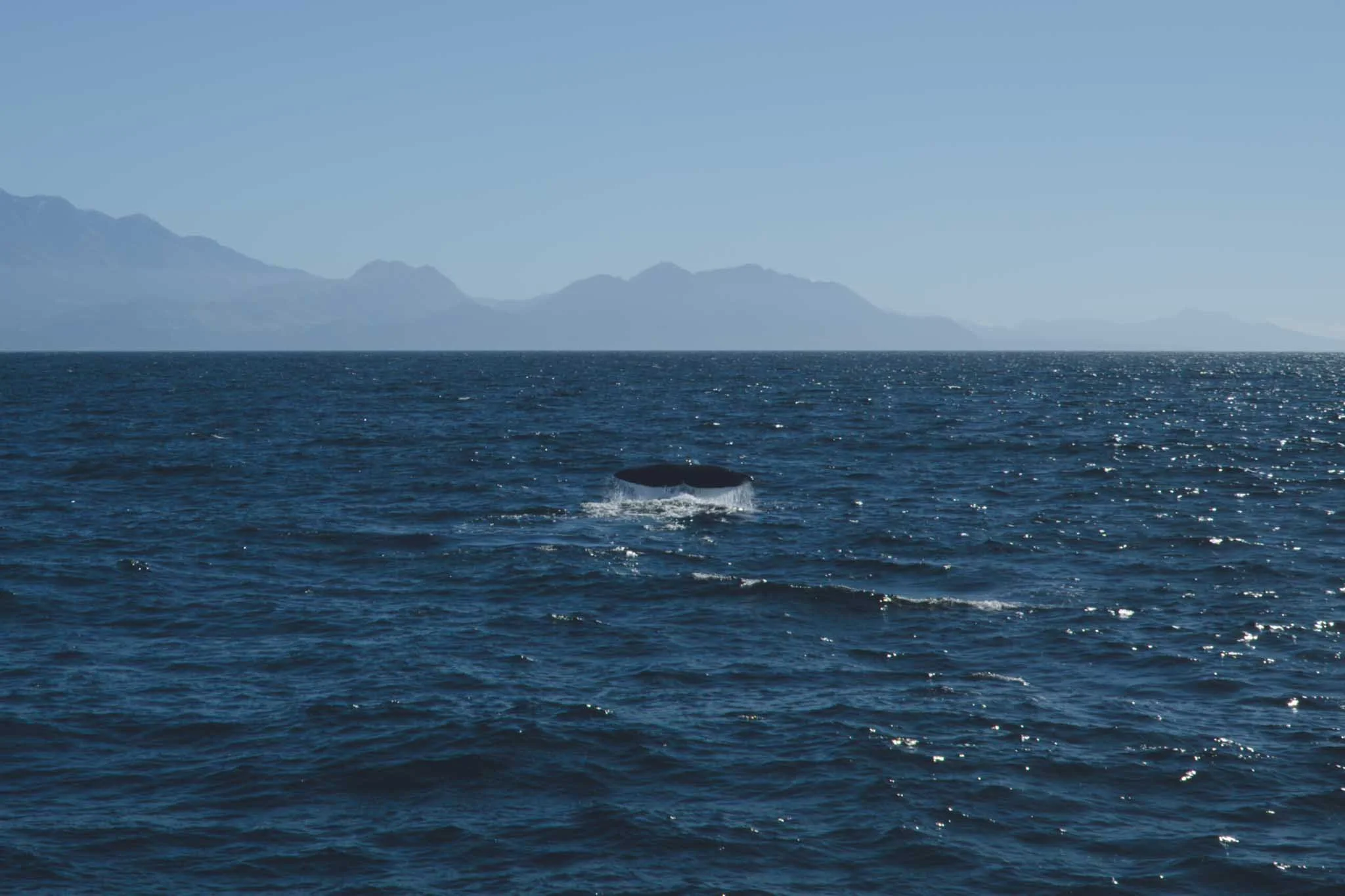
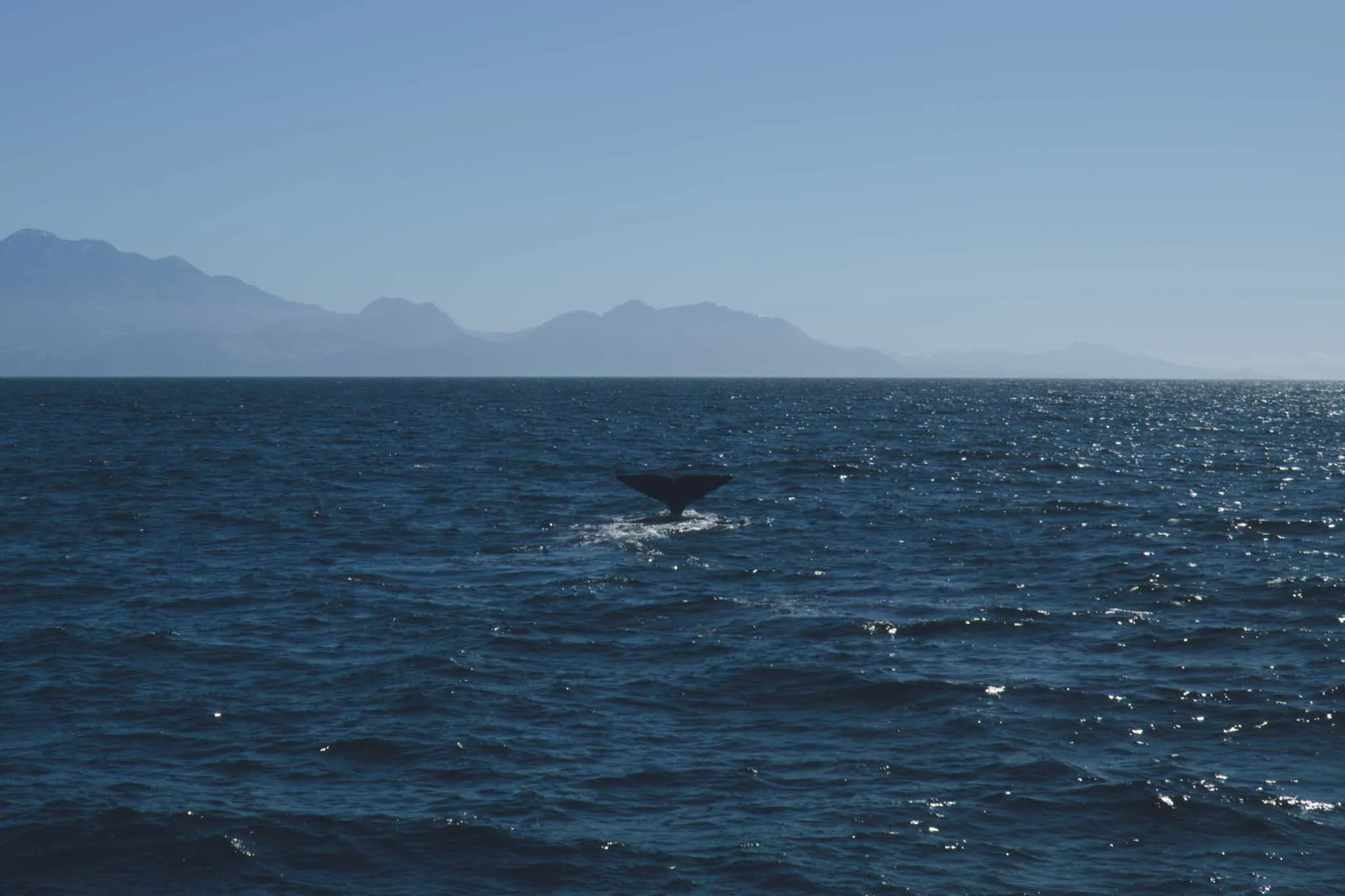
On the trip I went on, we saw one solitary sperm whale. He hovered at the surface for around five minutes, breathing, then slowly dived. I got to see the slow slither of his back as he descended, and then that iconic dark fluke lifted against the silhouette of the mountains beyond. It was a fleeting encounter, and the most we saw of the whale was his great tail, but I still loved the tour. We saw a few albatross and petrels, which was a nice bonus, but no dolphins, although they do sometimes show up as well.
The details
Tours are $175 for around 3.5 hours in total, with roughly 2 hours spent out on the water. (I travelled on the Whale Watch boat for free as part of a larger press trip).
Air Kaikōura
Allegedly, seeing whales from the air means you get to see even more of them; I wouldn’t know, as the two times I have tried to get on flights, the wind has meant the planes stayed grounded. If you’re lucky enough to get lift off, whale watching flights have a very high success rate for seeing the whales. You should also get some stunning scenery into the bargain.
The details
From $220 for a 30 minute flight
Kaikōura Kayaks
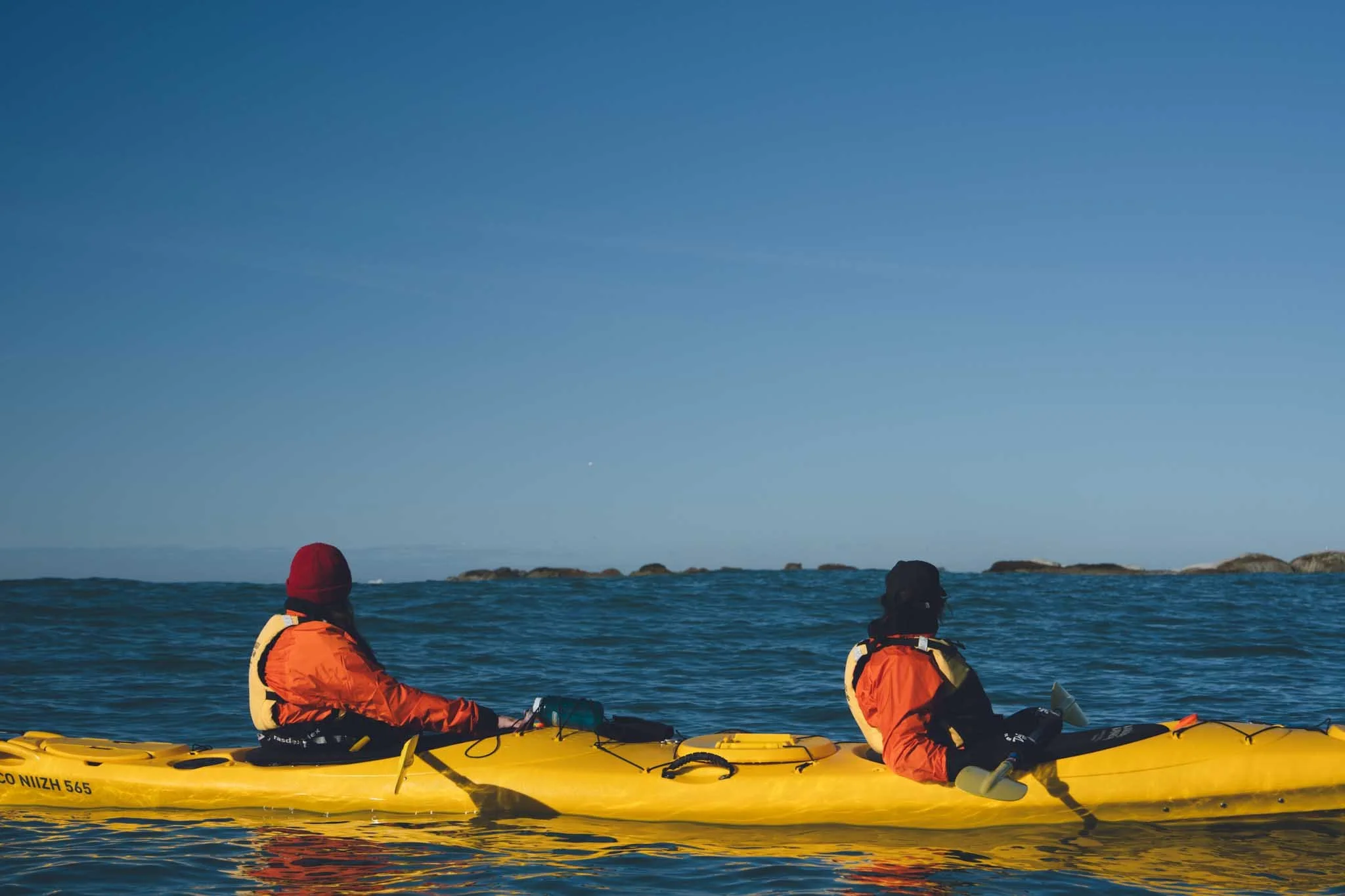
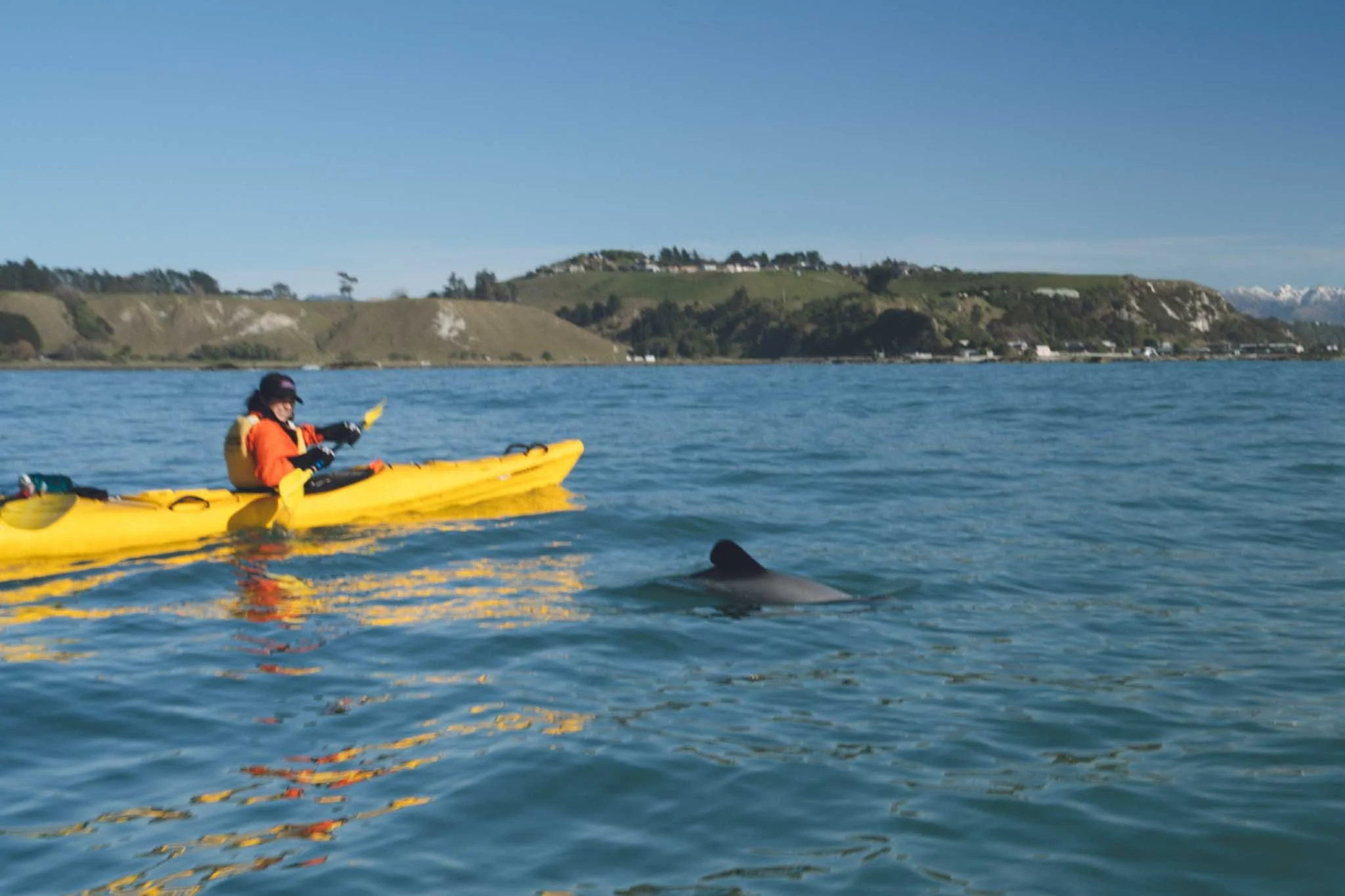
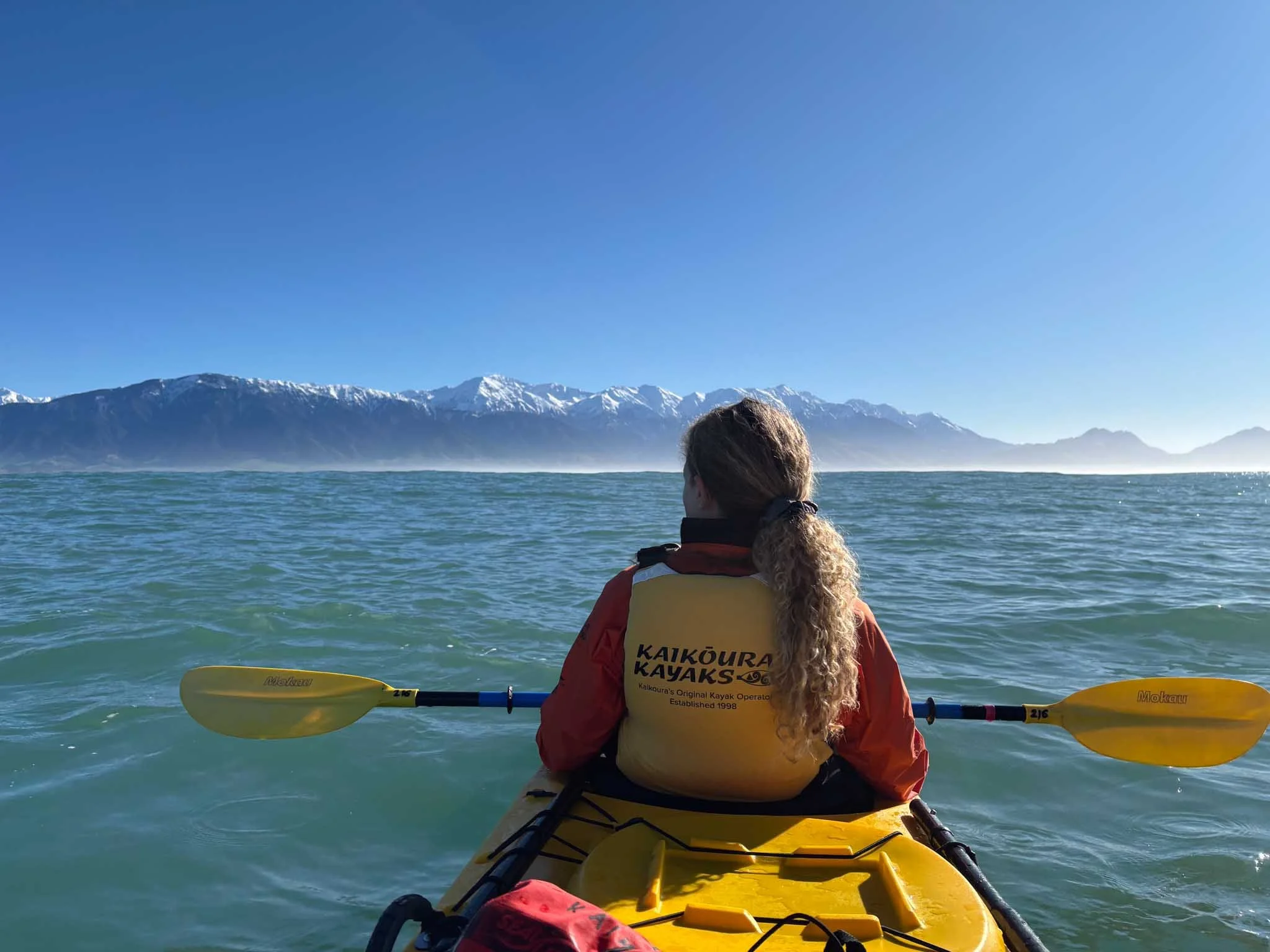
A long running sea kayaking business – first established in 1998 by adventure guide Matt Foy – Kaikōura Kayaks is the only kayak operator in town licensed to view seals, dolphins, and whales. Although that is not to say that you’ll see all of these.
Seals are nigh guaranteed, and the paddling route essentially takes you along the water to the Point Kean colony (which is easily accessible on foot). I found the seals on my trip with Kaikōura Kayaks to be a little underwhelming. Viewed from the water, they were actually harder to see than from dry land (the Point Ohau colony in particular, a little north of town, gives you a prime view of the animals). I’m also very spoiled, and have seen seals many times around New Zealand.
Dolphins are less of a sure thing, despite likely being the mammal that most people join the tour hoping to see.
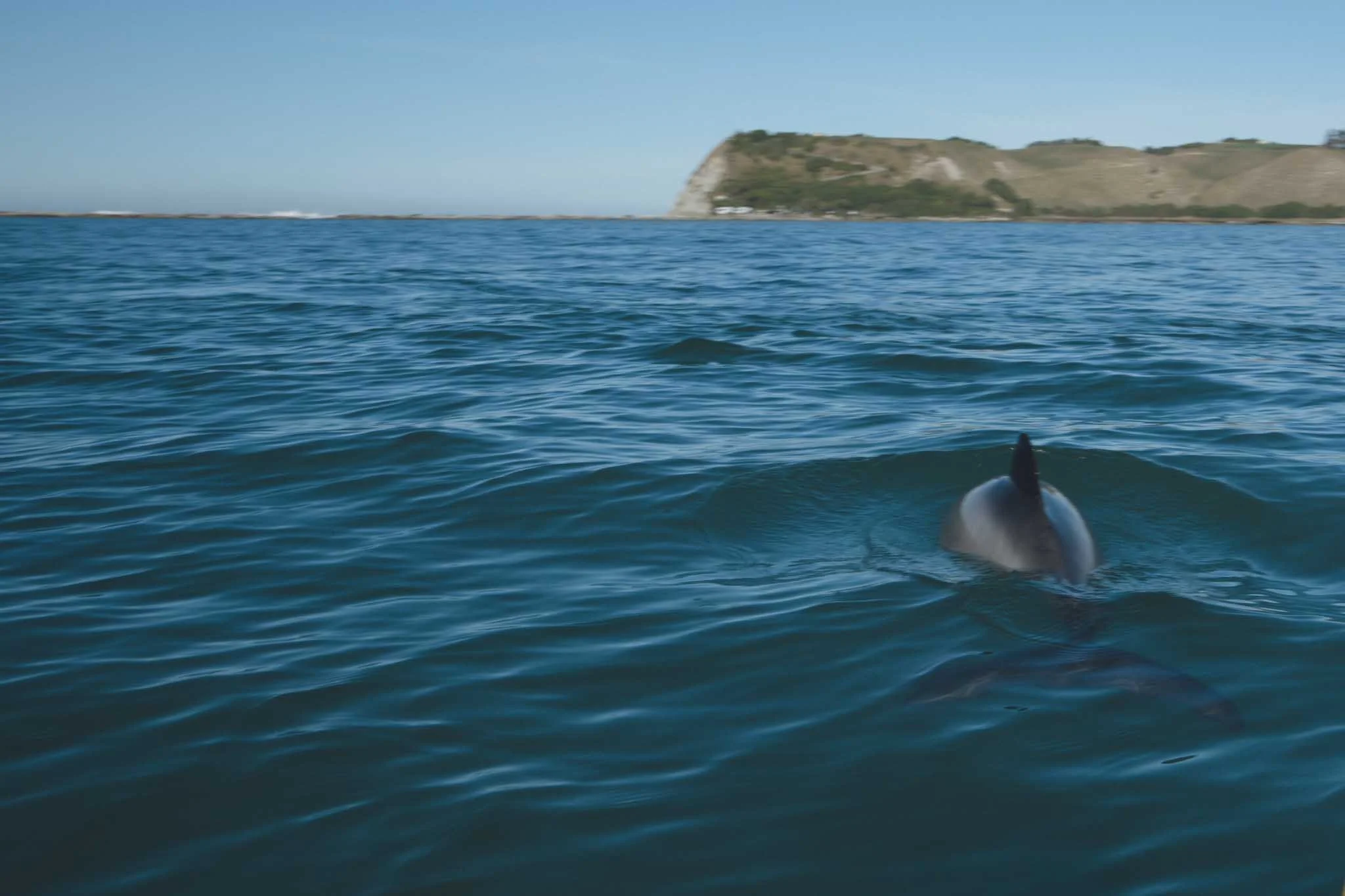
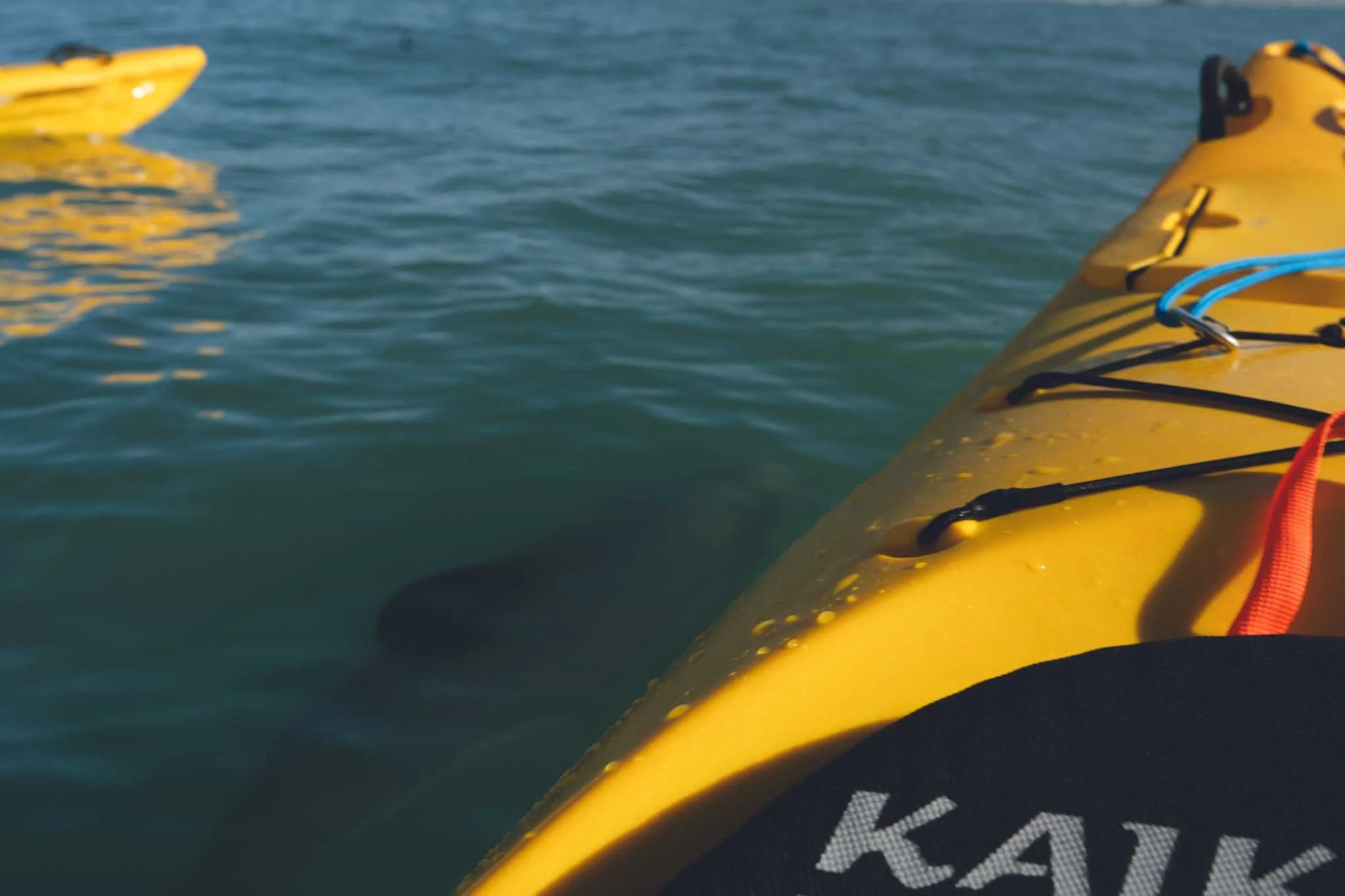
I was lucky enough for a small pod of Hector’s dolphins to show up on my kayaking tour. They surfaced right next to our kayaks and swam under, around, and in front of us. Hector’s are the smallest dolphin species in the world at only 1.2-1.6 meters (3 ft 11-5 ft 3), so having this encounter with them was incredibly special.
If we hadn't seen them, it would have been a short and fairly uneventful paddle; swell prevented us from making our way too far around the point.
So, if you’re excited about this trip because of the possibility of kayaking with dolphins, know that it is essentially a gamble (and a fairly expensive one at that). We didn’t see a single dusky dolphin in August – the large pods move through in late summer, so you might have more luck in March or April. The scenery in winter was spectacular though, looking back across the water to the snowy mountains.
The details
Kayaking tours are $165 for a 3 hour trip (although 45 minutes is spent getting to the location, and listening to a safety briefing)
The paddling isn’t strenuous, but you will need to help lift heavy kayaks onto the beach.
Seal Swim Kaikōura
One of the activities I have had on my list for a long time is swimming with the seals on the Kaikōura Peninsula. Unfortunately, when I have tried in the past I have been thwarted by the weather, but I’m determined to try again soon (tours only run in the summer season, from November through to April). Meeting the seals in their environment, on their terms, seems like it would be a lot of fun. Seal Swim Kaikoura has been running these trips since the late 80s, and is still a family-owned operation. As far as I can tell from looking at studies into the effects of seal swim activities, it’s an ethical set up; helped along by the fact that seals mostly either ignore people or choose to interact (they are rarely observed fleeing from people in the water – sadly why they made such good targets for fur traders).
The Kaikōura Peninsula Walkway and Point Kean Seal Colony
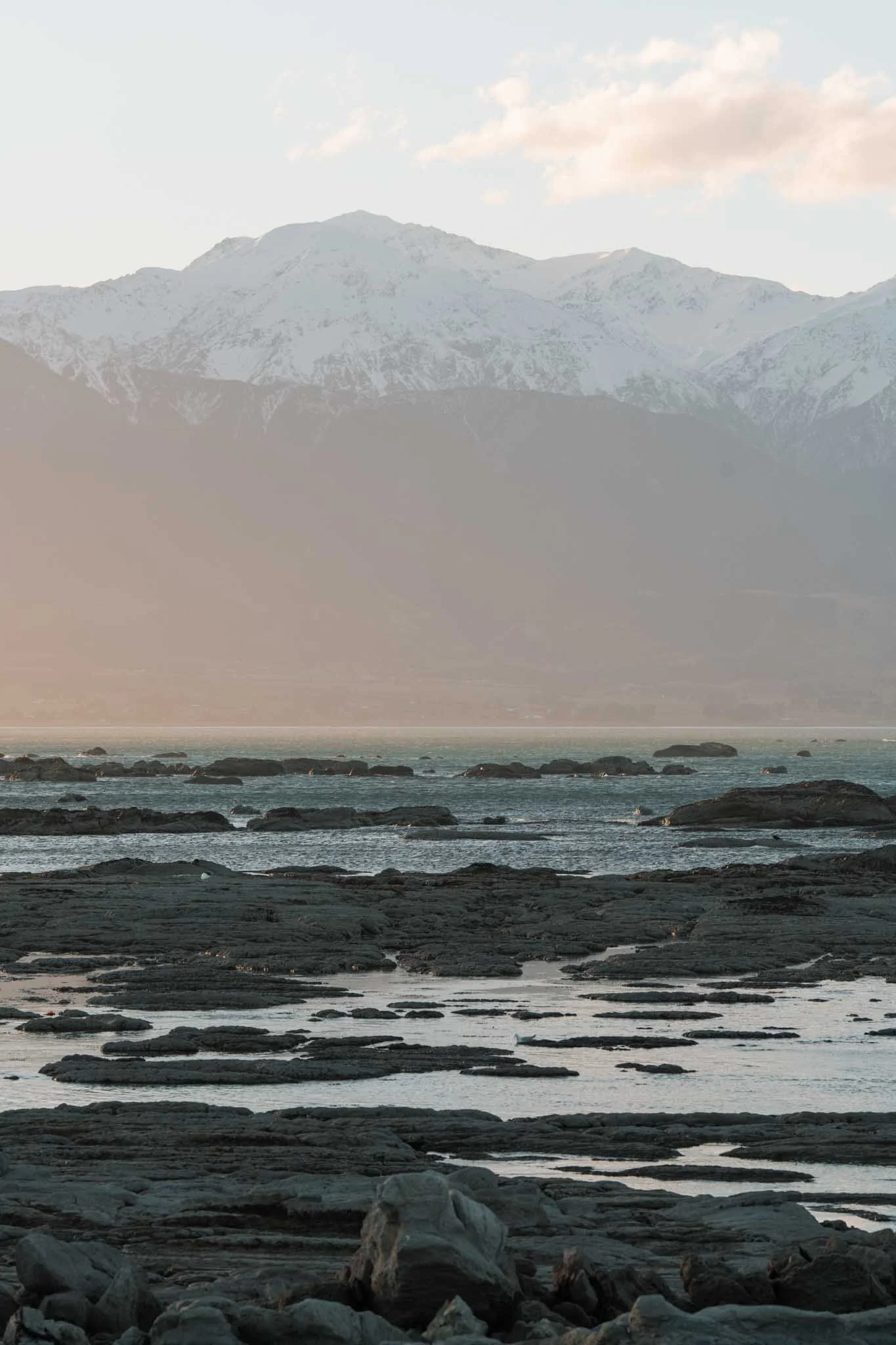
Sunset views from Point Kean
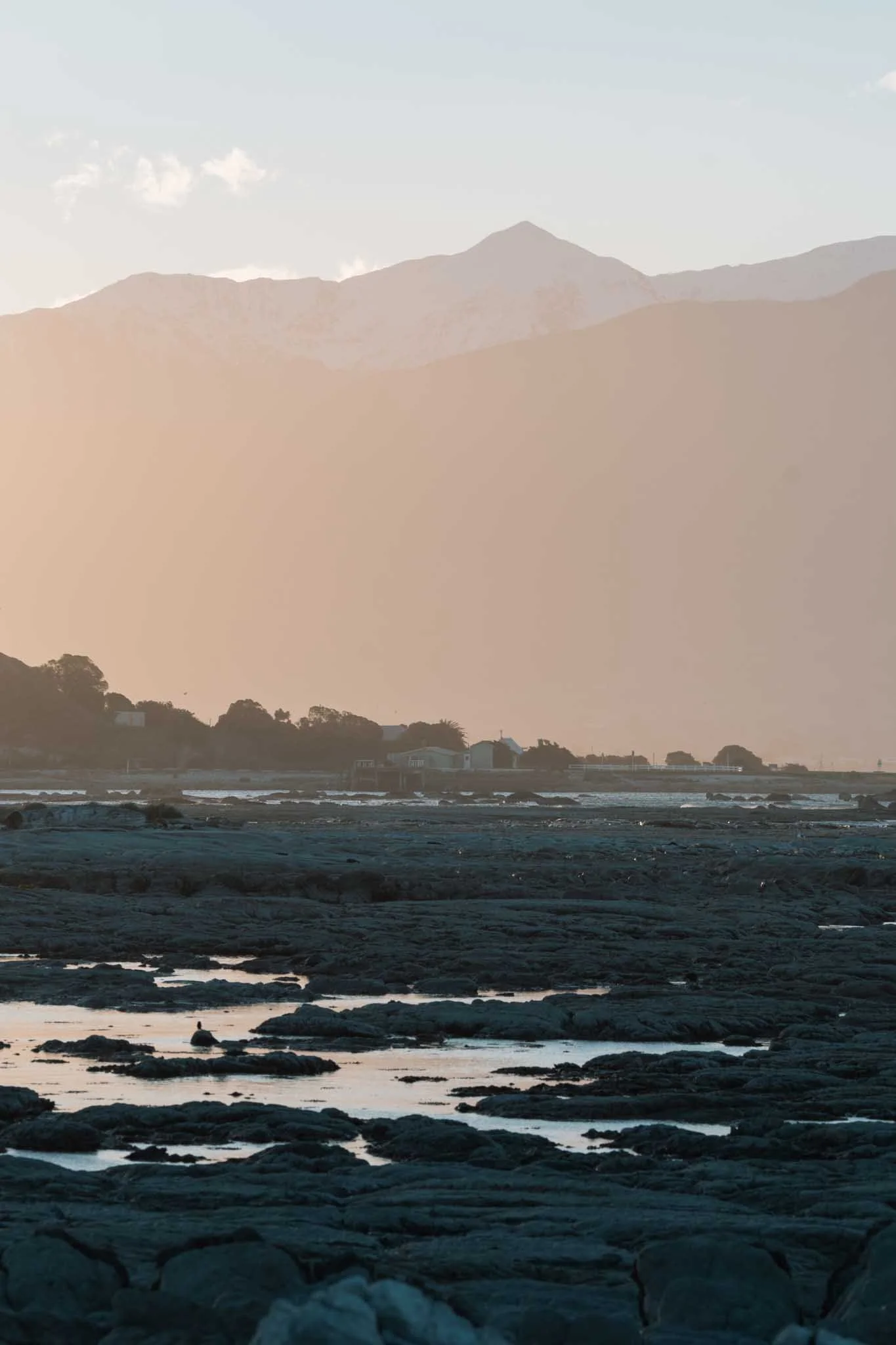
Sunset views from Point Kean
Follow the road all the way out to the tip of the Kaikōura Peninsula, and you’ll be within easy walking distance of a seal colony. This is the starting point of the Kaikōura Peninsula Walkway, which is billed as a 3-4 hour loop, but in reality the most interesting part of the track is the clifftop – from the vantage point of the cliffs you can look down at the seals spread out across the rocks below. You can drop down to the coast at Whale Bay and walk back to the car park to form a shorter loop that will take you right past the seals. This loop should take around 1.5 hours.
Alternatively, you can just walk around the bottom of the cliffs until you reach the seals, which is the quickest and most direct way of reaching the colony (around 10 minutes walk from the carpark).
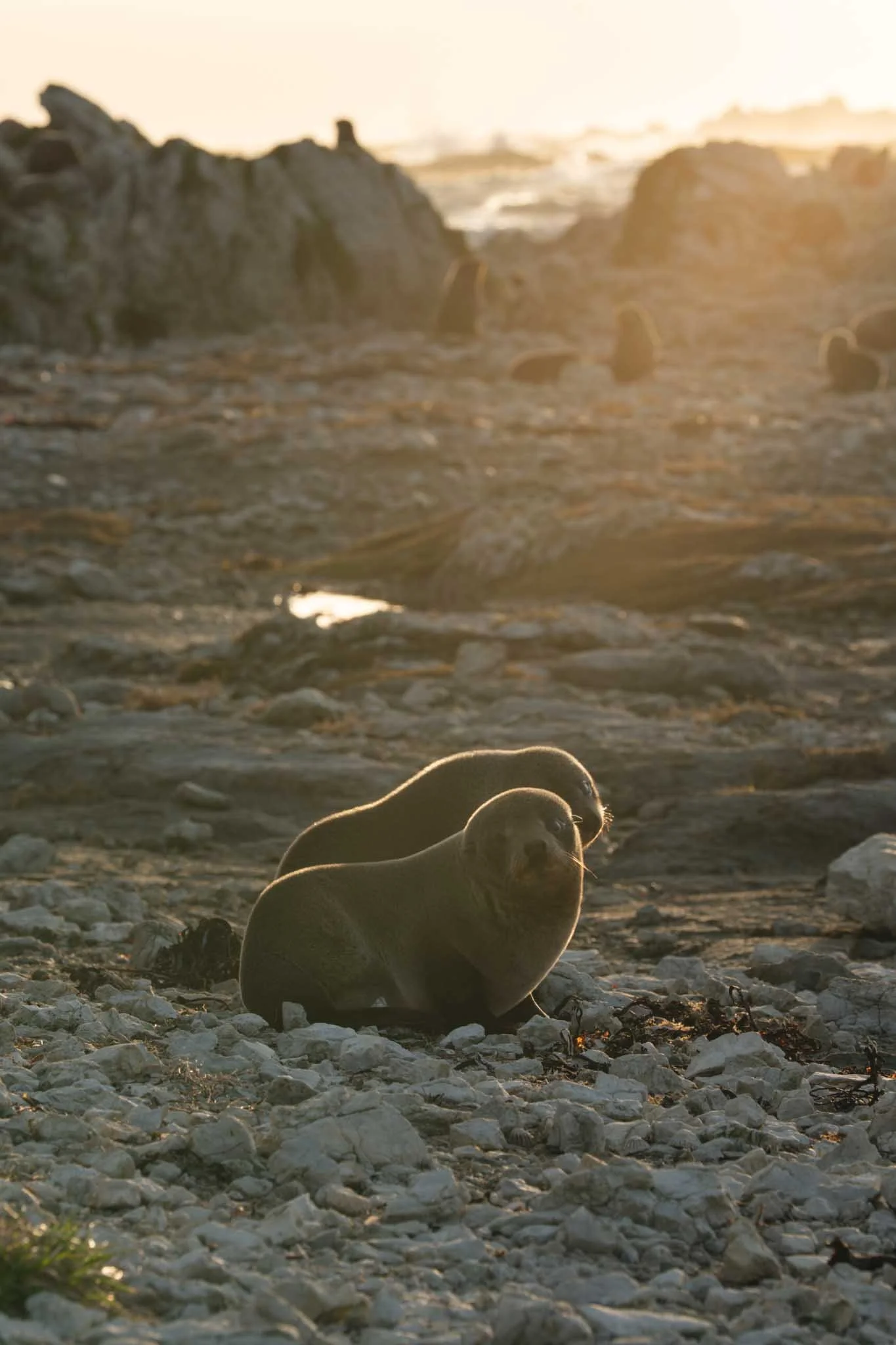
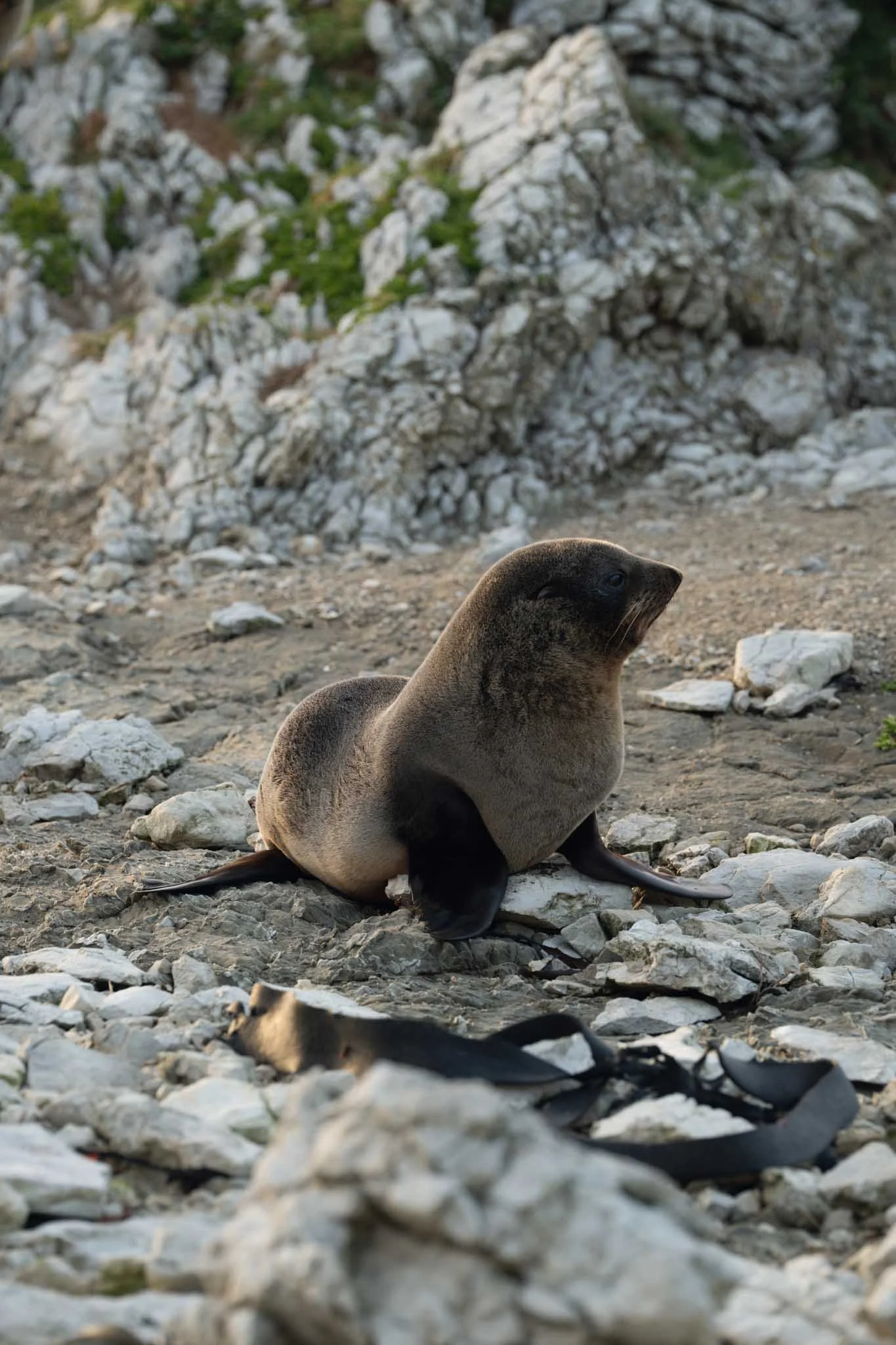
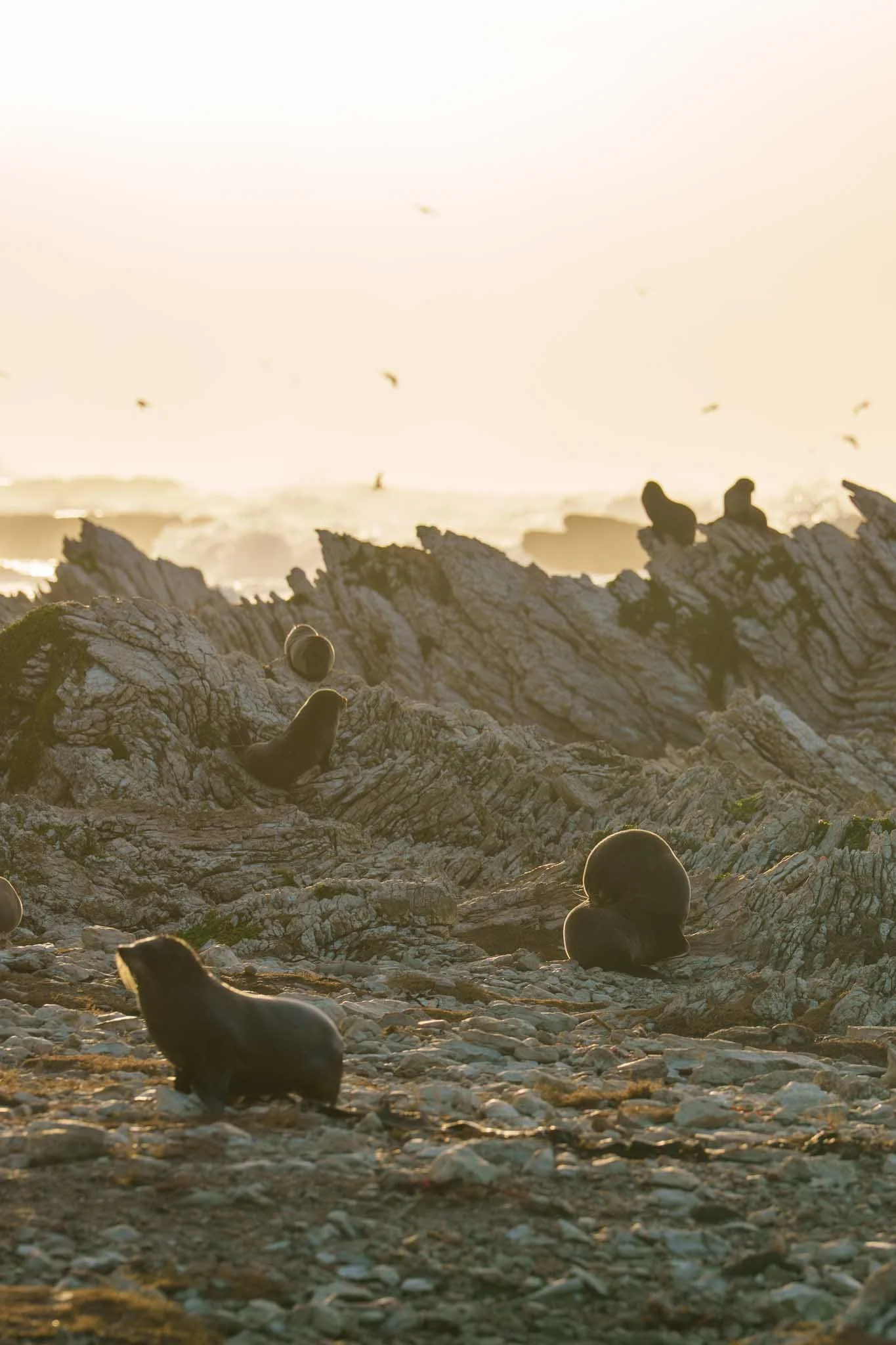
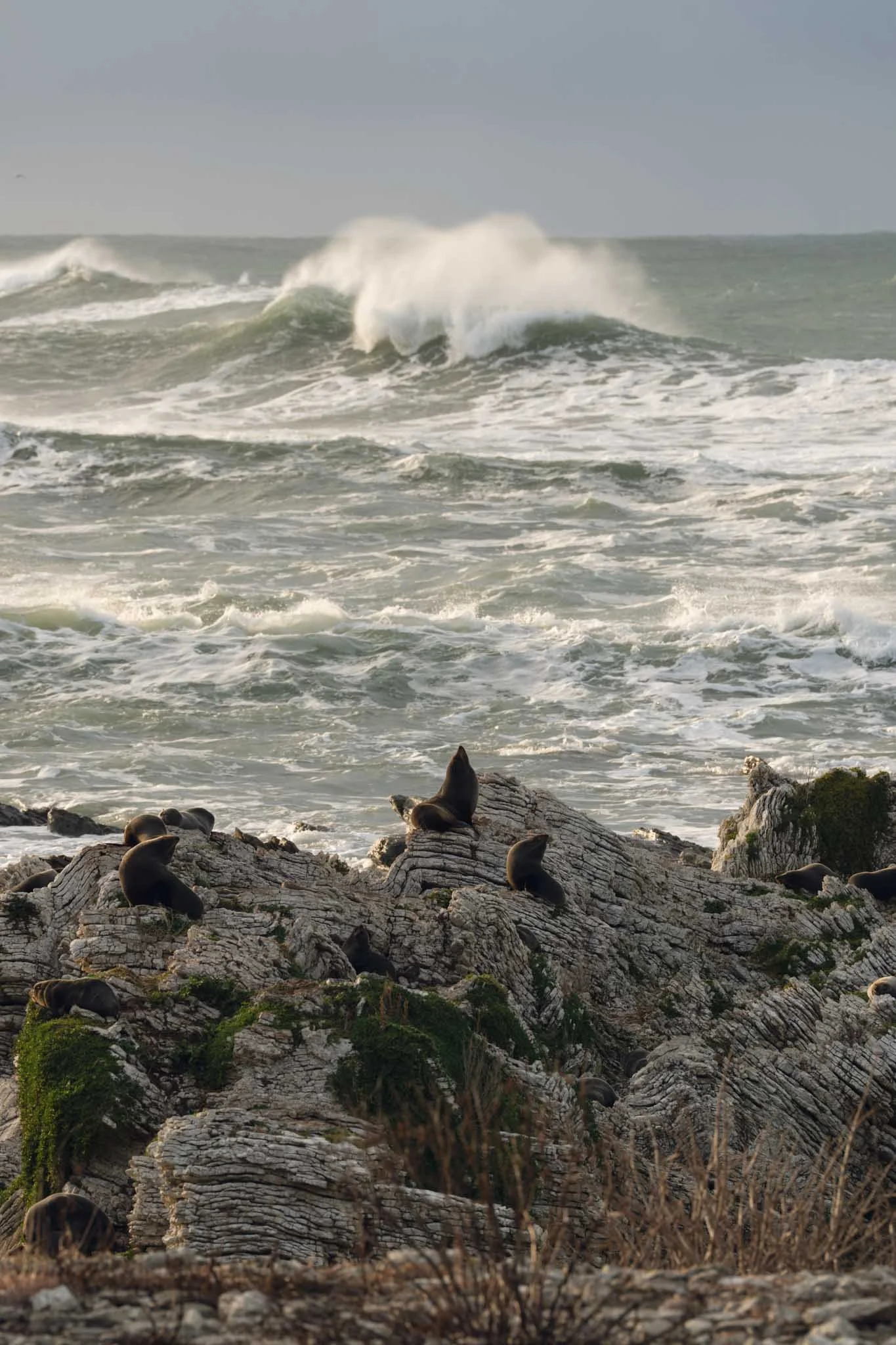
The seals are numerous and largely unfazed by human presence, but keep a respectful distance of at least 20 metres (roughly the length of two buses).
In terms of photos, I’m always hoping to spot seals on the rocky outcrop right by the carpark, to get a shot looking back towards the seawards ranges. Seals appear more sporadically in this area, so I haven’t managed to do this yet; you might have more luck. Otherwise, sunrise is a good time to take photos of the seal colony at the base of the cliffs – the rising sun bathes the area in nice light, whereas at sunset the area is cast in shadow from the cliffs above.
Where to stay in Kaikōura
Clifftop Cabins
LOCALLY OWNED | OUTDOOR BATHTUB
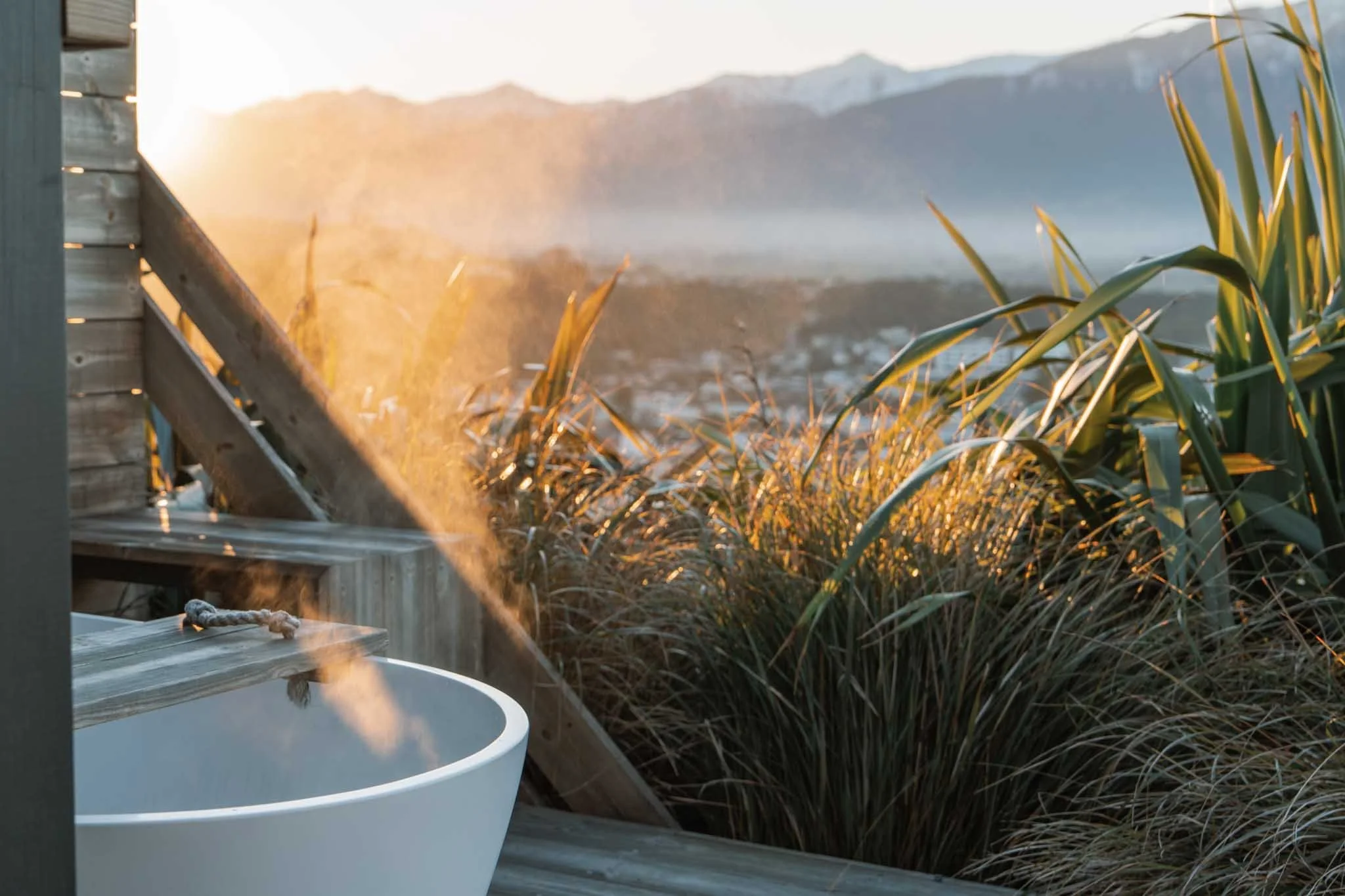
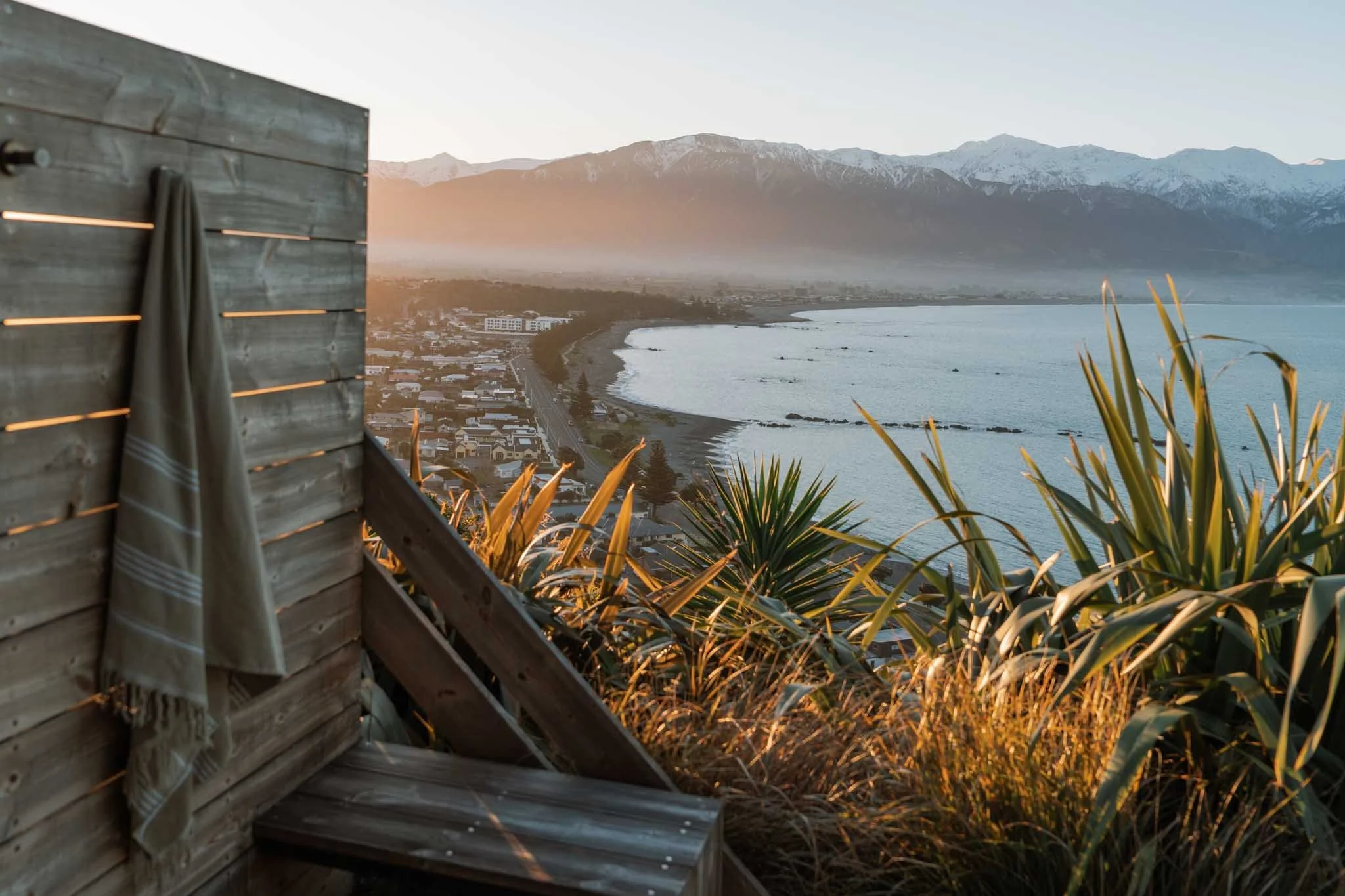
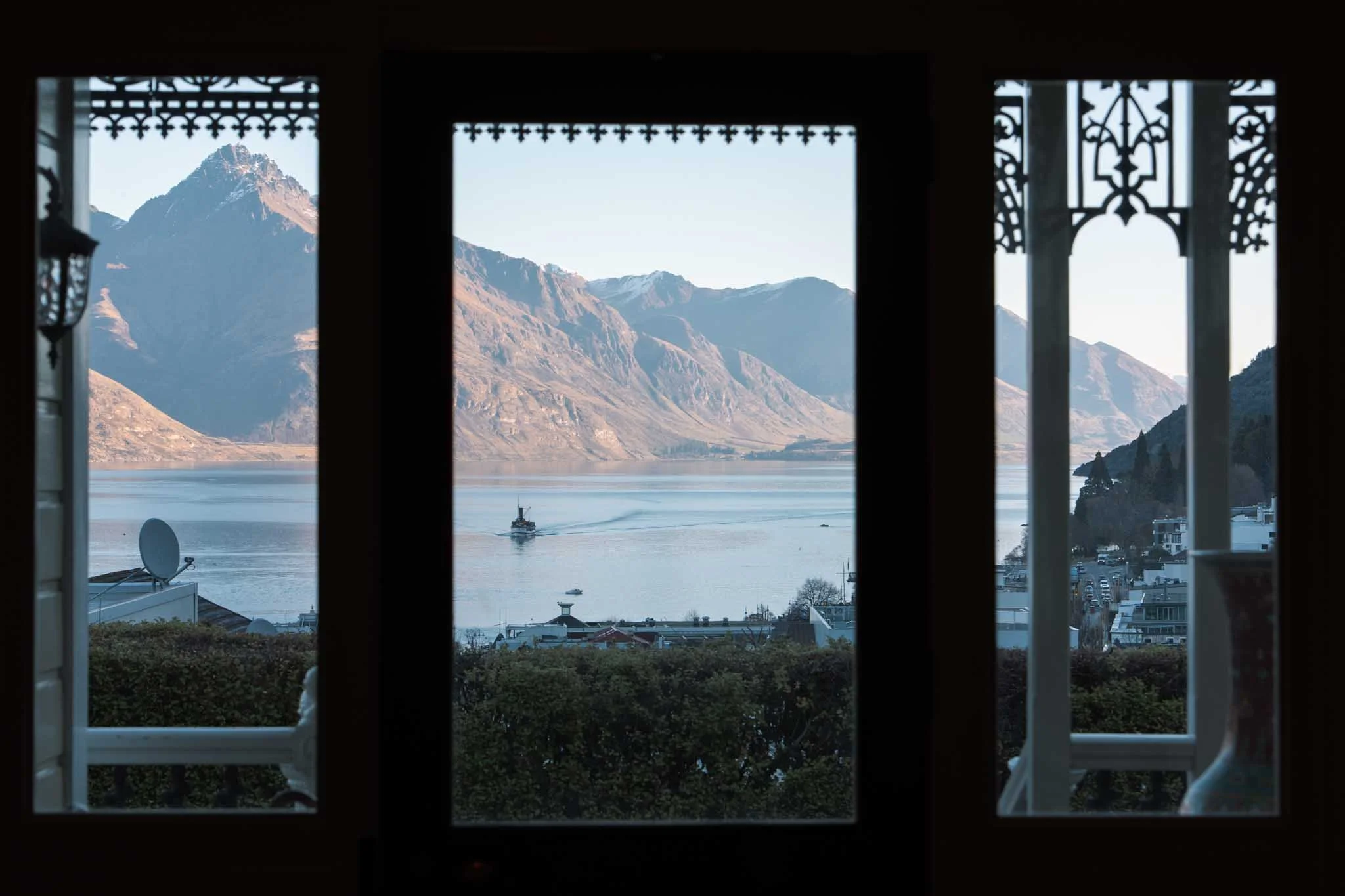
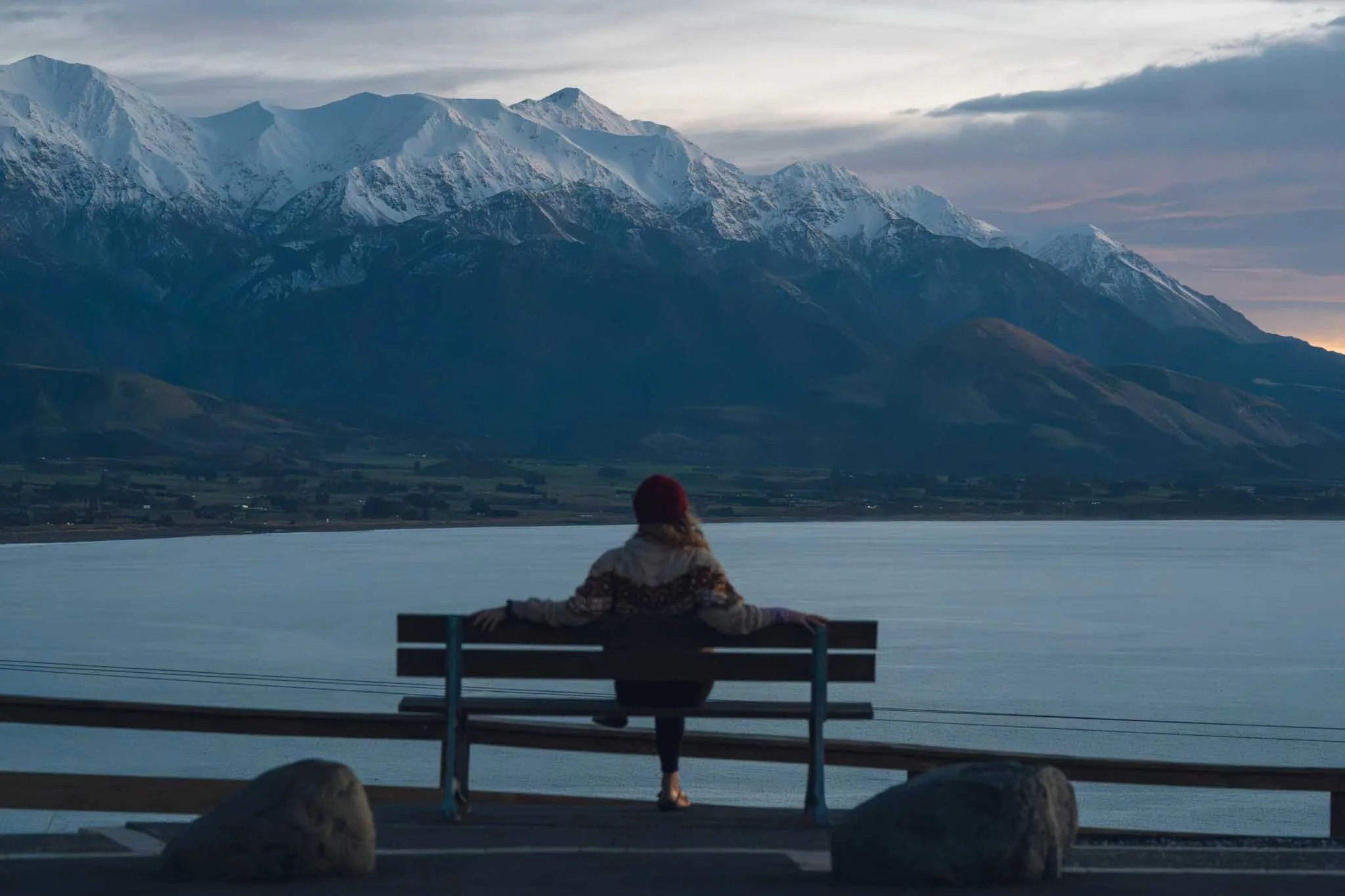
The prime place to stay in town has to be in one of these three small cabins arranged on the hill overlooking the township and the mountains beyond. I stayed in the Ruby Cabin, but they all seemed to be identical in layout, privacy, and outlook. The Kaikoura lookout is almost directly behind the cabins, which goes to show how remarkable the view is; and at the cabins, you can admire the tableau from bed or from the outdoor bathtub.
Run by a local couple, the cabins have been carefully designed with plenty of creature comforts (I will always fall for a place with welcome chocolates, and a good coffee machine. The one in my cabin was top of the line). The decor leans into blonde wood and sandy colours, as you would expect from a beachside holiday home. The kitchen is simple and located outside, which is fine for fair weather but might be a little challenging if it’s raining and you want to cook. Other than that, the cabins seem to be flawless, and any niggles you can identify you have to forgive immediately in light of the stunning view.
The details
Rates from $350 a night
Thanks for reading
My life as a travel writer wouldn’t be possible without you, so thank you for taking the time to read my work.
All of the recommendations in this article are the result of my personal, on-the-ground research. I only mention places I have actually been to, and as much as I can, I pay my own way, with the goal of being fully independent. I refuse to use AI, or outsource any part of the running of this website. I stubbornly believe that the best travel tips come from real people, so I have made it my mission to be the most trustworthy source of information you’ll find for planning your New Zealand travels.
I hope this article has been at least a little useful in planning your visit to Kaikōura. If you have any questions or you think there’s something crucial I’ve missed out, please feel free to get in touch at hello@petrinadarrah.com.

AUTHOR BIO
I’m a freelance travel writer from New Zealand with bylines in National Geographic Travel, Conde Nast Traveler, Travel + Leisure and more.
I’ve travelled up and down beautiful Aotearoa and I love sharing my recommendations for the best places to visit in New Zealand.
READ MORE