What to do in Aoraki Mount Cook: A guide to visiting the national park
Where to find the best walks and views in this stunning national park.
Disclosure: This article contains affiliate links, so I may make a commission at no extra cost to you if you book through those links. Thanks for your support.
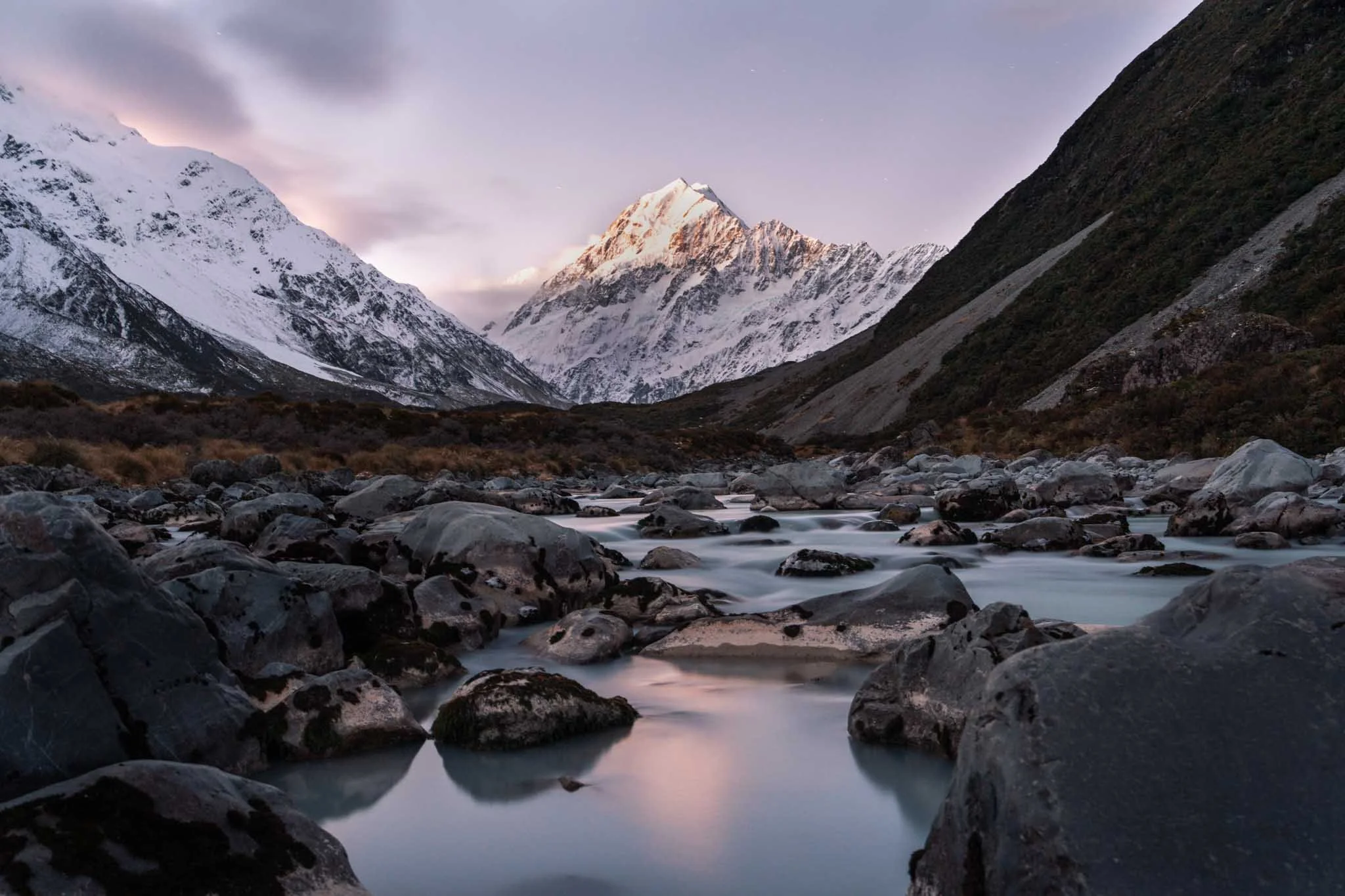
Aoraki/Mount Cook is the singularly most beautiful part of New Zealand. There’s something about the mountains, rising straight up from the valley floors, rocky peaks strung with glaciers and banks of cloud. Stand still and listen and you’ll hear the sound of rock and ice falls high in the mountain tops, the boom cracks ricocheting off the valley walls.
I’ve lost count of how many times I’ve been to Aoraki/Mount Cook now — each time I climb a little higher, and a little further. I’ve seen the mountains there under winter snow, in late summer sunshine, and cloaked in clouds and rain. I have yet to lose the sense of wonder I feel every time I set my course on that one narrow road leading into Mount Cook.
Mt Cook — Aoraki in Māori — is the tallest mountain peak in New Zealand. This rocky spire 3,724 metres above sea level is where Sir Edmund Hillary famously honed his climbing skills before taking on Everest. Mount Cook isn’t the only drawcard in Aoraki/Mount Cook National Park; there are 19 peaks soaring over 3,000 metres and 178 glaciers covering more than a third of the park.
Despite the hostile-sounding nature of the park, there are excellent short walks in the park that almost anyone can do. This accessibility is great, but it also means that visiting Aoraki/Mount Cook comes with a big caveat. It’s very, very busy.
Staying overnight in the national park is a good way to cope with the crowds, because you can be on the trails either late or early. The only catch is that accommodation is hard to come by in the park — you’ll need to book far in advance for the summer season.
Getting there and away
Located roughly halfway between Christchurch and Queenstown — around four hours driving from each — Aoraki/Mount Cook is a popular stop on any South Island road trip. Spending a night in the park is ideal, but accommodation is limited and expensive. If it’s sold out, Twizel is the next best option, roughly 40 minutes away. You can easily visit Aoraki Mount Cook on a day trip from Twizel or even Tekapo, but it’s a stretch to visit from further afield (although there are day tours operating from both Christchurch and Queenstown).
Whether going for a day trip or staying overnight, it’s wise to top up your petrol tank and food supplies in Twizel (or Tekapo, if coming from that direction). While you can get food and petrol in the park, both are limited and expensive.
If driving yourself into the park, note that you’ll need to pay for parking at the main car park ($5 an hour, with a maximum of $25 a day). Despite being a paid carpark, it still manages to be a fairly chaotic spot, with people parking at random along the road leading into the carpark. If you want to avoid the charges and/or the busyness of the carpark, another option is to park in Mount Cook Village, near the DOC visitor centre (which also acts as a small museum for the park and is worth a visit if you have the time). From there, it’s a 1.2 kilometre walk to the starting point of either Sealy Tarns or Hooker Valley, which adds an extra 20-30 minutes of walking in each direction.
Itineraries that pass by Aoraki Mount Cook
Where to stay in Aoraki/Mount Cook
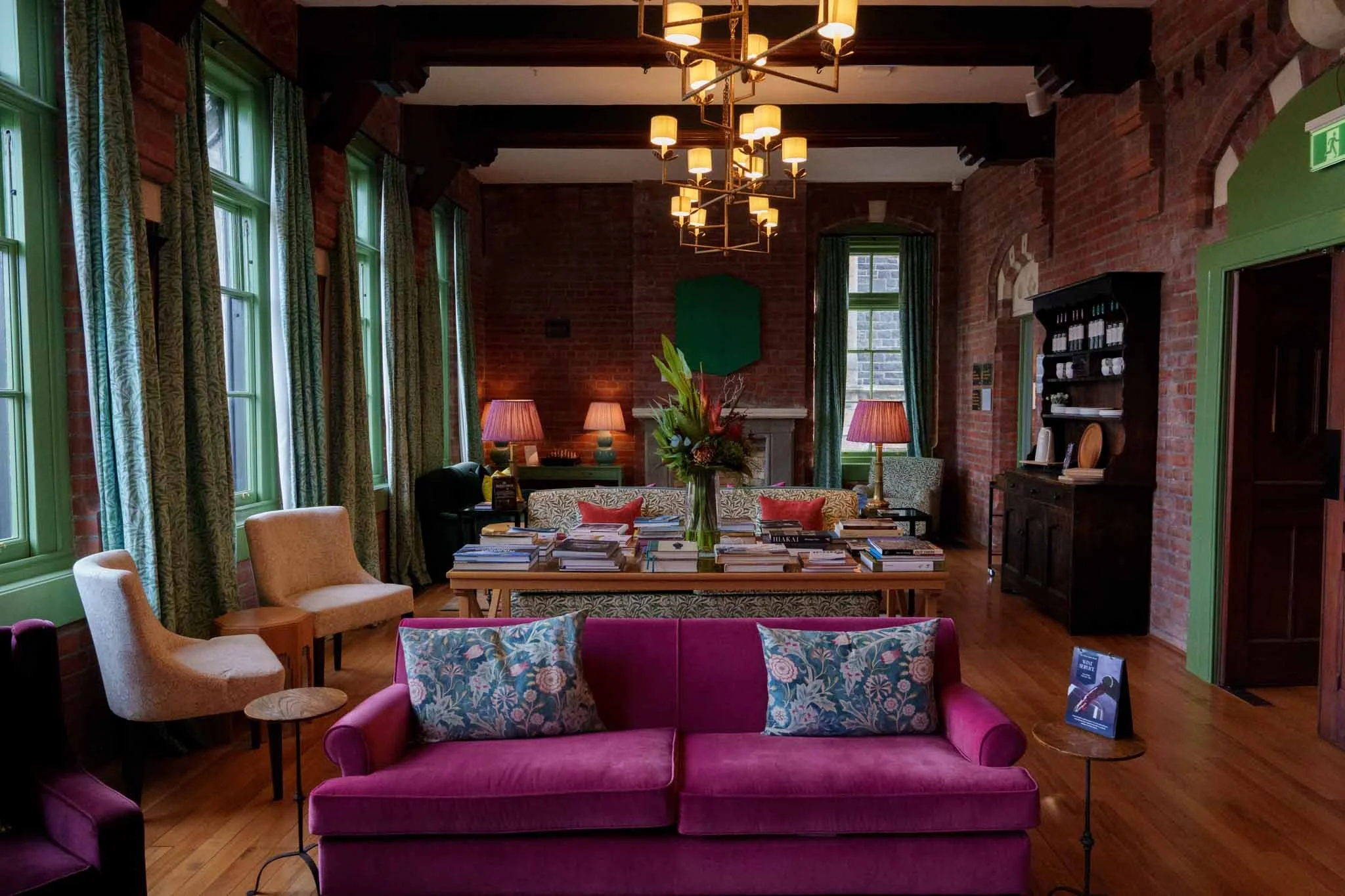
There are limited accommodation options in the park; as well as the Hermitage, the only real hotel, there are a couple of smaller motels, a backpackers, and a campground. Space is limited and prices are high, but it’s still worth it in my eyes. Book as far in advance as you can.
If all accommodation in the park is sold out, search for places to stay in and around Twizel.
The Hermitage Hotel
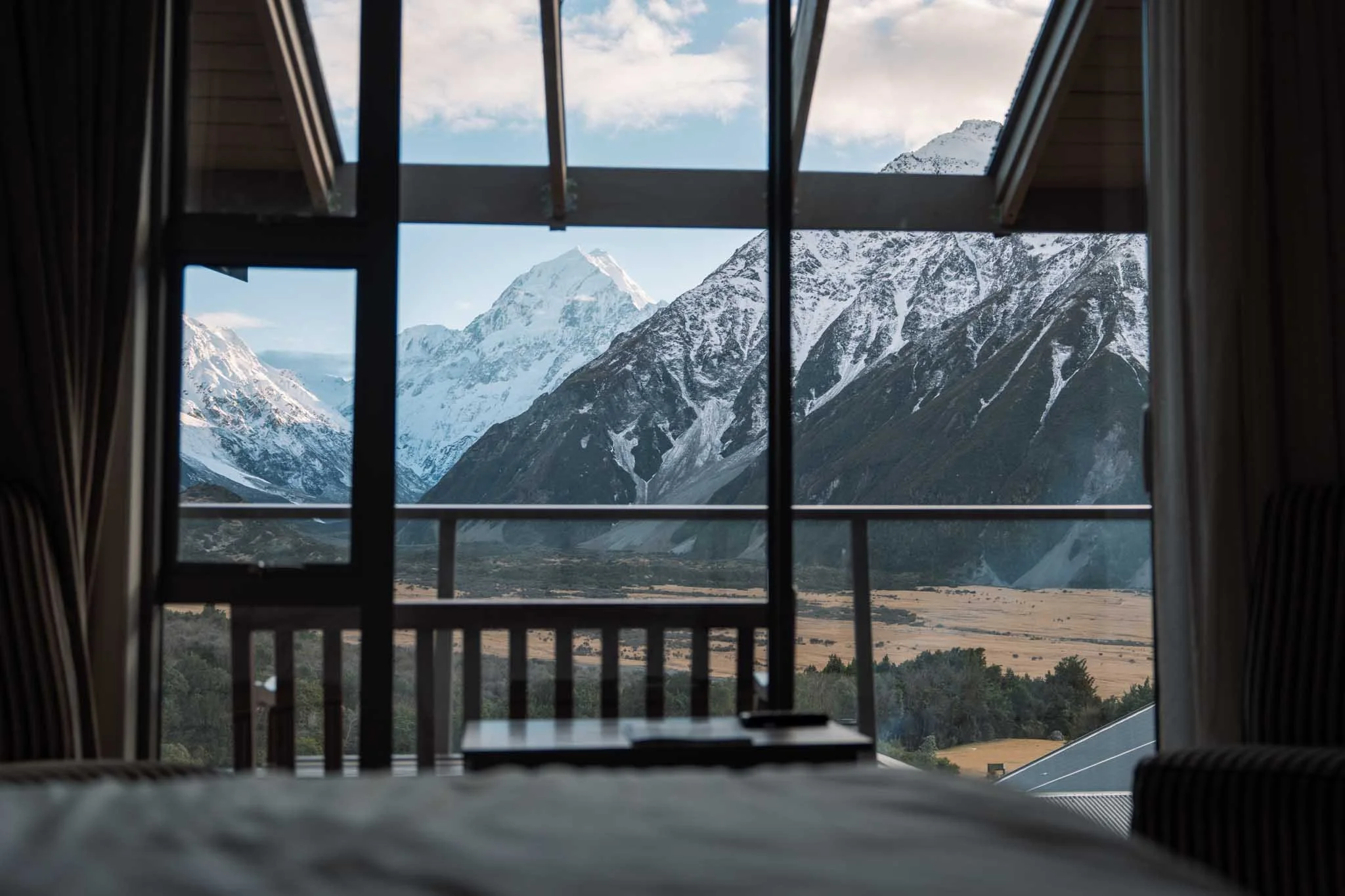
The iconic Hermitage has been a fixture in the park since 1884. The hotel takes full advantage of its position – cleverly angled to face Aoraki/Mount Cook – and rooms have floor to ceiling windows providing blockbuster views of the mountain. I stayed in a standard queen room and even though it was a fairly straightforward room, the small balcony with a bench seat facing the view made it feel spectacular.
Standard rooms from $380
Aoraki Alpine Lodge
A basic but very serviceable place to stay, with a great shared kitchen and lounge area. With almost nowhere to eat in the park, having cooking facilities is very useful. There are views of Aoraki/Mount Cook from the lounge area, but my room didn’t have any kind of view.
Haka House Hostel Aoraki Mt Cook
If you don’t mind a dorm room, the Haka House hostel is a decent option. It’s a nice spot as far as hostels go, with cosy living areas and generous kitchen facilities.
Planning your time
One day is enough to see the highlights of Aoraki Mount Cook National Park. Staying overnight gives you more time to explore various trails, and see the changing light on the mountain peaks. One night is all you really need (the trails are relatively short and the area you can visit is compact). On top of that, there are very limited options for eating in the park – the only restaurant is at the Hermitage Hotel. So, unless you come very prepared, a shorter visit also makes logistics a little easier.
If you only have time for one walk, go for the Hooker Valley Track (3 hours return). Add on a quick stop by the Tasman River (1 hour return) if you can, to see the Tasman glacier and the ice bergs it calves into the lake. If staying overnight, you could also add the Sealy Tarns track (3-4 hours return) which is a close second to Hooker Valley for views.
Hiking in Aoraki/Mount Cook National Park
The main things to in Aoraki/Mount Cook are hikes — this is where you’ll find some of the best short walks in New Zealand. You don’t need to be a seasoned hiker, or even be extremely fit to enjoy the walks in Aoraki.
Trails range from 30 minutes to a full day.
You’ll need to pack your own water and snacks, and ideally lunch as there are only a couple of places to get food in Mount Cook Village (stop in Twizel for supplies on the way through). Make sure you take a hat and sunscreen as well, as the trails are mostly exposed to the sun.
It’s also a good idea to have warm and windproof layers, especially if you plan on hiking to higher elevations (like Sealy Tarns). For most of the trails, though, you’ll be able to walk in sneakers or trail running shoes.
Hooker Valley Track
Most people come to Aoraki/Mount Cook for the Hooker Valley Track. This walk is possibly one of the best short walks in New Zealand.
It’s only three hours return and the track is accessible to people of all levels of fitness and experience. It feels very special being able to see glacial and mountain scenery on such an accessible walk.
The trail is very clearly marked and evenly graded the whole way. Lots of families with children make the trek.
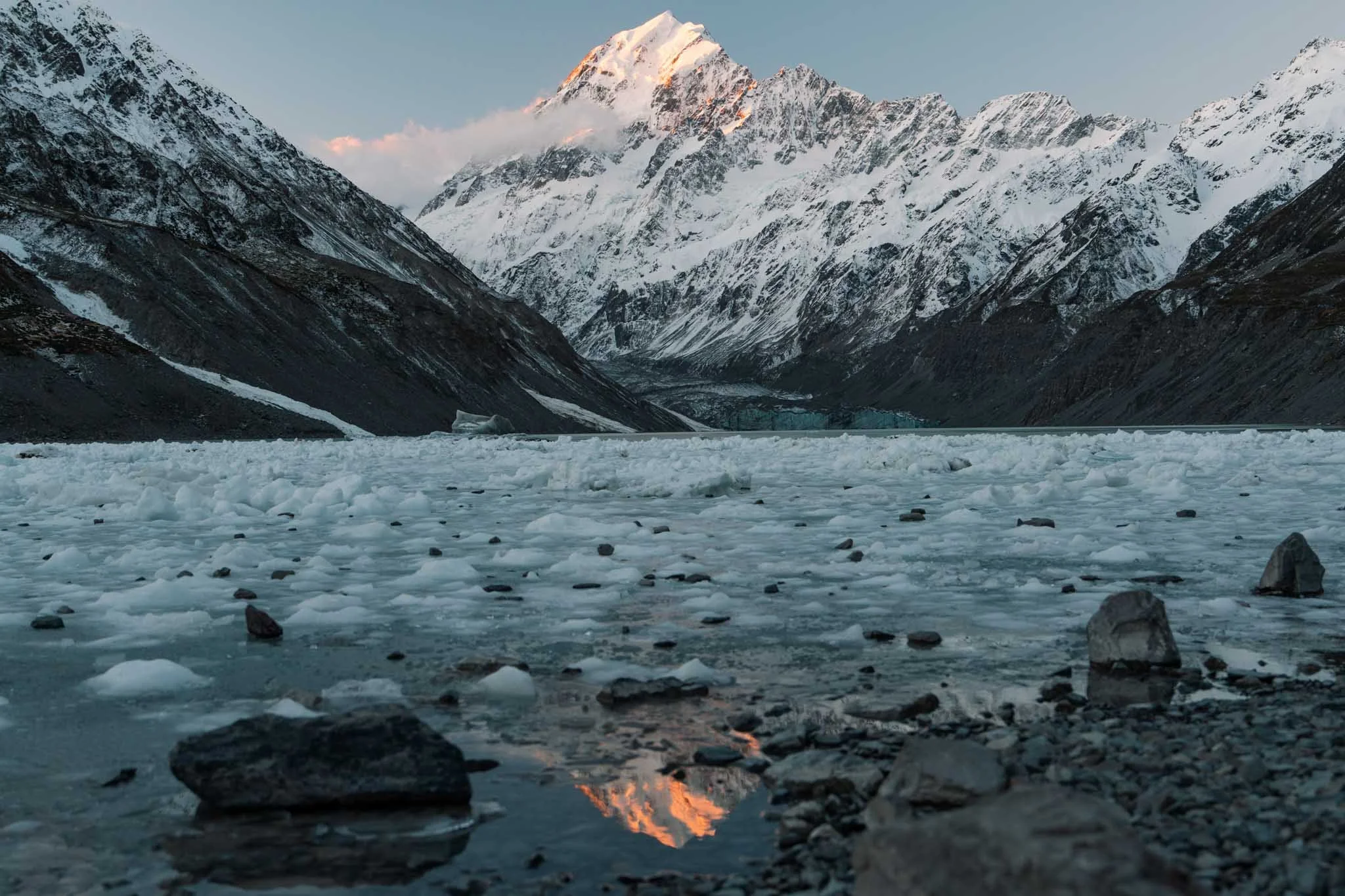
The walk takes you through a valley to the Hooker Lake, where you can see icebergs crumbling from the Hooker glacier, and the peak of Aoraki/Mount Cook rising behind the glacier.
The track is popular, so you can expect to be walking in a line of people most of the way.
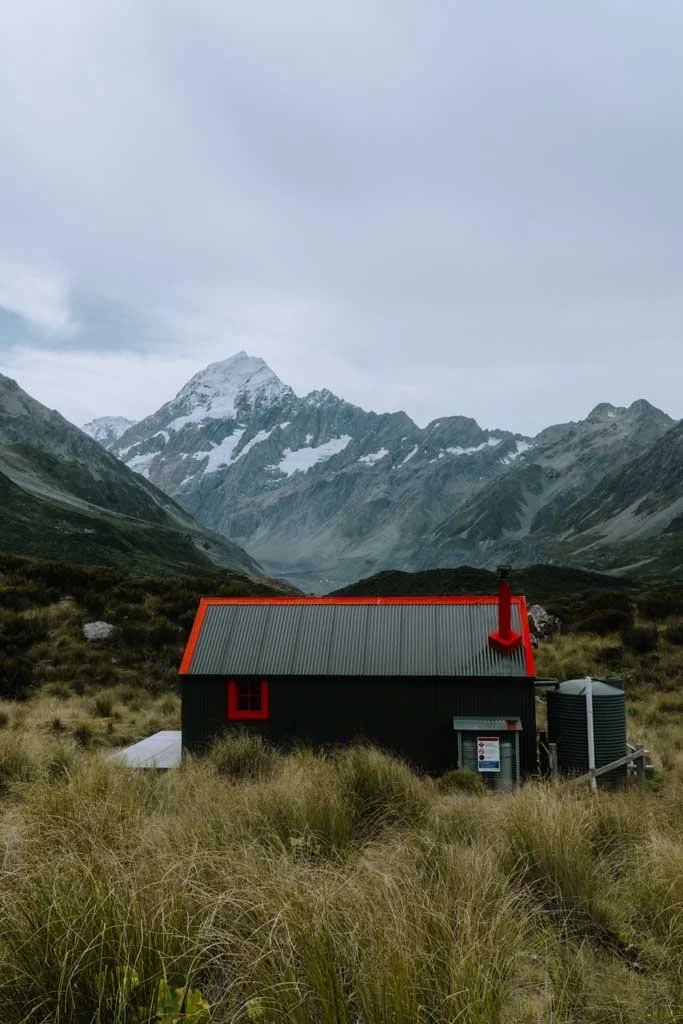
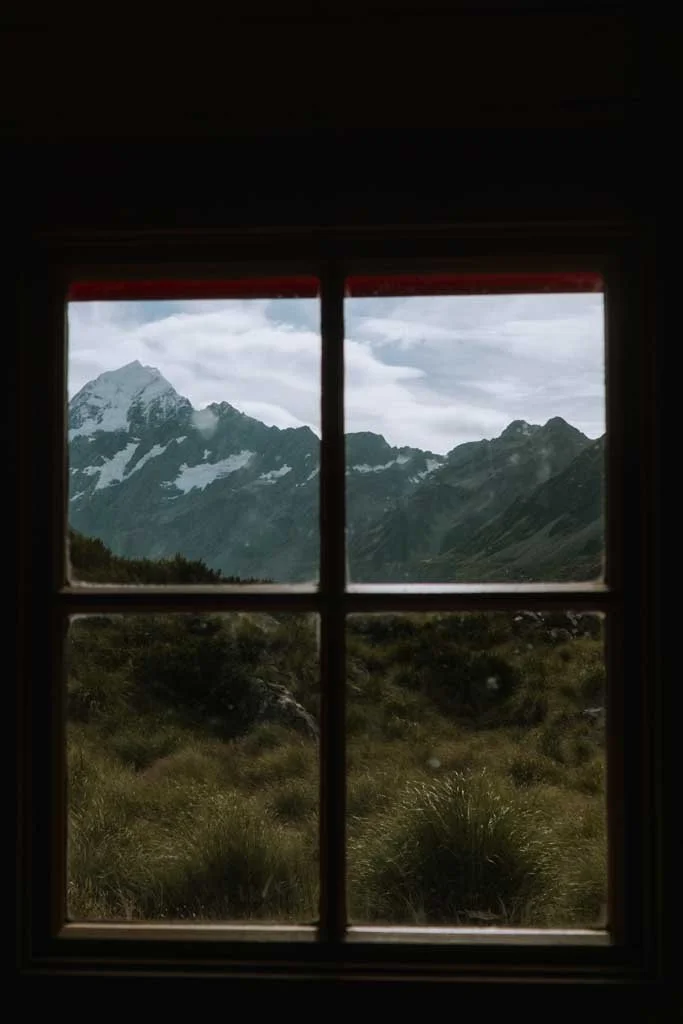
My best tip for you on this hike is to see if you can find the turn off for Hooker Hut. If you can spot it (and it’s not easy) you’ll be able to duck away from the crowds, and enjoy peace and quiet at the little red-accented hut with perfect views of Aoraki/Mount Cook.
Climb the ‘stairway to heaven’ to see the Sealy Tarns (3-4 hour return walk)
Another epic hike in Aoraki/Mount Cook National Park is the Sealy Tarns track.
A tarn is a small mountain lake which often form in glacial landscapes.
Climbing up to the Sealy Tarns involves 2,200 steps, which people call the ‘stairway to heaven.’
It sounds more intimidating than it is, although steep the track is in good condition and has great views of the Hooker valley and Aoraki/Mount Cook. Take your time and in no time at all you’ll find yourself looking at the freshwater tarns.
In summer, alpine flowers add an extra element of beauty.
Hike to Mueller Hut
Mueller Hut is famous for being built and opened by Sir Edmund Hillary. From it’s rocky mountain perch, it beckons to hikers and climbers who want to spend a night in a superb alpine environment.
The hut is located two hours beyond the Sealy Tarns.
It’s a four hour hike in total to reach the hut from the Aoraki/Mount Cook Visitor Centre, so if the hut is booked, and it often is, you can hike up and back as a tough but rewarding day hike.
Despite its popularity, this is still an alpine hike in difficult terrain.
In the summer months — December to February — you can hike the Mueller Hut route with moderate experience.
Outside of this time you might need mountaineering experience with crampons and ice axes.
Ask at the Aoraki/Mount Cook Visitor Centre for guidance on conditions, and don’t overestimate your abilities.
It’s free to enter the visitor centre and well worth visiting to learn more about the national park and the trails you can find there.
Hike to Kea Point (go at sunset for incredible colours)
1 hour return from White Horse Hill Campground
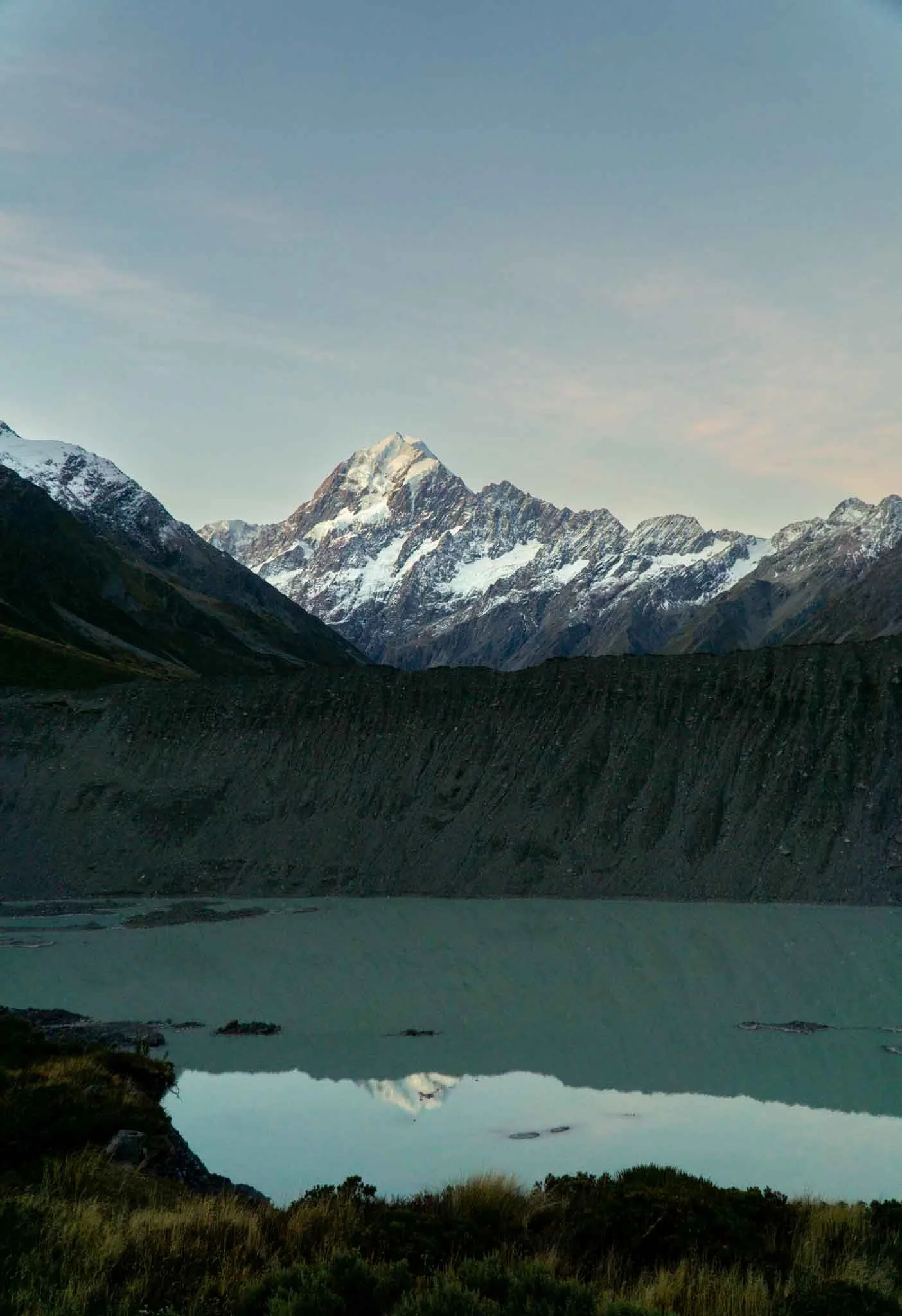
The Kea Point track is a gorgeous easy walk you can do from the campground.
At the lookout point, you can see the peak of Aoraki/Mount Cook reflected in a glacial lake below.
I went around sunset and when I rounded the last corner the tip of the mountain was bathed in a warm red glow.
It was stunning, so if you’re camping I recommend checking the sunset times and going about 30 minutes before it’s due to set.
The path back to the camp is well marked and easy to follow, so as long as you have a torch you won’t get lost on the way back.
Hike to the Tasman Lake Viewpoint
The Tasman glacier is New Zealand’s longest glacier.
An impressive 23 kilometres of ice cascade out of the mountains and into the Tasman Lake.
You can walk to a view point for the Tasman glacier in one hour, so it’s a nice short hike.
From the viewpoint, you can see the stubby end of the glacier, which often looks quite dirty. It’s not the most visually impressive glacier you can see in New Zealand, at least not from this vantage point (it’s a different story if you take a helicopter up to the glacier) but it’s still cool to lay eyes on it.
The lake is a muddy, light brown colour, not quite the bright blue of Lake Pukaki, but sometimes ice bergs float in the lake.
There is also a second track which branches off the Tasman Lake Viewpoint walk and leads to the Blue Lakes, another pretty spot to admire the glacier and surrounding mountains.
I found the Blue Lakes pretty underwhelming though, so you could easily skip these and you won’t miss much.
AUTHOR BIO
I’m a freelance travel writer from New Zealand with bylines in National Geographic Travel, Conde Nast Traveler, Travel + Leisure and more.
I’ve travelled up and down beautiful Aotearoa and I love sharing my recommendations for the best places to visit in New Zealand.
Read more